

Groundwater accounts for 99% of all liquid freshwater on Earth. However, this natural resource is often poorly understood and consequently undervalued, mismanaged and even abused. According to the latest edition of the United Nations World Water Development Report published by UNESCO, the vast potential of groundwater, and the need to manage it sustainably, can no longer be overlooked.
UNESCO launched the latest edition of the report at the opening ceremony of the 9th World Water Forum on 21 March in Dakar, Senegal. Titled “Groundwater: Making the invisible visible”, the authors call on States to commit themselves to developing adequate and effective groundwater management and governance policies in order to address current and future water crises throughout the world.
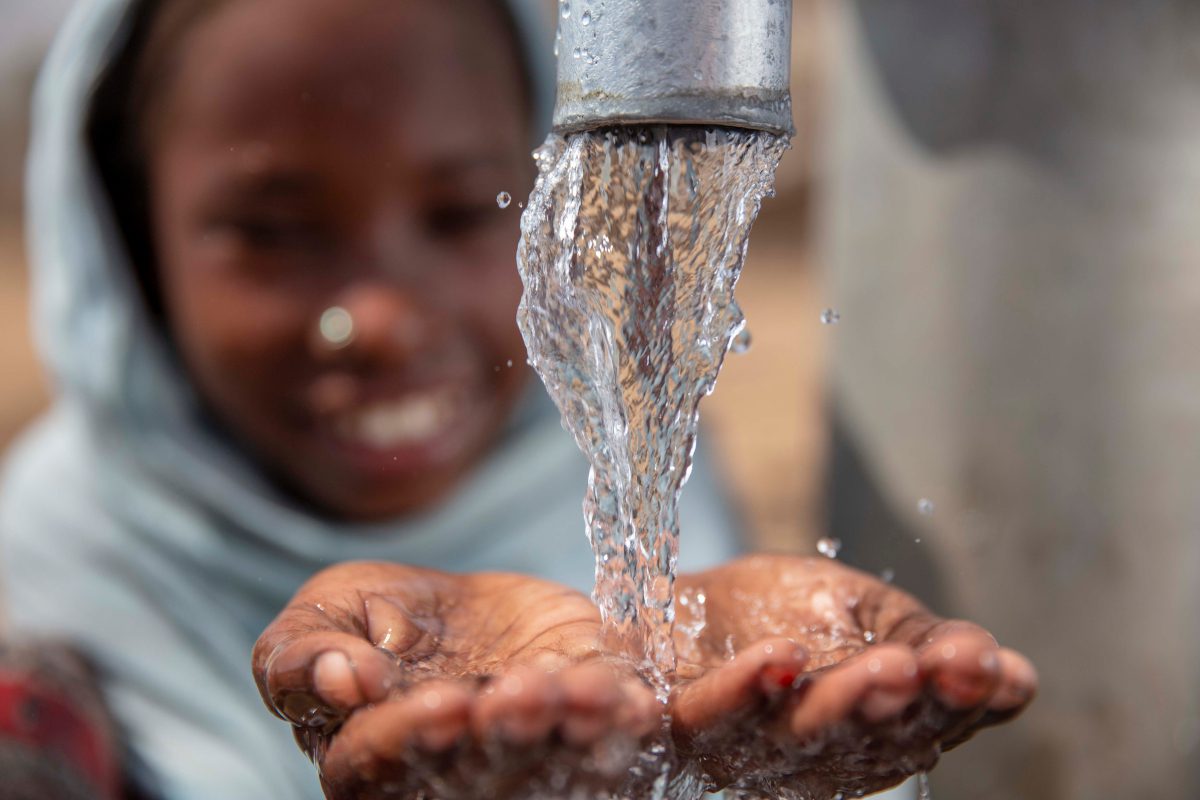
Groundwater presently provides half of the volume of water withdrawn for domestic use by the global population, including the drinking water for the vast majority of the rural population who do not get their water delivered to them via public or private supply systems, and around 25% of all water used for irrigation.
Globally, water use is projected to grow by roughly 1% per year over the next 30 years. Our overall dependence on groundwater is expected to rise as surface water availability becomes increasingly limited due to climate change.
“More and more water resources are being polluted, overexploited, and dried up by humans, sometimes with irreversible consequences. Making smarter use of the potential of still sparsely developed groundwater resources, and protecting them from pollution and overexploitation, is essential to meet the fundamental needs of an ever-increasing global population and to address the global climate and energy crises” says the Director-General of UNESCO, Audrey Azoulay.
“Improving the way we use and manage groundwater is an urgent priority if we are to achieve the Sustainable Development Goals (SDGs) by 2030. Decision-makers must begin to take full account of the vital ways in which groundwater can help ensure the resilience of human life and activities in a future where the climate is becoming increasingly unpredictable” adds Gilbert F. Houngbo, Chair of UN-Water and President of the International Fund for Agricultural Development (IFAD).
Social, economic and environmental benefits and opportunities
The quality of groundwater is generally good, which means it can be used safely and affordably, without requiring advanced levels of treatment. Groundwater is often the most cost-effectiveway of providing a secure supply of water to rural villages.
Certain regions, such as Saharan Africa and the Middle East for example, hold substantial quantities of non-renewable groundwater supplies that can be extracted in order to maintain water security. However, consideration for future generations and for the economic, financial and environmental aspects of storage depletion should not be overlooked.
In Sub-Saharan Africa, the opportunities offered by the vast aquifers remain largely underexploited. Only 3% of farmland is equipped for irrigation, and only 5% of that area uses groundwater, compared to 59% and 57% respectively in North America and South Asia.
As the report points out, this low use is not due to a lack of renewable groundwater (which is often abundant), but rather by a lack of investments in infrastructure, institutions, trained professionals and knowledge of the resource. The development of groundwater could act as a catalyst for economic growth by increasing the extent of irrigated areas and therefore improving agricultural yields and crop diversity.
In terms of climate change adaptation, the capacity of aquifer systems to store seasonal or episodic surface water surpluses can be exploited to improve year-round freshwater availability, as aquifers incur substantially lower evaporative losses than surface reservoirs. For example, including groundwater storage and abstraction as part of urban water supply planning would add security and flexibility in cases of seasonal variation.
Unlocking groundwater’s full potential – what needs to be done?
1. Collect data
The report raises the issue of the lack of groundwater data and emphasizes that groundwater monitoring is often a ‘neglected area’. To improve this, the acquisition of data and information, which is usually under the responsibility of national (and local) groundwater agencies, could be complemented by the private sector. Particularly, the oil, gas and mining industries already possess a great deal of data, information and knowledge on the composition of the deeper domains underground, including aquifers. As a matter of corporate social responsibility, private companies are highly encouraged to share these data and information with public sector professionals.
2. Strengthen environmental regulations
As groundwater pollution is practically irreversible, it must be avoided. Enforcement efforts and the prosecution of polluters, however, are often challenging due to groundwater’s invisible nature. Preventing groundwater contamination requires suitable land use and appropriate environmental regulations, especially across aquifer recharge areas. It is imperative that governments assume their role as resource custodians in view of the common-good aspects of groundwater to ensure that access to – and profit from – groundwater are distributed equitably and that the resource remains available for future generations.
3. Reinforce human, material and financial resources
In many countries, the general lack of groundwater professionals among the staff of institutions and local and national government, as well as insufficient mandates, financing and support of groundwater departments or agencies, hamper effective groundwater management. The commitment of governments to build, support and maintain institutional capacity related to groundwater is crucial.
The report is available here.