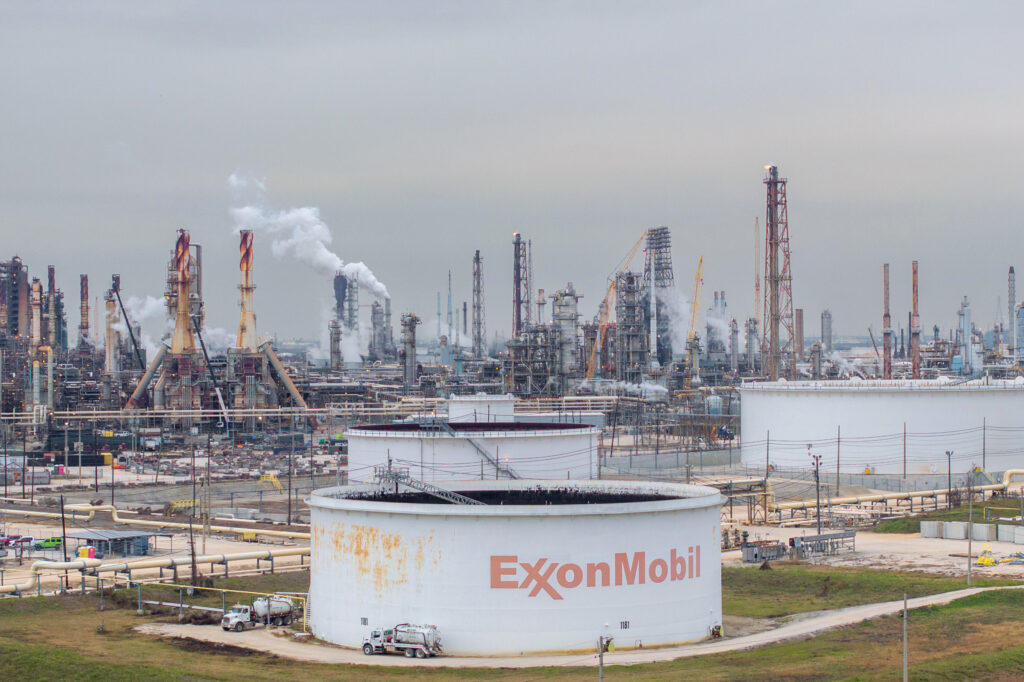


Carbon emissions generated by the world’s 180 largest fossil fuel and cement producers have played a substantial role in driving dangerous and oftentimes deadly extreme heat events around the world, according to new research.
A study published Wednesday in the journal Nature finds that these emissions from the so-called carbon majors contributed to about half of the increase in intensity of heat waves compared to the preindustrial era. They have also contributed to significant increases in the likelihood of extreme heat events, including some that would have been virtually impossible without climate change.
Led by researchers at the university ETH Zurich in Switzerland, the study examined the influence of climate change on over 200 heat waves around the globe from 2000 to 2023. It also looked at how the carbon majors contributed to these heat waves, finding that they played a significant role in their occurrence.
The latter analysis involves what is known as source attribution. In climate research, that means attributing global warming and its impacts to specific emissions sources. Researchers calculate the carbon emissions attributable to the carbon majors using data on company operations and sold products and associated emissions factors for carbon dioxide and methane. Those emissions figures are then used in climate models (comparing scenarios with and without observed warming) to analyze how the emitting companies contributed to increased warming.
Scientists are also able to pinpoint the influence of human-caused climate change on specific extreme weather events. This study combines those two approaches. It is one of the first to systematically analyze the impact that emissions from specific companies have had on multiple extreme weather events, in this case extreme heat, over a particular time period.
Researchers say their results are especially relevant for informing climate accountability initiatives such as litigation and that the study helps fill an evidentiary gap that may assist in establishing legal responsibility for climate harms.
“We can expect this research will be quite relevant in a legal context,” Sonia Seneviratne, head of the Institute for Atmospheric and Climate Science at ETH Zurich, told Inside Climate News.
The study employed peer-reviewed research methods that scientists use to examine the role that human-caused climate change played in amplifying individual extreme weather events, known as extreme event attribution. But rather than focus on a singular event, the researchers analyzed 213 heat waves reported in the international disaster database EM-DAT.
“That helps us gain a more robust perspective on this link between climate change and heat waves,” Yann Quilcaille, a postdoctoral researcher at ETH Zurich and study lead author, explained.
Using observed changes in global mean surface temperature, the researchers used statistical assessments and modeling to link global warming to increasing intensity and frequency of heat waves. Their results show that climate change has made the heat waves both hotter and much more likely to occur.
According to the study, “the median estimates for the changes in intensity range across events from +0.3 °C to +2.9 °C,” with the higher figure in that range applicable to the 2021 Pacific Northwest heat dome. In the years 2020 to 2023, heat wave intensity increased by over 2°C (median estimates) due to climate change. In terms of probability, climate change has made heat waves about 20 times more likely between 2000 and 2009, and 200 times more likely between 2010 and 2019, compared to the preindustrial era.

Researchers then extended the analysis to quantify the contributions of the carbon majors to these 213 heat waves. Collectively, these fossil fuel and cement producers are responsible for the majority of anthropogenic CO2 equivalent emissions from 1850 to 2023. Previous source attribution climate research has found that about half of the Earth’s surface warming and approximately one-third of the rise in sea levels can be traced to the emissions of the carbon majors.
The new study demonstrates that these emissions have also contributed to the increasing intensity and probability of heat waves.
“We already have observations for what is the temperature of the planet and how it evolves over time,” Quilcaille explained. “Then we assess what would be the difference if we were to remove emissions from individual carbon majors. That difference goes into the statistical model to deduce the change in probability and intensity, and thus the contribution of the carbon major, to the heat wave.”
Specifically, emissions from the carbon majors are responsible for about half of the roughly 1.7 degrees Celsius increase in intensity over the period 2010 to 2019 that can be attributed to climate change. The top 14 carbon majors contributed to about 28 percent of that increase, while the other 166 entities contributed to 22 percent of it. “These results show that the emissions of carbon majors contributed to about half of the increase in intensity of heat waves since preindustrial times, and that this contribution is rising,” the study states.
Carbon majors are also making heat waves more likely to occur, the research suggests. “Depending on the carbon major, their individual contribution is high enough to enable the occurrence of 16–53 heat waves that would have been virtually impossible in a preindustrial climate,” the study explains. Even the emissions from the smallest carbon major contributed to more than a dozen heat waves that would have been virtually impossible absent climate change.
“While the 14 largest carbon majors have contributed the most to the occurrence of heat waves, the contributions of smaller players also play a significant role,” Quilcaille said.
This story is funded by readers like you.
Our nonprofit newsroom provides award-winning climate coverage free of charge and advertising. We rely on donations from readers like you to keep going. Please donate now to support our work.
Donate Now
The results are broadly consistent with another study published earlier this year in Nature, which went even further in quantifying economic damages resulting from intensifying heat waves that are linked to the emissions of the carbon majors. That study suggested that 111 carbon majors are responsible for $28 trillion in global economic losses stemming from extreme heat over the period 1991 to 2020.
“We show that emissions traceable to carbon majors have increased heat wave intensity globally, causing quantifiable income losses for people in subnational regions around the world,” the study, authored by researchers Christopher Callahan and Justin Mankin, states.
Mankin said the results of the new study by Quilcaille and colleagues are not surprising. “If you have made contributions to emissions, you have made contributions to extreme heat,” he told Inside Climate News. “But empirically showing that, as we did and now these authors have done, is crucial.”
Callahan agreed that the new study adds value as it, along with other studies, can strengthen the evidence base that informs discussions around corporate climate liability.
“It is only over the last few years that this emitter-specific attribution, or ‘source attribution’, has been performed, and the new paper is a very important contribution to that effort,” Callahan said. “Together, these research efforts are building a credible and consensus-based body of work that provides scientific support for climate accountability.”
Litigation is already underway in the United States attempting to hold carbon majors such as ExxonMobil, Chevron, and Shell liable for climate damages and alleged deception. Two of the lawsuits focus specifically on harms from the 2021 Pacific Northwest heat dome, which resulted in hundreds of deaths and billions of dollars in damage.
In 2023, Oregon’s Multnomah County brought a lawsuit against major fossil fuel companies as well as several of their trade associations and the consulting firm McKinsey & Company, seeking to recover over $50 billion in damage and adaptation costs. And on May 29 this year, the family of a woman in Washington State who died during the heat dome filed a first-of-its-kind wrongful death case against ExxonMobil and several other large oil companies.
Quilcaille said it is clear that climate change, and the emissions of large carbon emitters, played a substantial role in this extreme heat event. “Climate change had a very strong influence on the Pacific Northwest heat wave,” he told Inside Climate News. “Not all carbon majors made that heat wave possible. But the big ones, yes. And each one of them substantially contributed to its probability and intensity.”
Beyond the relevance of this research for legal proceedings, Quilcaille said that it could also have broader significance in informing policies around climate and energy. “This work is just one more reminder for decisionmakers that we need to phase out fossil fuels as soon as possible,” he said.
About This Story
Perhaps you noticed: This story, like all the news we publish, is free to read. That’s because Inside Climate News is a 501c3 nonprofit organization. We do not charge a subscription fee, lock our news behind a paywall, or clutter our website with ads. We make our news on climate and the environment freely available to you and anyone who wants it.
That’s not all. We also share our news for free with scores of other media organizations around the country. Many of them can’t afford to do environmental journalism of their own. We’ve built bureaus from coast to coast to report local stories, collaborate with local newsrooms and co-publish articles so that this vital work is shared as widely as possible.
Two of us launched ICN in 2007. Six years later we earned a Pulitzer Prize for National Reporting, and now we run the oldest and largest dedicated climate newsroom in the nation. We tell the story in all its complexity. We hold polluters accountable. We expose environmental injustice. We debunk misinformation. We scrutinize solutions and inspire action.
Donations from readers like you fund every aspect of what we do. If you don’t already, will you support our ongoing work, our reporting on the biggest crisis facing our planet, and help us reach even more readers in more places?
Please take a moment to make a tax-deductible donation. Every one of them makes a difference.
Thank you,