

Monday, December 15, 2025
  • Privacy Policy
  • Contact
  • Terms & Conditions
Environmental Magazine
Advertisement
  • Home
  • News
  • Climate Change
  • Energy
  • Recycling
  • Air
  • Fossil Fuels
  • Water
No Result
View All Result
Environmental Magazine
  • Home
  • News
  • Climate Change
  • Energy
  • Recycling
  • Air
  • Fossil Fuels
  • Water
No Result
View All Result
Environmental Magazine
No Result
View All Result
Home Water

Using bacteria to create valuable materials from sludge: New funding announced in the Netherlands

December 15, 2025
in Water
A A

Half a million euros has been donated to assist a research project at the University of Delft (TU Delft), exploring how microbes can be harnessed to break down PFAS, pesticides and microplastics in heavily contaminated sludge, and recover valuable reusable resources.

The Haskoning Innovation & Education Fund announced the funding on 9 December for the multi-year study, which sits at the intersection of hydraulic engineering, water technology, and biotechnology.

This first project, ‘Sludge to Resource’, focuses on finding bacteria that occur in heavily polluted anaerobic environments, such as dredging depots. The research will explore whether these microorganisms can break down harmful substances or recover reusable raw materials, such as metals or biopolymers. This requires discovering unknown bacterial species and understanding their ‘superpowers’. Think of bacteria that can degrade PFAS, pesticides, or microplastics—a completely natural cleaning process.

Mark van Loosdrecht, Professor of Environmental Biotechnology and Water Treatment at TU Delft: “Of the estimated one billion species of microbes (microscopic organisms such as bacteria, fungi, and algae) on Earth, 99% have never been studied, which means there are untapped sources of unknown microorganisms and metabolic processes. The challenge is to find them and make them usable!”

In the Netherlands, the most contaminated sludge is stored in sludge depots. The Slufter on the Maasvlakte is a well-known example of a location where this sludge is kept. We expect that such sludge depots contain special microorganisms capable of breaking down persistent pollutants such as PFAS, PCBs, pesticides, and pharmaceutical residues.

The group summarises the important steps to be taken as follows:

  • Searching for the right bacteria: researchers will take samples of contaminated sludge and analyse which bacteria live there. Using modern techniques such as DNA and protein analysis, they will identify which special properties are present in some bacteria.
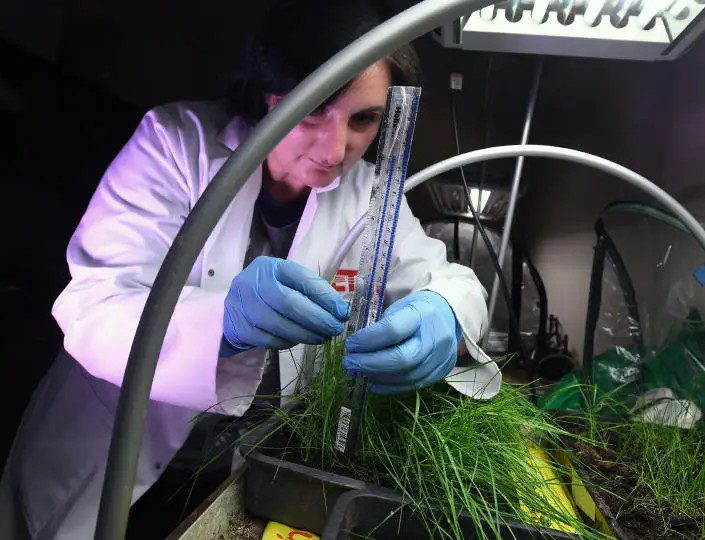
  • Testing in the lab: promising bacteria will then be cultivated and further studied in the laboratory. Researchers will determine the conditions under which they can grow optimally and break down pollutants effectively.
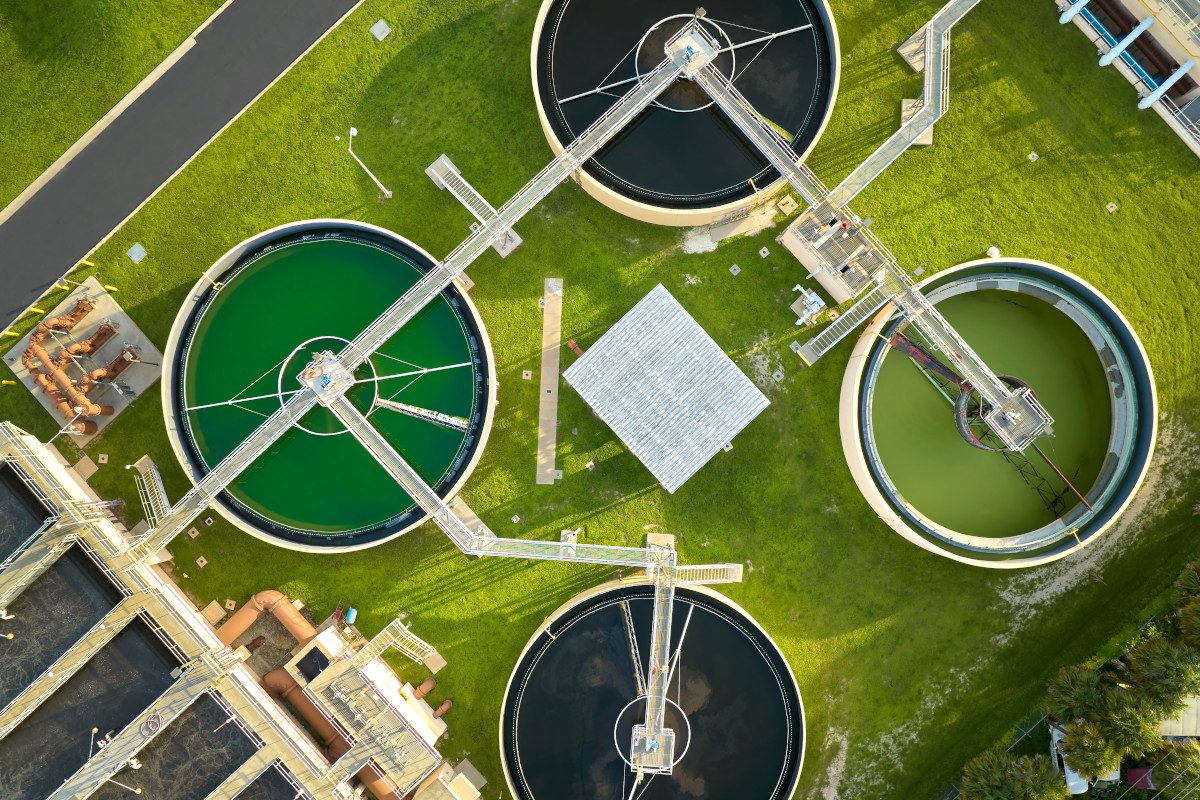
  • Scaling up: ultimately, the goal is to use these bacteria in larger installations (bioreactors)? so they can clean sludge or wastewater on a large scale and recover valuable raw materials. In this way, waste becomes a source of new resources, fitting perfectly within the circular economy.

Heavily contaminated sludge poses a risk to humans and the environment; think of pollutants such as PFAS, PCBs, PAHs, pesticides, or microplastics. “How great would it be if bacteria could convert these into natural, non-harmful substances?”

The TU Delft project ‘Sludge to Resource’ aims to turn this problem into an opportunity, say the researchers. By combining knowledge and technologies from different disciplines, new possibilities are created for material reuse and natural solutions.

ShareTweetSharePinSendShare

Related Articles

Dundee-based greywater recycling startup secures £350k
Water

Dundee-based greywater recycling startup secures £350k

December 15, 2025
Study shows promise for acid mine drainage recycling
Water

Study shows promise for acid mine drainage recycling

December 11, 2025
Rainwater-only irrigation system launches at premiership club, with accompanying awareness campaign
Water

Rainwater-only irrigation system launches at premiership club, with accompanying awareness campaign

December 7, 2025
New predictive tech tackles oxygenation of fisheries
Water

New predictive tech tackles oxygenation of fisheries

December 2, 2025
Technology firm signs asset monitoring deal with Southern Water
Water

Technology firm signs asset monitoring deal with Southern Water

December 2, 2025
Study finds higher levels of antimicrobial resistance in surface water during winter
Water

Study finds higher levels of antimicrobial resistance in surface water during winter

November 20, 2025

Leave a Reply Cancel reply

Your email address will not be published. Required fields are marked *

Recommended

EVs and ,000 Air Tanks: Iowa First Responders Fear the Dangers—and Costs—of CO2 Pipelines

EVs and $9,000 Air Tanks: Iowa First Responders Fear the Dangers—and Costs—of CO2 Pipelines

December 30, 2023
Consortium to assess the future of packaging waste sorting

Consortium to assess the future of packaging waste sorting

March 31, 2022

Don't miss it

Using bacteria to create valuable materials from sludge: New funding announced in the Netherlands
Water

Using bacteria to create valuable materials from sludge: New funding announced in the Netherlands

December 15, 2025
Pennsylvania Will Study a Plan to Keep New Natural Gas Pads Farther From Homes, Schools and Hospitals
Fossil Fuels

Pennsylvania Will Study a Plan to Keep New Natural Gas Pads Farther From Homes, Schools and Hospitals

December 15, 2025
One Big, Shining Beacon for Climate Hope
Energy

One Big, Shining Beacon for Climate Hope

December 15, 2025
Virginia Regulators Weigh Expanded Use of Data Center’s Polluting Generators 
Fossil Fuels

Virginia Regulators Weigh Expanded Use of Data Center’s Polluting Generators 

December 15, 2025
New advice booklet for councils offers “practical, science-led guide to greener, healthier and fairer towns”
Air

New advice booklet for councils offers “practical, science-led guide to greener, healthier and fairer towns”

December 15, 2025
Wyoming Ranchers Hoping Solar Can Lower Costs Say Utilities and the State Stand in Their Way
Energy

Wyoming Ranchers Hoping Solar Can Lower Costs Say Utilities and the State Stand in Their Way

December 14, 2025
Environmental Magazine

Environmental Magazine, Latest News, Opinions, Analysis Environmental Magazine. Follow us for more news about Enviroment and climate change from all around the world.

Learn more

Sections

  • Activism
  • Air
  • Climate Change
  • Energy
  • Fossil Fuels
  • News
  • Uncategorized
  • Water

Topics

Activism Air Climate Change Energy Fossil Fuels News Uncategorized Water

Recent News

Dundee-based greywater recycling startup secures £350k

Dundee-based greywater recycling startup secures £350k

December 15, 2025
Using bacteria to create valuable materials from sludge: New funding announced in the Netherlands

Using bacteria to create valuable materials from sludge: New funding announced in the Netherlands

December 15, 2025

© 2023 Environmental Magazine. All rights reserved.

No Result
View All Result
  • Home
  • News
  • Climate Change
  • Energy
  • Recycling
  • Air
  • Fossil Fuels
  • Water

© 2023 Environmental Magazine. All rights reserved.

This website uses cookies. By continuing to use this website you are giving consent to cookies being used. Visit our Privacy and Cookie Policy.