

Sunday, February 8, 2026
  • Privacy Policy
  • Contact
  • Terms & Conditions
Environmental Magazine
Advertisement
  • Home
  • News
  • Climate Change
  • Energy
  • Recycling
  • Air
  • Fossil Fuels
  • Water
No Result
View All Result
Environmental Magazine
  • Home
  • News
  • Climate Change
  • Energy
  • Recycling
  • Air
  • Fossil Fuels
  • Water
No Result
View All Result
Environmental Magazine
No Result
View All Result
Home Water

UK project to accelerate technology of biopolymers extracted from sewage sludge

September 25, 2024
in Water
A A

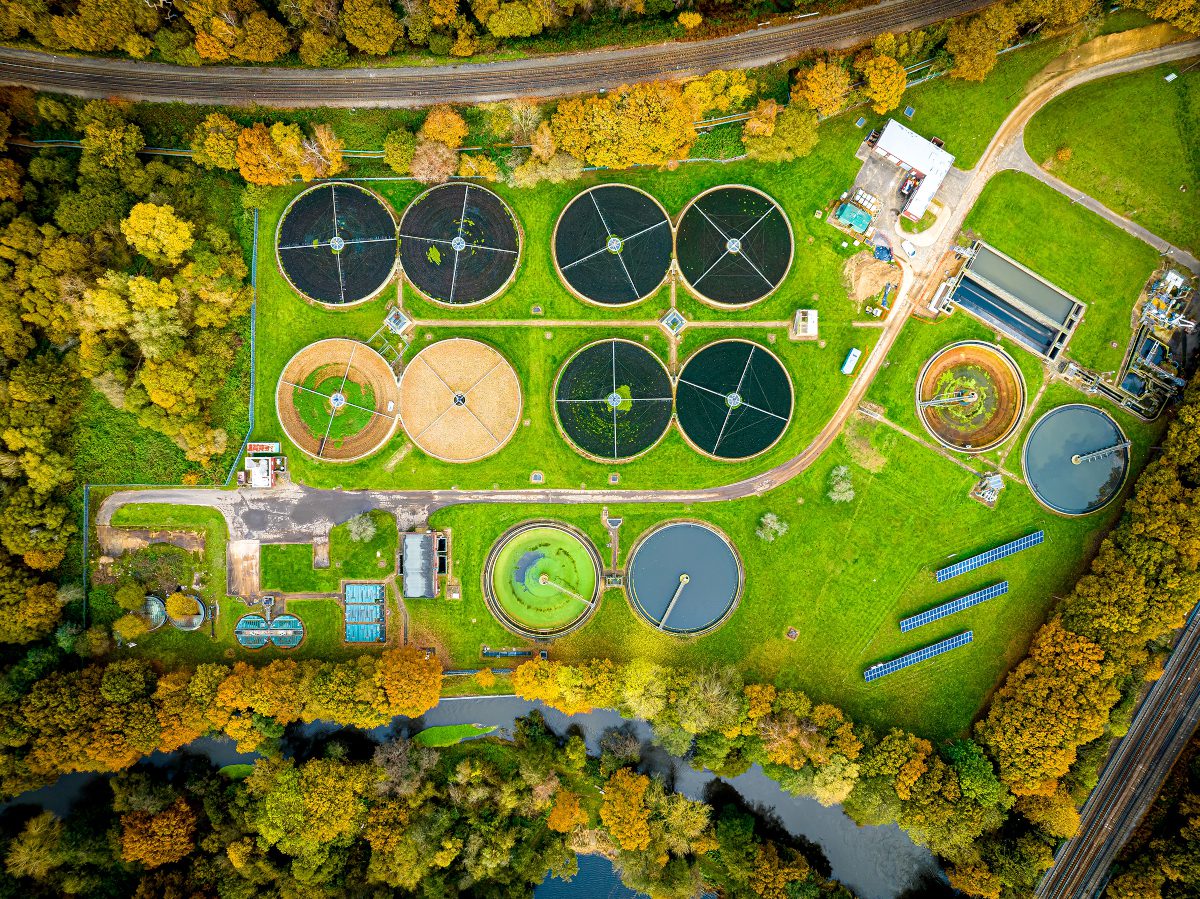
Engineering firm Royal HaskoningDHV is to implement the UK’s first-ever Kaumera pilot plant to extract biopolymers from sewage sludge, in Blackburn, Lancashire.

It is part of a seemingly groundbreaking circular economy-inspired project funded by Ofwat’s Innovation Fund. Under the leadership of United Utilities, UK water companies, partners and potential customers will join forces to assess the technology to recover biopolymers and their viability for use in a host of commercial applications from fertilisers to curing concrete. If successful, the pilot project could “radically change the economics of wastewater treatment and enable water companies to generate revenue streams from the extraction of natural bio-chemicals”, said a statement from the group.

A natural source of biopolymers
“Biogas is already extracted from sewage sludge but adding the recovery of useful biopolymers moves the industry higher up the value chain – it’s potentially game-changing,” said Paul Lavender, UK Water Utilities Director at Royal HaskoningDHV. “The global liquid polymer market is worth $1.27 trillion annually and is highly fossil fuel dependent, yet the nation’s water treatment plants offer us a natural source of biopolymers. This new pilot project won’t just demonstrate the extraction technology but will develop use cases by involving the whole supply chain including academia, commercial product developers, and blue-chip end-users.”

Lisa Mansell, Chief Engineer, Innovation, at United Utilities explains: “The water industry strives to minimise its environmental impact and increase efficiency. This project will explore the recovery of biopolymers such as those from cellulose in toilet paper to naturally derived biopolymers and will be a great example of a circular economy. It will also test the viability of generating new revenue streams which could help us drive down our operating costs and ultimately benefit customers. We are very excited about exploring the possibilities of circular wastewater treatment technologies and applications for a more sustainable future.”

Partners in the project include United Utilities, Severn Trent Water, South West Water, Royal HaskoningDHV, CirTec Cellvation, AquaMinerals, Yara, Glasgow Caledonian University, and Cranfield University.

Blackburn Wastewater Treatment Works already uses Royal HaskoningDHV’s Nereda® aerobic granular sludge technology which uses 50% less electricity than conventional aerobic treatment processes to purify wastewater. The extraction technology, developed with research partner Delft University of Technology (TU Delft), has yielded impressive results in plants in the Netherlands and Portugal. Installation of the extraction plant will take place later this year. The project will run until March 2027.

By adding the Kaumera extraction technology, the remaining sludge, as well as sludges from other plants, will be harvested for biopolymers resulting in a base product of Kaumera gel. This base product will be assessed in direct water company uses (i.e. flocculants for wastewater treatment) and for further processing to develop future market opportunities.

Future opportunities
Kaumera can retain water but also repel it. This opens up a host of industrial, agricultural, and water-related applications. For example, its water-retaining properties could see it used as a bio-stimulant in hot climates where water needs to be released slowly, whereas its water-repellent properties make Kaumera an excellent coating for concrete floors. It could also be used as a composite building material and has flame-retardant properties which could be added to many products including paint.

The project will draw on the experience of academia, product developers, and potential customers to explore commercial applications, supply chains, economies of scale, and regulatory issues concerning recovered materials. If successful, it could change the wastewater treatment industry forever, making it an income-generating business.

ShareTweetSharePinSendShare

Related Articles

Comment: Why predictive intelligence is non-negotiable for UK water
Water

Comment: Why predictive intelligence is non-negotiable for UK water

January 28, 2026
SEPA asks people in Scotland to help inform future flooding plans
Water

SEPA asks people in Scotland to help inform future flooding plans

January 26, 2026
Environmental monitoring expert listed in Sunday Times 2026 top 100 tech companies
Water

Environmental monitoring expert listed in Sunday Times 2026 top 100 tech companies

January 26, 2026
Time for a rethink on antibiotic-resistant bacteria?
Water

Time for a rethink on antibiotic-resistant bacteria?

January 22, 2026
Water stewardship needs “same level of urgency” as climate and biodiversity, says ISEP report
Water

Water stewardship needs “same level of urgency” as climate and biodiversity, says ISEP report

January 22, 2026
Water Discovery Challenge returns to bring more fresh thinking innovators into the water sector
Water

Water Discovery Challenge returns to bring more fresh thinking innovators into the water sector

January 20, 2026

Leave a Reply Cancel reply

Your email address will not be published. Required fields are marked *

Recommended

As the Whitmer Administration Enters Its Final Year, Environmental Advocates Lament Wasted Opportunities

As the Whitmer Administration Enters Its Final Year, Environmental Advocates Lament Wasted Opportunities

December 22, 2025
Finer particles emerge from the shadows: Can we really measure black carbon?

Finer particles emerge from the shadows: Can we really measure black carbon?

July 1, 2024

Don't miss it

‘A Disaster Waiting to Happen’: How the Fracking Boom Put an Oil Field in the Guadalupe River Floodplain
Fossil Fuels

‘A Disaster Waiting to Happen’: How the Fracking Boom Put an Oil Field in the Guadalupe River Floodplain

February 8, 2026
The State of Environmental Justice Under Trump 2.0
Activism

The State of Environmental Justice Under Trump 2.0

February 7, 2026
A Groundbreaking Geothermal Heating and Cooling Network Saves This Colorado College Money and Water
Energy

A Groundbreaking Geothermal Heating and Cooling Network Saves This Colorado College Money and Water

February 7, 2026
Georgia Power Gas Expansion Would Drive Significant Climate-Damaging Pollution
Fossil Fuels

Georgia Power Gas Expansion Would Drive Significant Climate-Damaging Pollution

February 7, 2026
Pennsylvania Must Act to Limit Greenhouse Gases, Lawyers Argue
Energy

Pennsylvania Must Act to Limit Greenhouse Gases, Lawyers Argue

February 6, 2026
UK PFAS Plan leaves critics cold
News

UK PFAS Plan leaves critics cold

February 6, 2026
Environmental Magazine

Environmental Magazine, Latest News, Opinions, Analysis Environmental Magazine. Follow us for more news about Enviroment and climate change from all around the world.

Learn more

Sections

  • Activism
  • Air
  • Climate Change
  • Energy
  • Fossil Fuels
  • News
  • Uncategorized
  • Water

Topics

Activism Air Climate Change Energy Fossil Fuels News Uncategorized Water

Recent News

‘A Disaster Waiting to Happen’: How the Fracking Boom Put an Oil Field in the Guadalupe River Floodplain

‘A Disaster Waiting to Happen’: How the Fracking Boom Put an Oil Field in the Guadalupe River Floodplain

February 8, 2026
The State of Environmental Justice Under Trump 2.0

The State of Environmental Justice Under Trump 2.0

February 7, 2026

© 2023 Environmental Magazine. All rights reserved.

No Result
View All Result
  • Home
  • News
  • Climate Change
  • Energy
  • Recycling
  • Air
  • Fossil Fuels
  • Water

© 2023 Environmental Magazine. All rights reserved.

This website uses cookies. By continuing to use this website you are giving consent to cookies being used. Visit our Privacy and Cookie Policy.