

Fracking’s Forever Problem: Sixth in a series about the gas industry’s radioactive waste.
How much toxic oil and gas waste is produced in Pennsylvania every year, and where does it end up? Despite state efforts to track it, there’s no way to know for sure.
For more than a decade, regulators have been aware of significant problems with their tracking system for the large volumes of waste created by Pennsylvania’s booming fracking industry. Eleven years ago, reporters at the Pittsburgh Post-Gazette found that nine Pennsylvania landfills had reported accepting tens of thousands of tons of oil and gas waste more than industry operators said were being sent there. Two years ago, a University of Pittsburgh and Duquesne University study found the same unexplained gaps, this time totaling more than 800,000 tons.
The Pennsylvania Department of Environmental Protection promised to investigate the discrepancies and look into updating its reporting standards for companies.
But an Inside Climate News analysis of state records from 2017 to 2024 found that the problem persists. The analysis revealed discrepancies totaling almost 1.4 million tons. Some landfills in the southwestern part of the state report receiving far more oil and gas waste than Pennsylvania operators say was sent.
Among the handful of landfills required to tell the state how much oil and gas waste they accept, the collective total reported from 2017 to 2024 in their annual reports was 3.1 million tons. That’s around 80 percent more than the 1.7 million tons Pennsylvania oil and gas operators said they sent to those locations.
One theory is that some of the discrepancies, especially at landfills in the southwestern corner of the state, could be caused by large volumes of waste coming from Ohio and West Virginia and being disposed of in those landfills. That would not be included in reports from oil and gas operators in Pennsylvania.
Another possibility is that Pennsylvania operators are underreporting the amount of waste they are sending to landfills, just as was found in the Post-Gazette’s investigation in 2014 and the universities’ in 2023.

The state’s outdated, disconnected and largely unaudited systems mean that no one—including DEP—knows how much oil and gas waste there is or where all the waste is going, said David Hess, who served as the agency’s secretary from 2001 to 2003 and has closely monitored environmental news in Pennsylvania since then.
Without accurate tracking, he said, it’s far more difficult to enforce regulations around spills, leaks, transport and dumping on roads or in public waterways. Contaminants in this waste can include radioactive material, heavy metals and carcinogenic chemicals.
“It could be dumped right next to somebody’s house and they would not even know,” Hess said. “It is very important to track where this goes.”
He added: “If you don’t actually do the audits and find out where this stuff is actually going, if for no other reason than to keep the operators honest, it becomes very difficult to say with a straight face that you’re really effectively regulating this stuff. Because you just don’t know.”
For months, Inside Climate News has been asking DEP to clarify how it tracks oil and gas waste. Although a spokesperson, Neil Shader, confirmed that the agency does review landfills’ annual operations reports and audits landfills’ oil and gas waste numbers “as needed,” DEP did not respond to questions about the state’s different systems for tracking this waste or the large volume discrepancies in the records. Shader said that the agency does not regularly audit landfills’ records unless there is an investigation or enforcement action underway.
Patrick Henderson, a vice president for the fracking industry group the Marcellus Shale Coalition, said in a statement that “existing state and federal regulatory standards, combined with industry-led safety practices, have proven to be protective of public health and the environment.”
“Our members remain committed to operating safely, transparently, and responsibly,” he said.
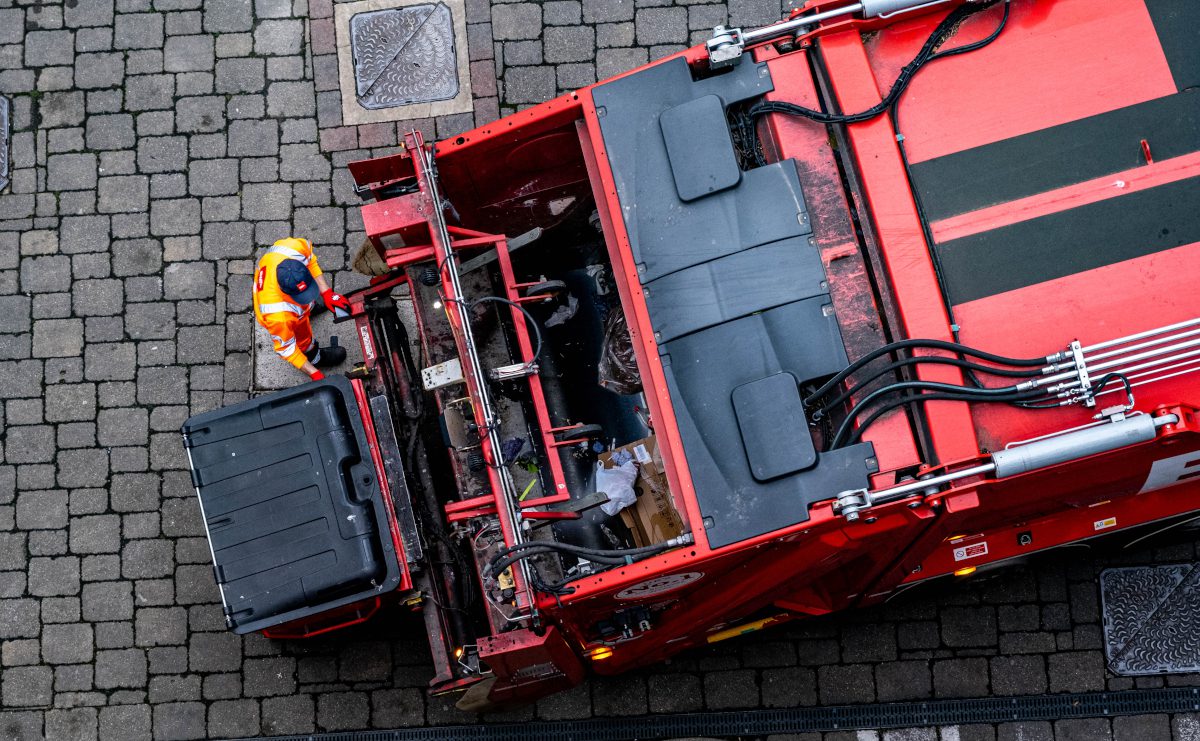
As fracking in Pennsylvania enters its third decade, the volume of waste in the state’s landfills keeps getting bigger. Operators reported producing almost 8.8 million tons of solid waste between 2017 and 2024 and sending about 6.3 million tons of that to landfills in the state.
All told, the operators say they’re producing a little over a million tons a year of solid oil and gas waste. For comparison, residents and businesses in all of Allegheny County produce about 900,000 tons of waste annually.
Most of Pennsylvania’s oil and gas waste goes to landfills within the state, the weight equivalent of dumping two Empire State Buildings every year.
Inside Climate News found the largest discrepancies at Westmoreland Sanitary Landfill, Imperial Landfill and Arden Landfill in the southwestern corner of the state. Together, these three landfills accounted for about 98 percent of the almost 1.4 million-ton total discrepancies. They are close to the borders with Ohio and West Virginia, suggesting that waste from those two states might account for much of the difference.
There were also some improbable outliers in the reports filed by oil and gas operators. Notably, for three consecutive months in 2024, a single well in Greene County operated by EQT Corp. reported sending exactly 60,876.94 tons of waste to the Arden Landfill—each almost four times larger than any other monthly consignment of waste from a single well to a single landfill.
After Inside Climate News asked about these numbers, a spokesperson for EQT, Amy Rogers, confirmed that these reports were clerical errors. She said the company immediately reached out to DEP to correct the entries. Our analysis reflects this corrected data. But in the absence of thorough auditing by the state, other errors may still be lurking.
“They’re at the mercy of the data that is given to them by the regulated community,” said John Quigley, who served as secretary of the Pennsylvania DEP from 2015 to 2016 and secretary of the Pennsylvania Department of Conservation and Natural Resources from 2009 to 2011. “The simple fact of the matter is that the problem has been long-standing and it still has not been addressed.”
From water consumption to waste disposal to radioactivity, he added, “I think it is fair to say that in the early days of the play, the state completely underestimated the potential impacts [of fracking]. The state started behind the eight ball, put itself further behind and hasn’t been able to catch up.”
DEP underestimated how much waste the state would be dealing with as natural gas production and well size both increased. “Originally a lateral, horizontal well was maybe a mile. Well, now it’s several miles. The consumption and the volumes are just multiplied almost exponentially,” Quigley said. “Nobody was prepared for it.”
Both Quigley and Hess say the root of the problem is a serious shortage of funding and people at DEP. Even as more and more wells have been drilled across Pennsylvania, the number of state employees tasked with overseeing the industry has fallen. “With respect to the oil and gas program, they are very understaffed,” Hess said.
In March, state Rep. Greg Vitali from Delaware County wrote in an op-ed that the oil and gas program’s staff had dropped from 226 to 190 positions between 2015 and 2025. Vitali argued DEP’s staffing issues were so serious that the agency “can no longer adequately enforce Pennsylvania’s environmental laws and regulations.”
At a hearing held by the Senate Democratic Policy Committee on oil and gas waste in 2021, DEP said it does not regularly cross-check the numbers it receives from operators and landfills, citing a lack of funding and staff.
Despite the potential dangers of oil and gas waste, it is not considered “hazardous” legally, the result of industry lobbying. The federal regulations governing its disposal are less strict as a result.
That gap leaves regulation largely up to the states and has led to a muddle of different rules for operators and landfills in Pennsylvania, Ohio and West Virginia.
“There are no national regulations. There are only state regulations, and they vary a lot,” said Sheldon Landsberger, a professor in nuclear and radiation engineering at the University of Texas at Austin. “There is no comprehensive plan in the United States. No administration has wanted to touch oil and gas.”
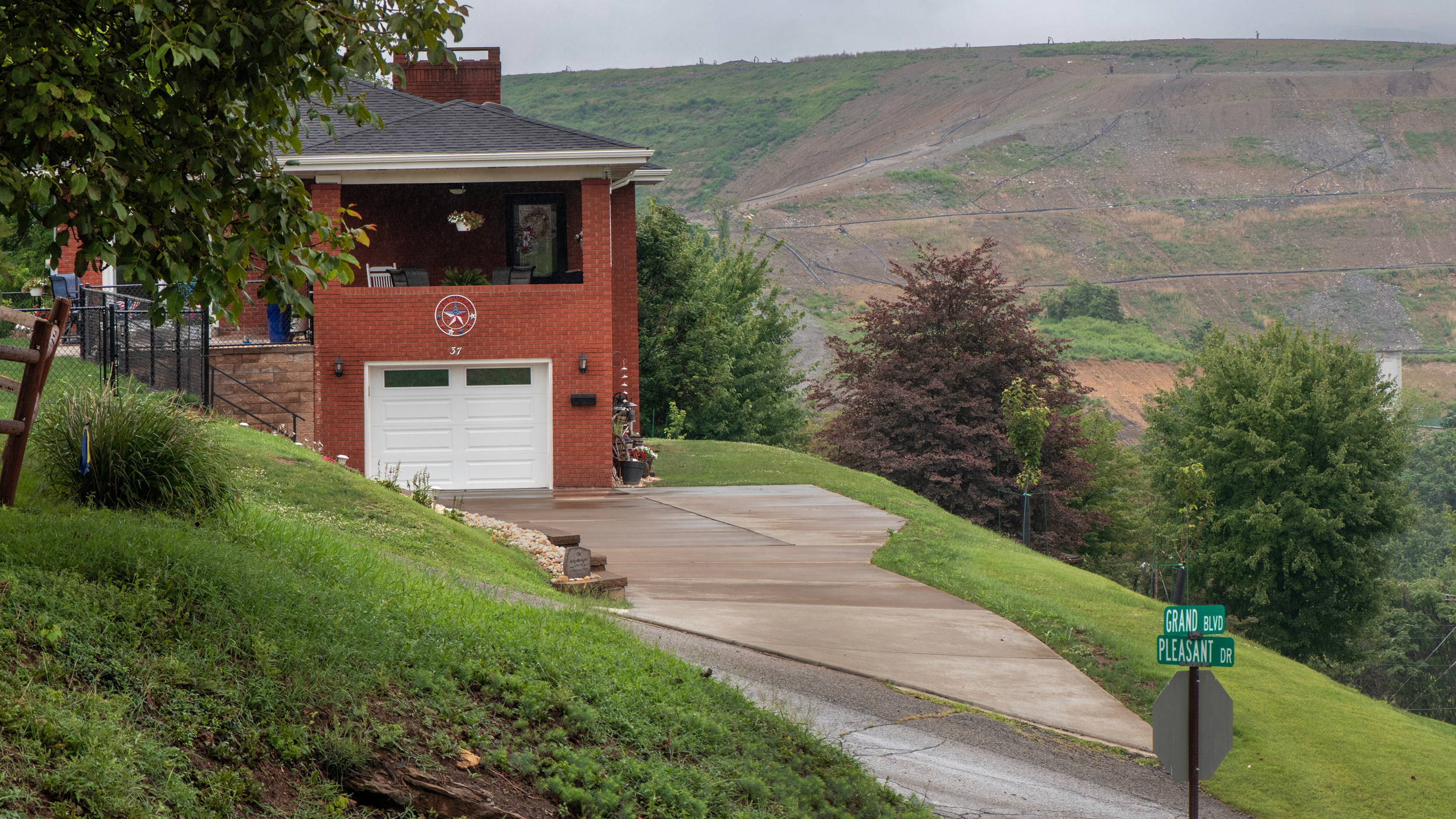
The lack of a standardized set of regulations makes it harder to track waste and wastewater across state lines. Pennsylvania requires operators to report when their waste leaves the state, but DEP did not answer questions about whether it gathers any data on what comes in. Ohio doesn’t track incoming oil and gas waste to landfills, and the Ohio Environmental Protection Agency confirmed that it doesn’t track waste that is leaving wells. West Virginia did not respond to any questions about its tracking.
If the reporting discrepancies in Pennsylvania “is indeed waste being generated from out of state, then the agency doesn’t have the personnel needed to track it down,” Quigley said. “There’s no checking. There’s no validation.”
Losing Track of the Waste
The mismatch between operators’ and landfills’ records in Pennsylvania is only one of many challenges facing anyone trying to trace the fate of the state’s oil and gas waste.
Data collection, organization and storage are spread across multiple offices at DEP, with varying time periods and requirements for reporting.
Oil and gas companies in Pennsylvania report monthly on the fracking waste they produce and where it goes, and the information is stored in an online database overseen by the Office of Oil and Gas Management.
This story is funded by readers like you.
Our nonprofit newsroom provides award-winning climate coverage free of charge and advertising. We rely on donations from readers like you to keep going. Please donate now to support our work.
Donate Now
The volume of waste that landfills accept is reported in a separate annual form sent to the Bureau of Waste Management, sometimes specifying how much came from oil and gas, but often not. Landfills send radioactivity reports about the waste they accept to the Bureau of Radiation Protection.
Most Pennsylvania landfills, meanwhile, aren’t required to disclose in their annual operations reports the amount of oil and gas waste they accept, so a comparison with operators’ records isn’t possible for those sites.
“It’s definitely a mess,” said Matt Kelso, manager of data and technology at the nonprofit FracTracker, where he compiles and analyzes data from the oil and gas industry. “There’s so much of it that it’s kind of overwhelming, but it’s hard to know for sure whether that’s all of it, and keeping track of it all is just a logistical mess.”
Some DEP oil and gas waste reports show treatment facilities as the destination, but those facilities produce their own waste that then must go somewhere. “We kind of lose track of it,” Kelso said. “We don’t really know what happens to it at the end.”
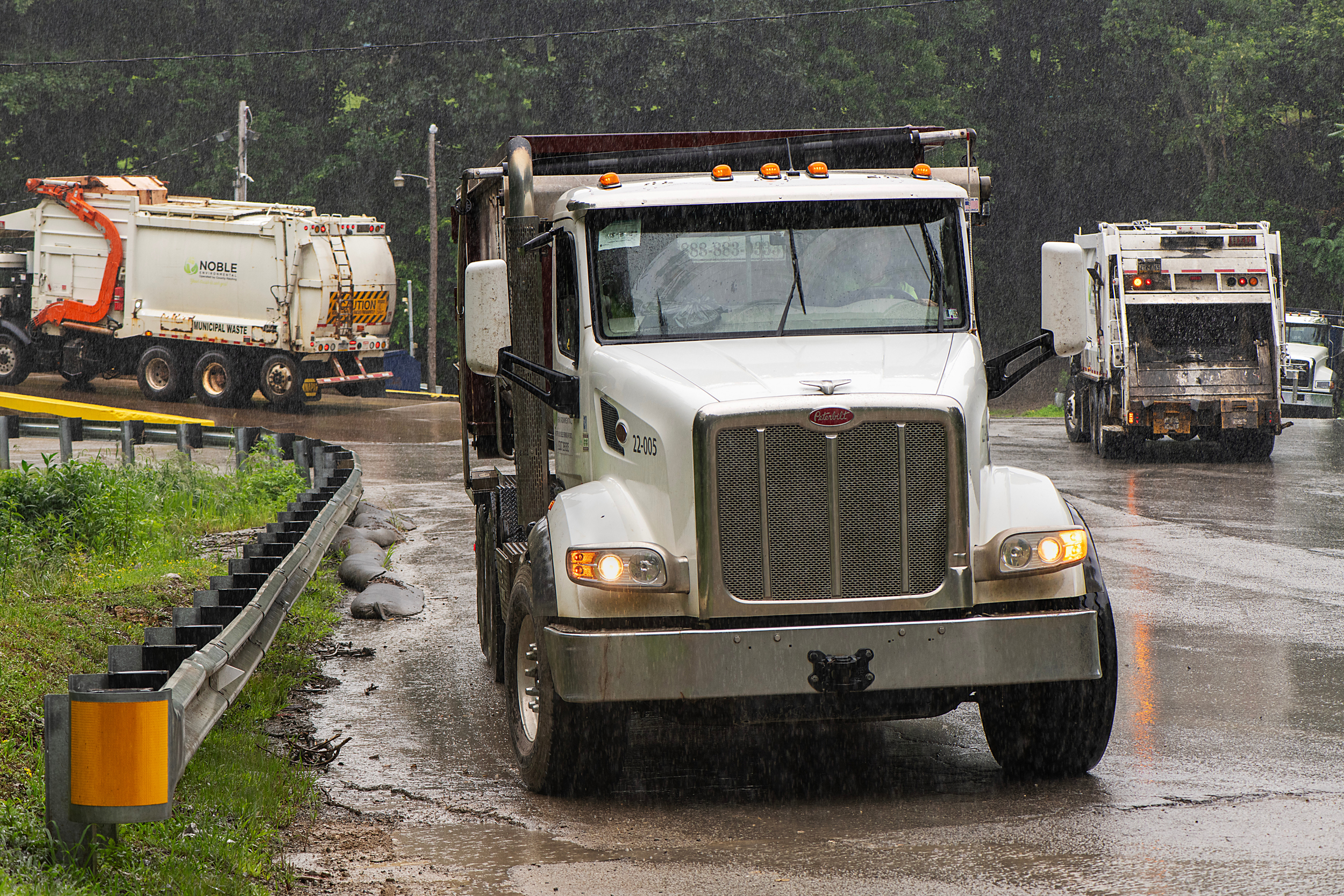
The landfills’ tainted leachate—the liquid mixture that is created when rainwater flows through the waste—is another worry. “That’s one of the holes in tracking waste in Pennsylvania,” Kelso said. Landfills submit quarterly reports to DEP showing the average monthly flow of leachate and chemical testing. DEP did not respond to questions about how leachate is tracked if it is not discharged on site at the landfill.
The University of Pittsburgh and Duquesne’s 2023 study also looked at radium in sediment downstream of facilities that treated leachate from landfills accepting oil and gas waste. They found elevated concentrations of radium at a number of these sites.
In June 2024, Hess stood on a road in northwestern Pennsylvania and watched a deer licking the pavement. It was summer, so any road salt put down for ice would be long gone. Someone, he thought, had likely dumped oil and gas wastewater, which is usually very salty, on the road.
The image has stayed with him because of all that it implied: that wastewater was still being dumped on rural roads, despite statewide limitations, and wildlife was ingesting the potentially toxic residue. In Pennsylvania, deer hunting is a popular pastime and many people eat or donate the venison. To Hess, what he saw in Warren County suggests what can happen when DEP can’t stay on top of its responsibilities.
The longer the state waits to improve its oversight of oil and gas waste, the more difficult the issue will be to fix, he said. “More information comes in in a way that you can’t correlate it with anything else. That pile gets bigger and it becomes even more of a mess to try to unravel.”
But then, he said, that’s been the story of DEP since the earliest days of the fracking boom. “The industry is getting much bigger,” he said, “and they are falling more and more behind.”
About This Story
Perhaps you noticed: This story, like all the news we publish, is free to read. That’s because Inside Climate News is a 501c3 nonprofit organization. We do not charge a subscription fee, lock our news behind a paywall, or clutter our website with ads. We make our news on climate and the environment freely available to you and anyone who wants it.
That’s not all. We also share our news for free with scores of other media organizations around the country. Many of them can’t afford to do environmental journalism of their own. We’ve built bureaus from coast to coast to report local stories, collaborate with local newsrooms and co-publish articles so that this vital work is shared as widely as possible.
Two of us launched ICN in 2007. Six years later we earned a Pulitzer Prize for National Reporting, and now we run the oldest and largest dedicated climate newsroom in the nation. We tell the story in all its complexity. We hold polluters accountable. We expose environmental injustice. We debunk misinformation. We scrutinize solutions and inspire action.
Donations from readers like you fund every aspect of what we do. If you don’t already, will you support our ongoing work, our reporting on the biggest crisis facing our planet, and help us reach even more readers in more places?
Please take a moment to make a tax-deductible donation. Every one of them makes a difference.
Thank you,

Kiley Bense
Reporter, Pennsylvania
Kiley Bense covers climate change and the environment with a focus on Pennsylvania, politics, energy, and public health. She has reported on the effects of the fracking boom in Pennsylvania, the expansion of the American plastics industry, and the intersection of climate change and culture. Her previous work has appeared in the New York Times, the Atlantic, Smithsonian Magazine, the Believer, and Sierra Magazine, and she holds master’s degrees in journalism and creative writing from Columbia University. She is based in Pennsylvania.

Peter Aldhous
Peter Aldhous is a science and data reporter based in San Francisco. He got his break in journalism in 1989 as a reporter for Nature in London, fresh from a Ph.D. in animal behavior. Later he worked as European correspondent for Science, news editor for New Scientist and chief news & features editor with Nature, before moving to California in 2005 to become New Scientist’s San Francisco bureau chief. From 2015 to 2022 he worked on the science desk at BuzzFeed News. Peter also teaches investigative and policy reporting, data visualization, and news features writing in the Science Communication Program at the University of California, Santa Cruz. He is a two-time winner in the Global Editors Network Data Journalism Awards. His reporting has also been honored by the Association of British Science Writers, the Association of Health Care Journalists, the Society of Environmental Journalists, and the Royal Statistical Society.