

A novel method for converting hazardous acid mine drainage into a valuable resource for drinking water treatment offers hope for communities living near polluted mining areas.
Acid mine drainage (AMD), a toxic byproduct of mining, is notorious for contaminating rivers and groundwater with high concentrations of metals such as iron, aluminium, and manganese.
It can make water undrinkable and destroy entire ecosystems, as well as destroy infrastructure like bridges and pipelines.
The researchers say they have found a way to extract ferric iron (Fe(III)) from AMD and convert it into ferric chloride, a widely used water treatment chemical.
The research was presented at the International Mine Water Association (IMWA) 2025 conference.
Turning a major hazard into an economic opportunity
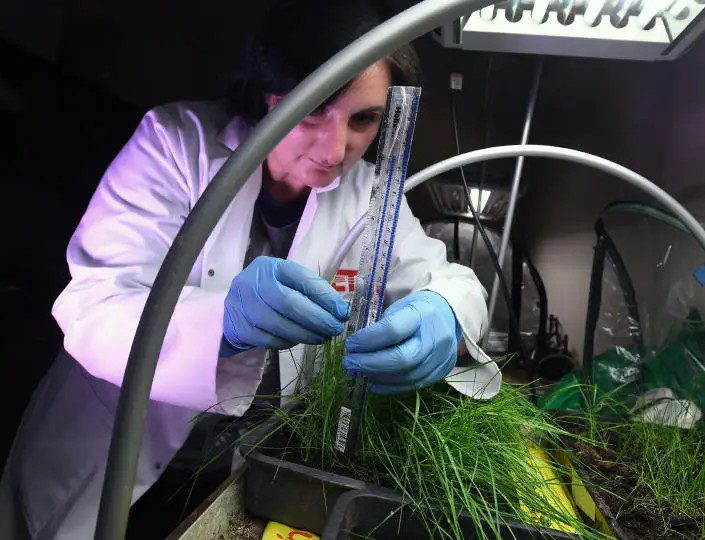
In laboratory tests, the AMD-derived ferric chloride achieved removal rates of over 99% for pollutants such as aluminium, iron and chromium from river water.
The treated water met South Africa’s drinking water standards (under SANAS/ISO/IEC 17025 accreditation).
Professor Vhahangwele Masindi from the University of South Africa said the project could help transform a major environmental hazard into an economic opportunity.
“Active and derelict coal and gold mines in South Africa discharge close to 400 million litres of acid mine drainage per day, and this demonstrates the viability of using this wastewater stream as a secondary mine for valuable minerals.
“This approach supports the circular economy by turning waste into a product with real value.”
“It also helps reduce the environmental footprint of mining operations.”
The study involved collecting mine water from an active coal mine in Mpumalanga, South Africa.
The team used magnesium oxide nanoparticles, produced from the calcination of locally available cryptocrystalline magnesite, to precipitate iron from the AMD before reacting it with hydrochloric acid to produce ferric chloride.
Dr Spyros Foteinis from Heriot-Watt University’s Research Centre for Carbon Solutions in Edinburgh collaborated on the research and said the findings show how mining regions around the world could benefit.
“We’re demonstrating that even highly contaminated mine water can be cleaned up.
“This could be a low-energy and low-carbon practical solution to a problem that blights communities around the world and has lasting health, ecological and economic impact.
“The scaling up of this sustainable technology can underpin global efforts to manage industrial waste more sustainably and advance the global effort for clean water and sanitation for all.”
The team’s next steps are to pilot the technology and its use in rural and peri-urban communities in South Africa, and further afield, that struggle with water scarcity pressures.
The scientists say their method could be applied at an industrial scale, particularly in countries grappling with legacy mining pollution.
Mamile Belina Mahlohla, from the University of South Africa and Magalies Water, said: “Climate change is exacerbating water scarcity pressures and creates new challenges that the water sector needs to address sustainably.
“This technology can be part of a portfolio approach. We’re also working on different methods of recovering nutrients and clean water from municipal wastewater.”