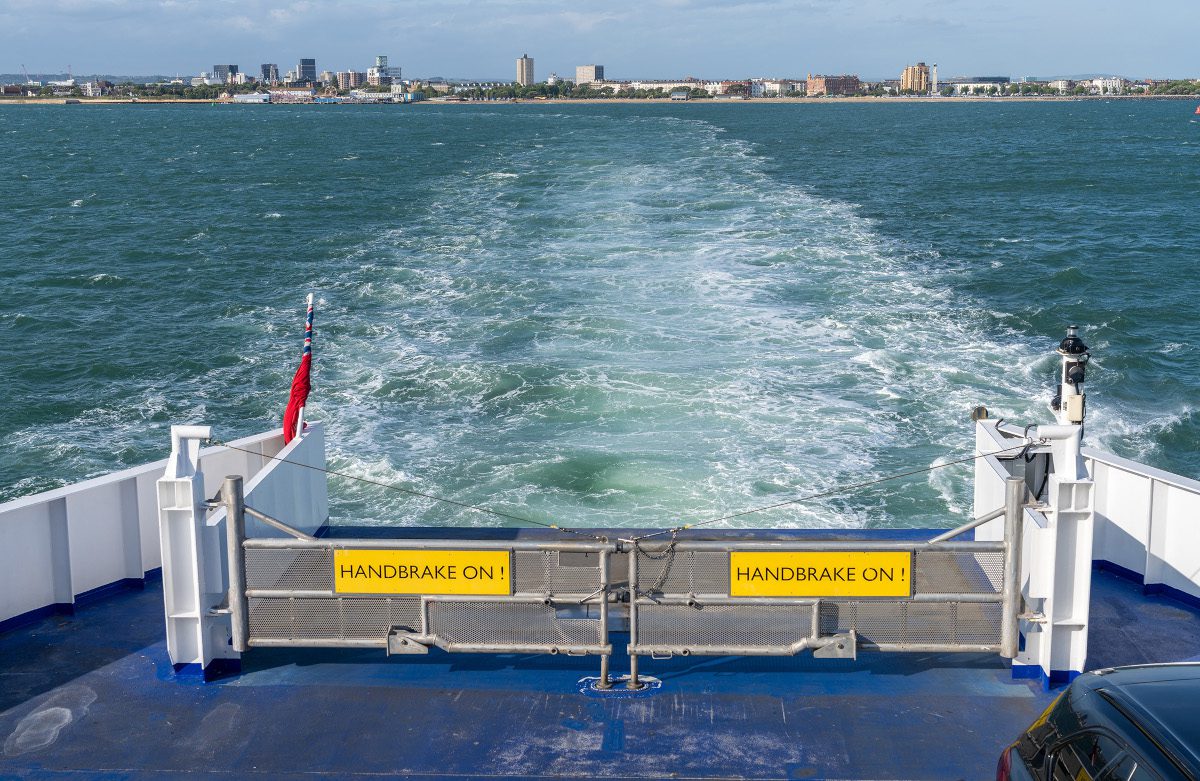


Ship traffic in shallow areas, such as ports, can trigger large methane emissions by just moving through the water. The researchers in a study, led by Chalmers University of Technology in Sweden, observed twenty times higher methane emissions in the shipping lane compared to nearby undisturbed areas.
“Our measurements show that ship passages trigger clear pulses of high methane fluxes from the water to the atmosphere. This is caused by pressure changes and mixing of the water mass. Even if the pulses are short, the total amount during a day is significant,” said Amanda Nylund, researcher at Chalmers University of Technology and the Swedish Meteorological and Hydrological Institute, SMHI.
The concern about methane emissions from the few ships that run on liquefied natural gas (LNG) appears to be a hot topic. Methane is of great interest because of its potency as a greenhouse gas, with a Global Warming Potential (GWP) approximately 27 times that of CO₂ over a 100-year timescale. On the other hand, methane is much shorter-lived in the atmosphere—lasting about 12 years—compared to CO₂ which can persist for centuries, with a portion remaining for thousands of years.
In the current study, the measured methane emissions are completely decoupled from the ships’ choice of fuel. This means that all ships can cause emissions and thus shipping’s contribution to emissions of greenhouse gases has previously been underestimated. The researchers point out that even though methane is found naturally in the sediments, the activity of the ships cause an extensive release into the atmosphere.
The study focuses on shallow marine areas where the sediments are oxygen-free and rich in organic matter. In such environments, methane is formed, and at high production levels, the gas can leak or bubble up into the water above. When a ship passes, the pressure at the seafloor changes and methane bubbles make their way out of the sediments more easily. In combination with the mixing that takes place in the wake of ships, the methane can quickly rise to the surface and escape out into the atmosphere.
The phenomenon was discovered by chance
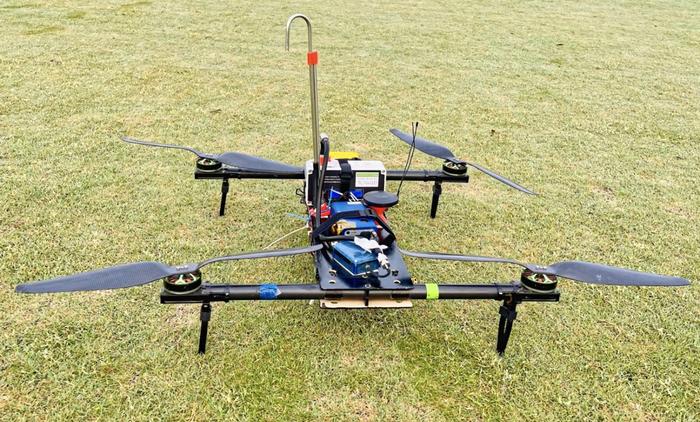
The article, published in Nature Communications Earth & Environment, is said to be unique and the result of a broad research collaboration. The phenomenon of the extensive methane emissions in shallow waters was first discovered by chance, in connection with other measurements in the Neva Bay in the Baltic Sea.
“The discovery of the hitherto unknown impact of ships is important for improving global estimates of methane emissions, not least considering that nine of the world’s ten largest ports are located in waters with similar conditions as Neva Bay,” said Johan Mellqvist, Professor of Optical Remote Sensing, Chalmers, whose group made the unexpected discovery that forms the basis for the new results.
Two of the largest ship types, cruise and container ships, triggered the most frequent and largest measured methane releases, but slightly smaller ropax vessels (combined freight and passenger ferries) also account for large methane releases. The larger (compared to ropax and container) vessel type, bulk carriers, accounted for lower emissions. This means that it is more complicated than the size of the ships controlling methane emissions.
“A possible explanation for the high emissions of ropax vessels is that they have double propellers,” says Rickard Bensow, Professor of Hydrodynamics, Chalmers, and responsible for the study’s modelling of ship traffic.
Next step: investigate discharges in large shallow ports
The authors of the current study now emphasise the need to rethink how and where methane measurements are carried out, especially in coastal waters where natural and human factors interact. They place particular focus on further investigating large ports in river deltas.
“The next step is to estimate how large these effects can be globally. Major ports in China, Singapore, and South Korea, as well as European ports such as Rotterdam, Antwerp, and river systems in Germany, have similar conditions to the Neva Bay. It is very likely that we underestimate methane emissions there as well,” said Ida-Maja Hassellöv, Professor of Maritime Environmental Science, Chalmers, who will lead the follow-up project that will start this autumn.