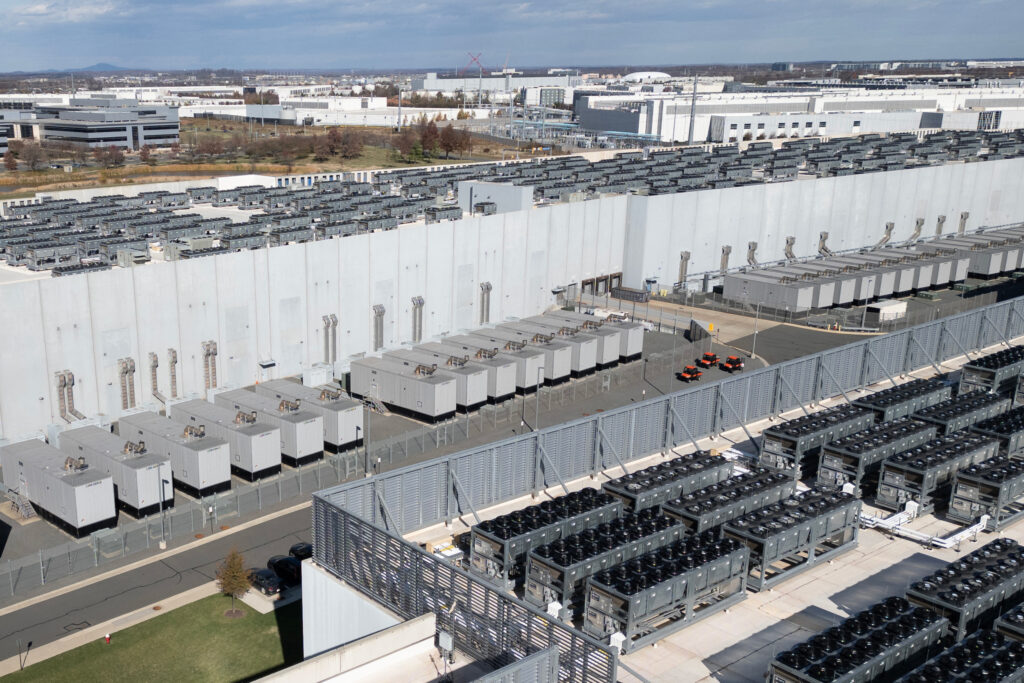


As data center growth across the United States is expected to create unprecedented stress on electrical grids, PJM Interconnection, a pivotal grid operator that has come under criticism for delays, is scrambling for ways to keep up.
PJM, which serves 13 Northeast and Mid-Atlantic states, is seeking public comment on a rulemaking shortcut known as the Critical Issue Fast Path or CIFP—a process launched by its board as a way to expedite its months-long review process for suppliers seeking to join the grid.
Among the fixes PJM has proposed in the process is a fast-track interconnection queue that would let a handful of large projects connect to the grid within months instead of years. Experts warn that the criteria would prioritize gas plants, potentially locking in more fossil fuel generation just as states in the region race to reduce emissions.
PJM will submit its findings and request to the Federal Energy Regulatory Commission (FERC), which must determine if the rule change is fair, lawful and in the public interest before giving its approval.
PJM plans to send its request to FERC in December.
“This is PJM’s way of saying, ‘Oh, heck, we have a problem. We can’t leave this to the normal stakeholder process. We need something faster,’” said Abraham Silverman, an energy researcher at Johns Hopkins University’s Ralph O’Connor Sustainable Energy Institute.
The last time PJM was allowed to use CIFP was 2023, when it rushed to find ways to keep enough power plants running as older ones retired. PJM then sought to require plant owners to provide more advance notice before shutting down and to pass tougher performance tests proving they could operate during extreme weather—changes that FERC later approved.
The grid operator hosted biweekly meetings in September at the PJM Training and Convention Center in Audubon, Pennsylvania, to present its proposals for meeting data center demands and to receive comments from stakeholders, including ratepayers, state energy officials, local utilities, data center developers and consumer advocates. (The public can attend and watch online by registering here.)
“This onrush of demand has created significant upward pricing pressure and has raised future resource adequacy concerns. To further complicate matters, while demand expansion is clearly evident in recent system behavior, there exists a large cone of uncertainty around the trajectory and amplitude of future growth,” the PJM Board wrote in a letter to stakeholders in August.
PJM said that the region’s electricity needs will grow by 32 gigawatts from 2024 to 2030, roughly a 20 percent increase from current use. Meanwhile, new power is coming onto the grid at a snail’s pace through PJM’s current review queue. PJM warned in January in its 2025 long-term power forecast that new power generators “aren’t being built fast enough.”
PJM has pushed for faster interconnection rules and launched a fast-track review in February for specific new power projects. But PJM’s response has been criticized as too little and too slow—so much so that governors in the region have either pushed for studying PJM’s performance or flat-out threatened to leave the grid.
The CIFP process is an avenue to find solutions fast, the PJM board has said,
In daylong CIFP hearings since September, PJM staff have explained potential fixes and representatives from utilities, data center companies and consumer groups have offered their own ideas, raised concerns, and debated the details.
Proposed So Far
After each meeting, PJM revises its proposal and then returns for another hearing about two weeks later—a cycle that will continue through December.
PJM focused on reliability and capacity shortfalls in its September hearing and proposed limiting data center usage when energy demands surge. Developers of the centers and market analysts objected quickly, and PJM dropped the idea.
This month, PJM representatives proposed a new expedited interconnection queue that would allow 10 proposed projects per year to connect to the grid in as little as 10 months, sharply reducing the review process time. PJM currently has a multi-year backlog for reviews.
The catch, according to strategists who attended the Oct. 1 hearing, is that the proposal appears to favor gas projects.
“It might be custom made for gas developers who already have turbines, you know, have a line to get turbines early,” said Thomas Rutigliano, a senior advocate at the National Resources Defense Council.
To be eligible for this fast track, a project must generate at least 500 megawatts and be completed within three years.
“That’s a very stringent set of requirements,” said Ariel Horowitz, head of policy strategy for Eolian, a company that invests, develops and operates large-scale energy projects.
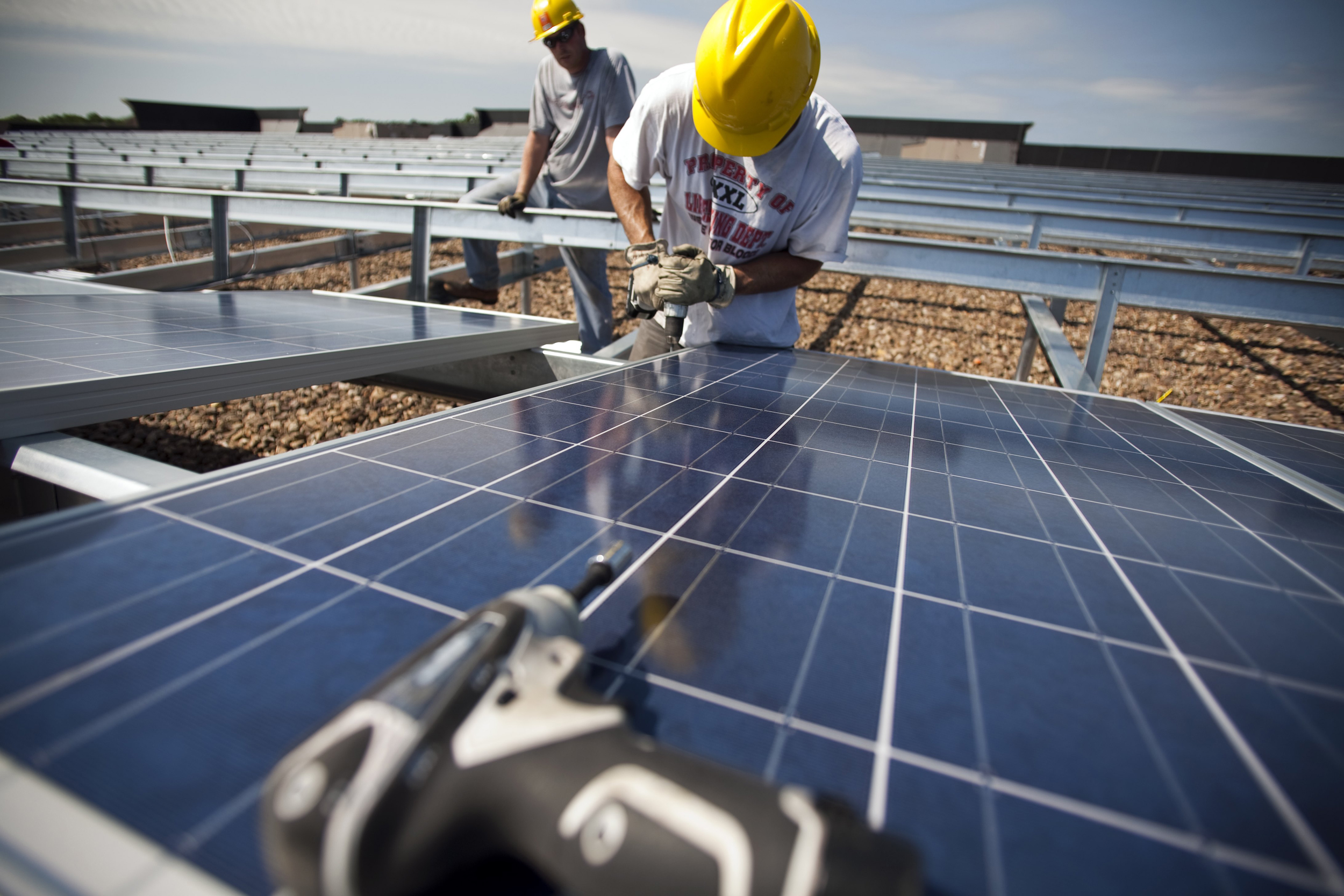
The PJM proposal would effectively screen out most wind, solar and battery storage projects, which rarely come in at that size or move that quickly through development and permitting, renewables energy proponents point out.
“I think it’s a real backtrack for a lot of states that are interested in clean energy goals to see PJM saying, ‘Well, we’re going to connect new gas in [10] months and wind and solar and storage and everything else, you have to go through this queue,’ ” Silverman of Johns Hopkins said.
The proposal could also collide with ambitious climate goals across the 13 states that rely on PJM, said Rutigliano and Silverman. States including New Jersey, Maryland, Virginia, Illinois and Massachusetts have passed or proposed laws demanding steep emissions cuts and aggressive renewable buildouts.
This story is funded by readers like you.
Our nonprofit newsroom provides award-winning climate coverage free of charge and advertising. We rely on donations from readers like you to keep going. Please donate now to support our work.
Donate Now
PJM spokesman Jeffrey Shields, in an email, pushed back on such criticism, saying the proposal “is open to all technologies and fuel types” and was not designed to favor gas.
Shields added that the fast-track would be limited to 10 new projects a year and that projects currently awaiting approval from the main queue would not be affected.
PJM also proposed a measure to compel local utilities to flag when data centers submit multiple interconnection requests, a practice dubbed “double counting,” which could be bloating PJM’s projection for energy needs and lead to inaccurate forecasts. That could ultimately lead to higher electricity prices, PJM has said.
PJM also proposed that data centers be required to pay a cash deposit or provide a letter of credit before their projects are included in the grid’s power plan.
Consumer Advocates of the PJM States, a nonprofit, backed the proposal to prevent double counting because as executive director Gregory Poulos said in an interview: “If you can’t measure it, you can’t address it.” The Electricity Customer Alliance or ECA, which lobbies for large power users such as data centers, said businesses want more certainty from PJM regarding upcoming energy demands.
“Customers across the board, from large data center customers to large manufacturers and others do not have a lot of confidence in the load forecast they’re seeing right now,” said ECA executive director Jeff Dennis.
About This Story
Perhaps you noticed: This story, like all the news we publish, is free to read. That’s because Inside Climate News is a 501c3 nonprofit organization. We do not charge a subscription fee, lock our news behind a paywall, or clutter our website with ads. We make our news on climate and the environment freely available to you and anyone who wants it.
That’s not all. We also share our news for free with scores of other media organizations around the country. Many of them can’t afford to do environmental journalism of their own. We’ve built bureaus from coast to coast to report local stories, collaborate with local newsrooms and co-publish articles so that this vital work is shared as widely as possible.
Two of us launched ICN in 2007. Six years later we earned a Pulitzer Prize for National Reporting, and now we run the oldest and largest dedicated climate newsroom in the nation. We tell the story in all its complexity. We hold polluters accountable. We expose environmental injustice. We debunk misinformation. We scrutinize solutions and inspire action.
Donations from readers like you fund every aspect of what we do. If you don’t already, will you support our ongoing work, our reporting on the biggest crisis facing our planet, and help us reach even more readers in more places?
Please take a moment to make a tax-deductible donation. Every one of them makes a difference.
Thank you,

Rambo Talabong
Contributor
Rambo Talabong is a multimedia climate reporter based in New York City. Before moving to the U.S., he led award-winning investigations into the Duterte drug war for Rappler, the Nobel Prize-winning newsroom in Manila. His reporting has been recognized by the Global Investigative Journalism Network, the Society of Publishers in Asia, and the Human Rights Press Awards. He studied data journalism at Columbia University and is currently pursuing a master’s in science journalism at New York University. He has faced—and won—two libel suits in the Philippines over his reporting.