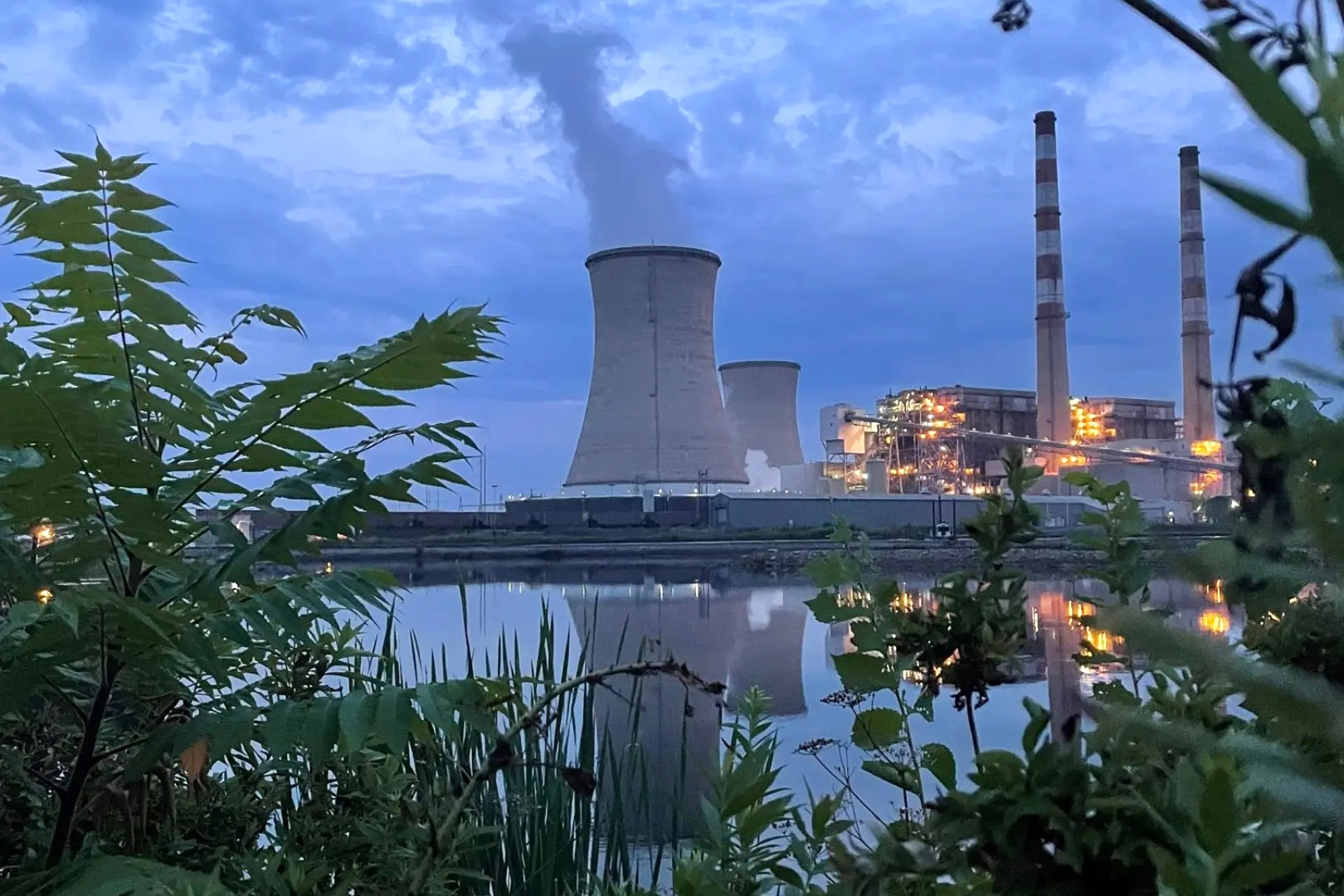


Pennsylvania lawmakers voted on Wednesday to withdraw the state from a regional effort that cuts carbon emissions from power plants, a move baked into a deal on the state’s long-overdue budget.
An ongoing legal battle kept Pennsylvania from participating in the Regional Greenhouse Gas Initiative since former Gov. Tom Wolf directed the state to join the pact in 2019. But it was technically in the collaborative of 11 Northeastern and Mid-Atlantic states and would have significantly reduced the region’s climate-damaging emissions if it had become an active member, experts say.
Almost five months after the new $50.1 billion budget should have been voted into law, the bill was passed by large majorities—156 votes to 47 in the Democrat-controlled House and 40 votes to 9 in the Republican-led Senate—in a move that critics said made meaningful climate action a victim of lawmakers’ need to restore normal state funding to services such as education and transportation.
“They didn’t offer it as a free-standing bill, which would have been easier to vote against, but as part of a must-pass budget bill,” said David Masur, executive director of the advocacy group PennEnvironment. “Yes, it was a hard vote for many members who said, ‘I don’t want to vote against RGGI but my school districts need money, transit agencies need money.’ Voting no also would mean voting against those things.”
Masur said the vote was one of the most far-reaching environmental rollbacks in recent state history and is a “huge blow” to climate action. Power generators in states participating in RGGI must buy carbon allowances for their greenhouse-gas emissions, incentivizing a shift to clean energy and raising money for climate efforts.
According to a 2023 analysis by the University of Pennsylvania’s Kleinman Center for Energy Policy, active membership in RGGI would have reduced the state’s electricity-sector emissions by 84 percent from 2020 levels by 2030. The state would also have raised $101 million to $148 million in the auction of emissions allowances in 2030, the study found.
Implementing RGGI membership would have little effect on retail electricity prices, cut coal use and encourage the uptake of renewables, the Kleinman analysis said.
But the Consumer Energy Alliance, an advocacy group that opposes RGGI membership, welcomed the legislature’s vote, which it contended will keep retail energy costs affordable and improve reliability.
“Pennsylvania lawmakers recognized that RGGI was a barrier to affordability, reliability, jobs and economic opportunity for families and businesses across the Commonwealth, and their common-sense bipartisan action leads the way for other states to do the same,” said CEA President David Holt in a statement.
“Getting out of RGGI means Pennsylvania can better compete for the data centers, advanced manufacturing facilities and energy investments that are driving 21st-century economic growth,” Holt added.
Since 2005, the other 10 RGGI states have cut power-sector emissions by 50 percent, which is almost 50 percent faster than the U.S. as a whole, while raising some $8.6 billion to invest in communities, the group said in January this year. Participating states set a regional cap for emissions, which declines over time. Each state issues allowances in proportion to its share of the regional cap.
Pennsylvania’s implementation of RGGI has been blocked by litigation brought by some Republican lawmakers over whether the levy on power producers constitutes a tax or a fee. Opponents of membership argued that it would be a tax, and therefore could not be imposed by a governor; only the legislature has the authority to impose a tax. That argument was backed by a state appeals court, a ruling appealed by Gov. Josh Shapiro and advocates to the Pennsylvania Supreme Court.
Shapiro, a Democrat, sought to deflect criticism of the RGGI withdrawal by calling for support for his “Lightning Plan,” a package of energy-related measures designed to create jobs, cut costs for consumers and curb climate change.
“For years, Senate Republicans have used RGGI as an excuse to stall substantive conversations about energy,” Shapiro said in signing the bill. “Today, that excuse is gone. It’s time to look forward—and I’m going to be aggressive about pushing for policies that create more jobs in the energy sector, bring more clean energy onto the grid and reduce the cost of energy for Pennsylvanians.”
Advocates for RGGI membership think it was a bad deal.
“By trading away RGGI, Governor Shapiro has sacrificed progress on climate and air pollution based on politics that prioritizes industry over our children’s health,” Patrice Tomcik, the senior national field director for advocacy group Moms Clean Air Force, said in a statement.
“He is ignoring the voices of millions in his state—and across the country, as we saw in last week’s elections—who want healthcare and safety as non-negotiables. The fact that RGGI has been stripped away is a blow to my family and to thousands of families across Pennsylvania who deserve a strong climate and energy affordability program.”
About This Story
Perhaps you noticed: This story, like all the news we publish, is free to read. That’s because Inside Climate News is a 501c3 nonprofit organization. We do not charge a subscription fee, lock our news behind a paywall, or clutter our website with ads. We make our news on climate and the environment freely available to you and anyone who wants it.
That’s not all. We also share our news for free with scores of other media organizations around the country. Many of them can’t afford to do environmental journalism of their own. We’ve built bureaus from coast to coast to report local stories, collaborate with local newsrooms and co-publish articles so that this vital work is shared as widely as possible.
Two of us launched ICN in 2007. Six years later we earned a Pulitzer Prize for National Reporting, and now we run the oldest and largest dedicated climate newsroom in the nation. We tell the story in all its complexity. We hold polluters accountable. We expose environmental injustice. We debunk misinformation. We scrutinize solutions and inspire action.
Donations from readers like you fund every aspect of what we do. If you don’t already, will you support our ongoing work, our reporting on the biggest crisis facing our planet, and help us reach even more readers in more places?
Please take a moment to make a tax-deductible donation. Every one of them makes a difference.
Thank you,