

Last March, Venezuela’s two most prominent opposition leaders transmitted a video message to Houston, appealing to one of the largest and most influential annual meetings of global energy titans.
“Venezuela represents the greatest untapped opportunity in the world,” said Edmundo González Urrutia, the former ambassador widely seen as the rightful winner of the nation’s disputed 2024 presidential election. Then, his running-mate and architect of the opposition campaign, María Corina Machado, came on screen. Soon there would be a “successful, secure and open society” in the nation that holds the largest petroleum reserves on Earth, she told the oil and energy company executives and government officials who had gathered for S&P Global’s CERAWeek.
It is not clear whether the video did much to enhance the lure of investing in Venezuela for the energy companies, some of which are still owed billions of dollars for the upending of their operations in the nation amid political turmoil nearly two decades ago. The dissidents had no power to make good on their promises—González was in Spain, and Machado, who would be awarded the Nobel Peace Prize later that year, was in seclusion in Venezuela. Both were living under threat of arrest from the government of President Nicolás Maduro.
But soon, the oil industry was hearing the same message from a different source. According to POLITICO, President Donald Trump’s administration summoned executives from Exxon Mobil and ConocoPhillips to a meeting in Washington in November to gauge their interest in returning to Venezuela once Maduro was gone. POLITICO’s sources described the oil companies as decidedly unenthusiastic, in light of both their history with Venezuela’s political instability and the surfeit of less risky opportunities they enjoy in the current market.
The prior outreach to the oil industry provides crucial context to Trump’s assurances that the United States’ dramatic raid and capture of Maduro on Jan. 3 would be followed by an oil-fueled rebuilding of the Venezuelan economy. Trump’s rosy forecast has led some to characterize the Maduro operation as a gift to the industry that helped bankroll the president’s return to the White House. But industry experts say oil companies have reason to view the Venezuela opportunity more as a leftover holiday white elephant gift than as a coveted prize.
Trump “seems to have the idea that he can just sort of throw the country open and the companies will come flooding back,” said Samantha Gross, director of the Brookings Institution’s Energy Security and Climate Initiative. “It’s true that there’s no resource risk there—we know the resources are there—but the political risk and the financial risk are huge.”
On Wednesday, multiple publications reported that Trump is set to meet with executives of several major oil companies at the White House on Friday to discuss Venezuela.
Billions Needed Over Many Years
Venezuela’s oil infrastructure is in disarray after a generation of authoritarian rule. Self-proclaimed populist Hugo Chávez and his hand-picked successor, Maduro, who took office after Chávez’s death in 2013, presided over the demise of the nation’s most important economic sector, expropriating foreign oil company assets and expelling domestic experts. Venezuela’s oil production fell more than 70 percent since its 1997 peak of 3.5 million barrels per day. The nation slid into economic chaos, with the United Nations estimating that 80 percent of Venezuelans now live in poverty and millions have fled the country. While the nation sits on an estimated 303 billion barrels of oil, the world’s largest reserves by far, experts say it would take billions of dollars and many years to return production to its previous levels.
“It’s much more than just knowing where the oil is,” Gross said. “In this case, that almost seems like the easy part.”
In a research note this week, the consulting firm Rystad Energy estimated at least $30 billion to $35 billion in international capital would need to be committed in the next two to three years to make it even plausible for Venezuela to return to 3 million barrel-per-day production by 2040. For comparison, that’s an amount equivalent to Exxon Mobil’s capital spending all over the world each year. Moreover, investment would need to be long-term, Rystad said, estimating the required total oil and gas capital expenditure over the next 14 years would be $183 billion. Much of Venezuela’s oil resource is mixed with sandstone in the Orinoco belt, the basin of one of the longest rivers in South America. Akin to the oil sands of Canada, it is difficult, expensive and carbon-intensive to extract.
World oil production currently exceeds global demand, which is flat or weakening for a number of reasons, including a slow economy, abundant supply from U.S. fracking and the uptake in electric vehicles around the world. Global oil prices this week were trading at $57 per barrel, the lowest level since early 2021, when the world economy was just beginning to emerge from the pandemic slowdown. As a result, experts predict oil companies will be gravitating toward low-cost, low-risk opportunities for investment.
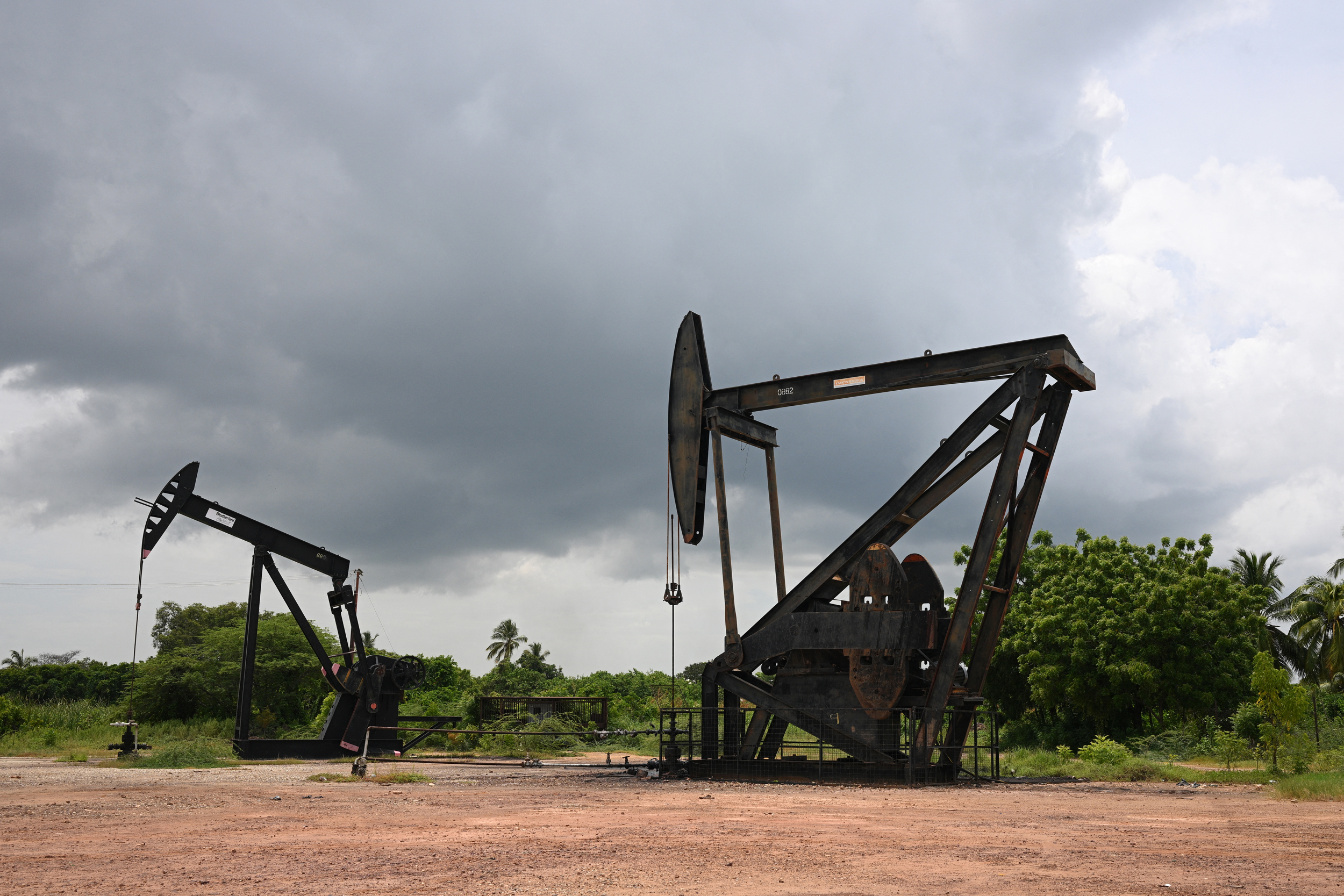
Nevertheless, in announcing the dramatic raid and arrest of Maduro, Trump expressed confidence that U.S. oil companies would leap into the high-cost, high-risk venture of rebuilding the Venezuelan industry. “We’re going to have our very large United States oil companies, the biggest anywhere in the world, go in, spend billions of dollars, fix the badly broken infrastructure, the oil infrastructure, and start making money for the country,” he said at the press conference where he announced Maduro’s capture. In an interview Monday with NBC News, Trump admitted the needed investment would be large, but he said the sector could be rebuilt within 18 months and that the oil industry will “get reimbursed by us or through revenue.”
But the economics are complicated, with investment dollars needed now and revenue expected only over the long term. The energy research and consulting firm Wood Mackenzie noted in an analysis Tuesday that if the administration lifts existing sanctions on Venezuela, that could lead to an already oversupplied market and drive down prices even further.
“Venezuela offers the scale major producers need, but the fundamentals work against rapid deployment,” said Alan Gelder, a senior vice president at the firm, in a press release. “Heavy crude economics at current prices, unresolved legal claims, and political uncertainty create a risk profile that extends well beyond typical above-ground challenges. Companies will watch, but commitments require more than sanctions relief.”
Dennis Nuss, a spokesman for ConocoPhillips, said the company “is monitoring developments in Venezuela and their potential implications for global energy supply and stability. It would be premature to speculate on any future business activities or investments. We will continue with our collection efforts, which are made in accordance with all applicable laws and regulations.”
Representatives for Exxon Mobil did not respond to questions from Inside Climate News.
Neither ConocoPhillips nor Exxon Mobil would confirm the November meeting with Trump administration officials.
“Who’s Going to Run the Country?”
Philippe Benoit, a research scholar at the Center on Global Energy Policy at Columbia University, said major U.S. oil companies will likely have an appetite for returning to Venezuela, but only if the political situation is stable and clear. Given the current glut of oil and low prices, the incentive to spend billions isn’t as strong as it might have been 40 years ago, when oil reserves were low and the market was more segmented.
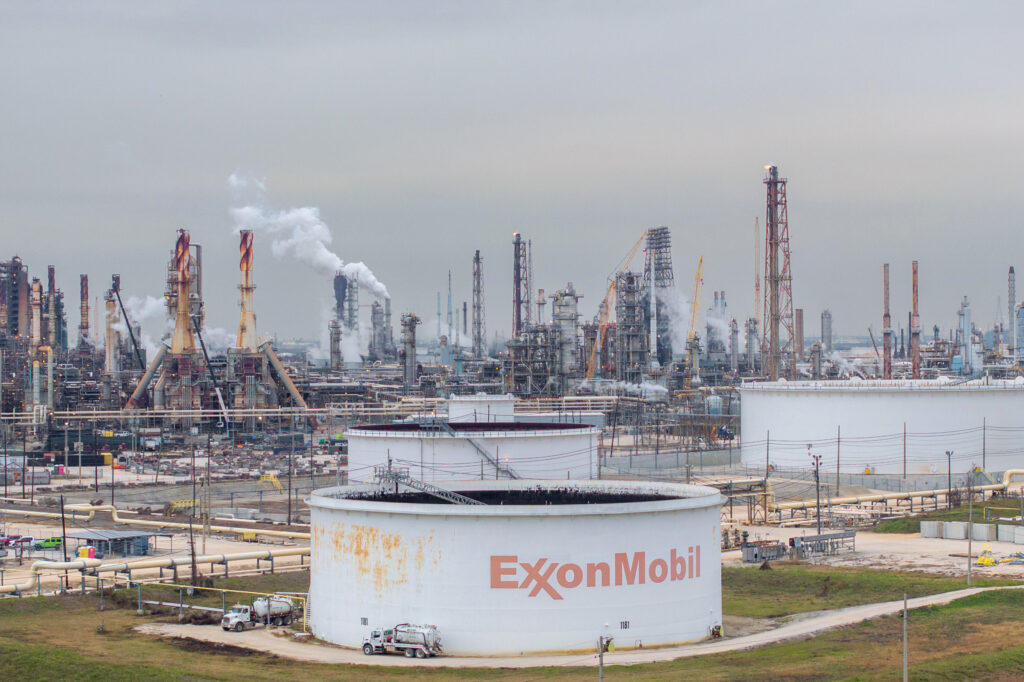
Exxon Mobil, which has a long, dispute-riddled history in Venezuela, has made major investments in neighboring Guyana, committing $60 billion toward seven offshore oil projects since 2019.
“They’re already in Guyana,” Benoit said, noting that the company tends to be cautious. “Who’s going to run the country? … Would you really put billions of dollars into Venezuela at this point?”
This story is funded by readers like you.
Our nonprofit newsroom provides award-winning climate coverage free of charge and advertising. We rely on donations from readers like you to keep going. Please donate now to support our work.
Donate Now
Guyana’s president, Irfaan Ali, touted his nation’s stability and commitment to democracy to the energy industry at CERAWeek last year, his presence alone a stark contrast to the video feed from Venezuela’s fugitive opposition leaders. His nation’s economy also is a counterpoint—one of the fastest-growing in the world due to increasing oil output in partnership with global energy companies. Ali conveyed confidence in Guyana’s ability to maintain those relationships, despite Venezuela’s claims to the offshore oil-producing zone on their border. He stressed peaceful diplomacy and trust in the international legal justice system to resolve the long-running territorial dispute.
David Goldwyn, who served as the State Department special envoy and coordinator for international energy affairs during President Barack Obama’s administration, says oil companies will want to see such commitment to rule of law and a functioning economic structure before they venture into Venezuela again. “Few U.S. companies are likely to return to the country until there is a reliable legal and fiscal regime and stable security situation,” Goldwyn said in a report from the Atlantic Council, a think tank, where he serves as chairman of the global energy advisory group.
Goldwyn said the United States does have policy options that could bring more oil revenue into Venezuela in the short term. The Trump administration “could allow oil currently on tankers to be exported, expand licensing and permit Venezuela to sell oil at market prices, all for the purpose of maximizing national revenue.”
American oil refineries along the Gulf Coast could benefit from any such easing of sanctions in the shorter term, according to Rystad Energy. Those refineries are outfitted to handle heavy, sour crude, which makes up roughly 70 percent of the Venezuelan oil supply.
Nevertheless, Goldwyn says much depends on factors other than industry economics. “Until there is clarity on sanctions and licensing and more information on who is actually managing the central bank and ministry of finance, the prospects for Venezuelan oil production and exports will remain uncertain,” he said.
Complicating the political picture in Venezuela, the Trump administration has so far allowed Maduro’s vice president, Delcy Rodríguez, to remain in place. Venezuela’s leading opposition leaders, including Machado, consider her “not trustworthy.”
Voters showed overwhelming support for Machado and González in the 2024 election, according to international observers. But Maduro refused to accept the election results and his opponents were driven underground.
Now, Trump has refused to voice support for Maduro’s opponents, despite Machado’s assiduous effort to win him over. She praised Trump’s policy on Venezuela in her video speech at CERAWeek and this week even told Sean Hannity of Fox News that she would like to hand over her Nobel Prize to Trump.
But Trump has remained cool. Asked about her at his press conference, he said, “She’s a very nice woman, but she doesn’t have the respect within the country.”
U.S. Energy Secretary Chris Wright, speaking at an energy investment conference in Florida on Wednesday, said that the United States intended to oversee Venezuela’s oil industry “indefinitely.”
A Clash With Energy Dominance, and Climate
Benoit noted that the Trump administration has long pushed for American “energy dominance,” but the move on Venezuela could backfire. “You have to ask yourself: How does this actually support energy dominance? I would argue that it maybe undermines American energy dominance.”
He pointed out that major global oil companies, including Exxon Mobil and ConocoPhillips, whose Venezuelan assets were expropriated by Chavez, could benefit, but the production and export of more Venezuelan oil could ultimately hurt mid-size American oil companies that extract oil in the U.S. and have made the U.S. the world’s leading oil producer.
“I’m a firm believer that demand for oil is going to fundamentally be constrained,” Benoit said, noting that global demand is projected to level off or slow. “You’re basically talking about fundamental substitution in the market. So it will help the Venezuelans. I’m not sure it actually helps Americans.”
Yet another uncertainty is whether any vision for an oil-driven revival of Venezuela makes sense in a world that, despite Trump’s efforts to the contrary, still is pursuing a future of less dependence on fossil fuels in order to curb the worst impacts of climate change.
Gross believes that if global oil demand is weak or falling, it will not make sense for oil companies to invest in developing high-cost new production in Venezuela. “If the market doesn’t want it, it doesn’t happen,” she said.
Ultimately, whether Trump can ramp up production of Venezuela’s carbon-intensive oil, and the impact that will have on the climate crisis, all depend on whether the world is moving decisively to transition away from oil, in Gross’ view.
“I do get frustrated when people say, ‘Oh my God, they’re going to go in there and develop it and it’s going to be a climate bomb,’” Gross said. “It’s not a climate bomb if nobody demands it.”
Arcelia Martin contributed to this report.
About This Story
Perhaps you noticed: This story, like all the news we publish, is free to read. That’s because Inside Climate News is a 501c3 nonprofit organization. We do not charge a subscription fee, lock our news behind a paywall, or clutter our website with ads. We make our news on climate and the environment freely available to you and anyone who wants it.
That’s not all. We also share our news for free with scores of other media organizations around the country. Many of them can’t afford to do environmental journalism of their own. We’ve built bureaus from coast to coast to report local stories, collaborate with local newsrooms and co-publish articles so that this vital work is shared as widely as possible.
Two of us launched ICN in 2007. Six years later we earned a Pulitzer Prize for National Reporting, and now we run the oldest and largest dedicated climate newsroom in the nation. We tell the story in all its complexity. We hold polluters accountable. We expose environmental injustice. We debunk misinformation. We scrutinize solutions and inspire action.
Donations from readers like you fund every aspect of what we do. If you don’t already, will you support our ongoing work, our reporting on the biggest crisis facing our planet, and help us reach even more readers in more places?
Please take a moment to make a tax-deductible donation. Every one of them makes a difference.
Thank you,

Marianne Lavelle
Bureau Chief, Washington, D.C.
Marianne Lavelle is the Washington, D.C. bureau chief for Inside Climate News. She has covered environment, science, law, and business in Washington, D.C. for more than two decades. She has won the Polk Award, the Investigative Editors and Reporters Award, and numerous other honors. Lavelle spent four years as online energy news editor and writer at National Geographic. She spearheaded a project on climate lobbying for the nonprofit journalism organization, the Center for Public Integrity. She also has worked at U.S. News and World Report magazine and The National Law Journal. While there, she led the award-winning 1992 investigation, “Unequal Protection,” on the disparity in environmental law enforcement against polluters in minority and white communities. Lavelle received her master’s degree from Columbia University Graduate School of Journalism, and is a graduate of Villanova University.

Georgina Gustin
Reporter, Washington, D.C.