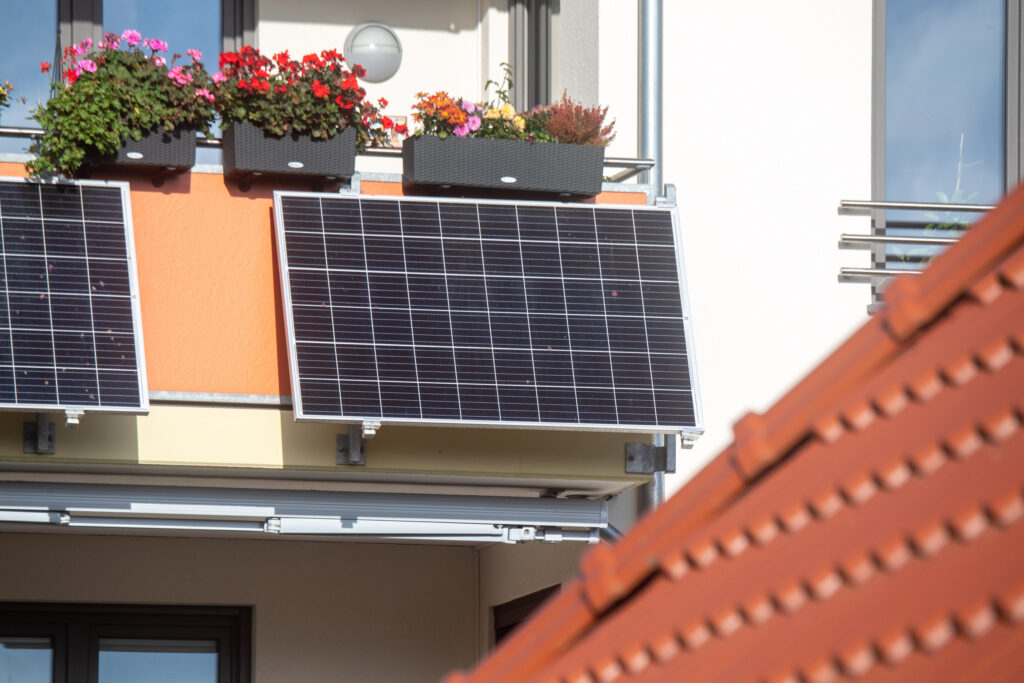


One of the most divisive topics among environmental advocates and researchers is the claim that the growth of rooftop solar leads to a concerning transfer of costs from households that have solar to those that don’t.
Most people who have studied this agree there is some shift in costs, but they disagree on how much and whether it’s too much.
A recent working paper from economists at the University of Maryland offers a novel way of looking at this issue by examining how rooftop solar and electric vehicles affect electricity demand for the population as a whole, and how each contributes to changes in electricity costs for the public as a whole.
The results, I suspect, will be frustrating for solar advocates and encouraging for EV advocates. But let’s not get ahead of ourselves.
The paper was written by a team that includes Joshua Linn, who teaches economics at the University of Maryland and is a senior fellow at Resources for the Future, a think tank that studies energy and the environment. As is common for economics research, the authors are gathering feedback and will revise the paper with the aim of publishing a peer-reviewed version.
Linn and his co-authors found that adoption of rooftop solar has led to a 2.35 percent decrease in electricity utilities’ revenue, which the companies have partially recovered by increasing customer rates by 1.48 percent.
Those are small numbers. But they become more significant when the authors zoom in on the effects on low-income households without solar. The upshot is that these households experience, by far, the most significant negative effects, while high-income households have a net benefit because they gain a large share of the cost savings from using rooftop solar.
The authors found that the use of EVs helps to reduce electricity rates for all consumers, with utilities benefitting from a 0.44 percent increase in revenue and consumers a 0.23 decrease in costs.
Again, small numbers. The larger point is that rooftop solar increases costs for other consumers while EVs lower them; the size of these effects is likely to increase as market share for solar and EVs rises, according to Linn.
The analysis looks at electricity consumers as a whole, including some with solar and some with EVs, some with both, and a large majority that have neither.
“When you put solar panels on your home, you’re imposing a cost on somebody else,” Linn said in an interview.
Linn is not suggesting that the costs exceed the environmental benefits. He argues that policymakers should understand the amount of the cost shift to make informed decisions when crafting policies related to rooftop solar.
The authors make clear that their findings should be understood as short-term effects which cover two to three years. So, we cannot extrapolate the effects on rates in a decade or more.
One of my initial reactions was that the findings could be used to justify policies that support the business interests of utility companies. Utilities tend to oppose rooftop solar and want to encourage EVs, and the companies have used their lobbying power to change net metering policies in states such as California, reducing the financial benefits of solar.
Linn said he doesn’t intend to support any industry’s agenda and that this research didn’t receive any corporate funding. His larger concern, he said, was quantifying how solar and EVs affect the roughly 95 percent of consumers who have neither.
I asked John Farrell, a rooftop solar advocate and co-director of the Institute for Local Self-Relience, to read and respond to the paper. His organization views customer-owned energy resources as essential for creating a more equitable economy and counteracting the harm often done by monopoly utilities.
This story is funded by readers like you.
Our nonprofit newsroom provides award-winning climate coverage free of charge and advertising. We rely on donations from readers like you to keep going. Please donate now to support our work.
Donate Now
Farrell said that the paper’s focus on short-term effects is a serious flaw because investments in rooftop solar and other energy-saving technologies yield benefits best understood in timelines that are decades long.
“In a short timeframe, my purchase of solar panels or an energy-efficient fridge will reduce demand and (very slightly) increase the necessary rates to recover costs,” he said, in an email. “But over the lifetime of that investment, the utility can reduce supply contracts, defer transformer upgrades, etc.”
His conclusion: “Doing this study is an interesting intellectual exercise but … it loses sight of the forest for the trees.”
I wouldn’t go that far. I think we need to continually monitor how the growth in rooftop solar and EVs will affect the electricity system and the prices paid by other consumers.
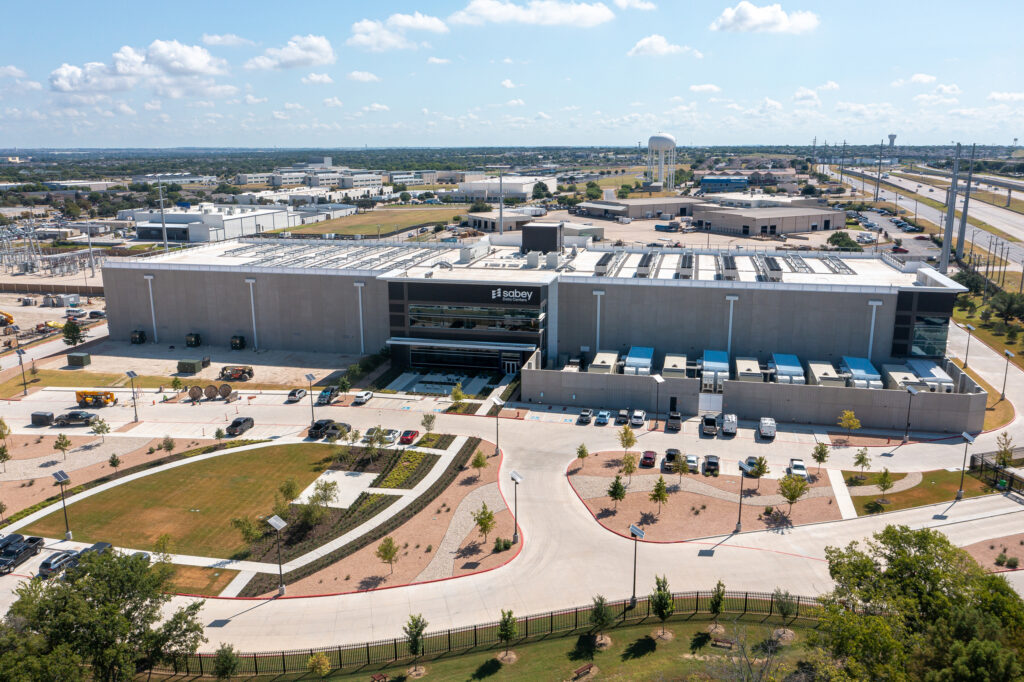
It’s worth noting that the cost shifts in the paper appear small relative to the large rate increases that have happened this year as utilities upgrade their systems to accommodate data centers and other large users.
To put it another way, the cost shifts linked to rooftop solar are not near the top of my list of problems to be solved right now. But 10 years from now, following more consumer adoption, it may be a different story.
Other stories about the energy transition to take note of this week:
Ford Has Scrapped the Fully Electric F-150 Lightning: Ford cited falling demand and high costs as reasons for discontinuing the F-150 Lightning, an all-electric truck, and replacing it with a gas-electric hybrid, as Alexa St. John reports for the Associated Press. The company reported $13 billion in losses on EVs since 2023 and will take a one-time charge of $19.5 billion in the current quarter related to its EV business. This is a major shift in strategy that follows what Stellantis has already done with its Ram brand, as Alisa Priddle reports for Motor Trend, a sign of declining confidence among automakers that there is sufficient demand to justify building all-electric trucks.
Investigating the Pluses and Minuses of China’s Clean Energy Investments Abroad: Chinese-funded battery factories in Hungary are provoking local backlash, as my colleague Nicholas Kusnetz reports. The debate there shows how China’s significant investments in other countries are likely good for the climate but pose serious challenges for human rights and local ecosystems. This is part of ICN’s Planet China series, which is very much worth your time.
GE Vernova Gives an Update on Its Gas Turbine Backlog: The Trump administration would like to see rising electricity demand largely met by new natural gas power plants. But this desire is running up against supply constraints from the companies that manufacture gas turbines needed to operate the plants. GE Vernova, a leading turbine maker, has said that it expects to end the year with a backlog extending into 2029, as Brian Martucci reports for Utility Dive.
Meet the Man Behind the Fall of Offshore Wind: David Stevenson has played an outsize role in supporting campaigns that have helped stymie the development of U.S. offshore wind. Clare Fieseler of Canary Media has a compelling story about who Stevenson is, how he has been so successful and how he feels about it.
Inside Clean Energy is ICN’s weekly bulletin of news and analysis about the energy transition. Send news tips and questions to [email protected].
About This Story
Perhaps you noticed: This story, like all the news we publish, is free to read. That’s because Inside Climate News is a 501c3 nonprofit organization. We do not charge a subscription fee, lock our news behind a paywall, or clutter our website with ads. We make our news on climate and the environment freely available to you and anyone who wants it.
That’s not all. We also share our news for free with scores of other media organizations around the country. Many of them can’t afford to do environmental journalism of their own. We’ve built bureaus from coast to coast to report local stories, collaborate with local newsrooms and co-publish articles so that this vital work is shared as widely as possible.
Two of us launched ICN in 2007. Six years later we earned a Pulitzer Prize for National Reporting, and now we run the oldest and largest dedicated climate newsroom in the nation. We tell the story in all its complexity. We hold polluters accountable. We expose environmental injustice. We debunk misinformation. We scrutinize solutions and inspire action.
Donations from readers like you fund every aspect of what we do. If you don’t already, will you support our ongoing work, our reporting on the biggest crisis facing our planet, and help us reach even more readers in more places?
Please take a moment to make a tax-deductible donation. Every one of them makes a difference.
Thank you,

Dan Gearino
Reporter, Clean Energy
Dan Gearino covers the business and policy of renewable energy and utilities, often with an emphasis on the midwestern United States. He is the main author of ICN’s Inside Clean Energy newsletter. He came to ICN in 2018 after a nine-year tenure at The Columbus Dispatch, where he covered the business of energy. Before that, he covered politics and business in Iowa and in New Hampshire. He grew up in Warren County, Iowa, just south of Des Moines, and lives in Columbus, Ohio.