

Tuesday, January 20, 2026
  • Privacy Policy
  • Contact
  • Terms & Conditions
Environmental Magazine
Advertisement
  • Home
  • News
  • Climate Change
  • Energy
  • Recycling
  • Air
  • Fossil Fuels
  • Water
No Result
View All Result
Environmental Magazine
  • Home
  • News
  • Climate Change
  • Energy
  • Recycling
  • Air
  • Fossil Fuels
  • Water
No Result
View All Result
Environmental Magazine
No Result
View All Result
Home News

High-speed methanol engine for shipping now successfully tested, says Rolls-Royce

November 4, 2025
in News
A A

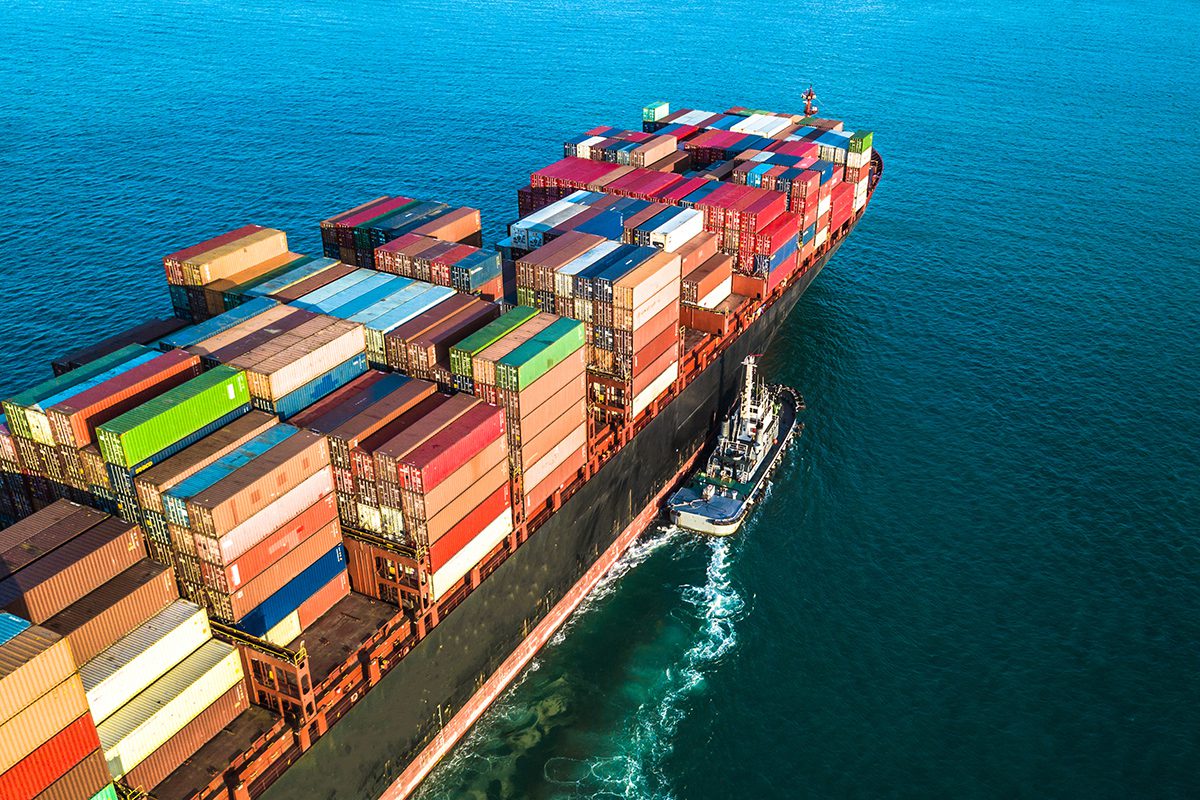
The world’s first high-speed marine engine running exclusively on methanol has been successfully tested, Rolls-Royce announced on 27 October, in what seems an important milestone for carbon-neutral shipping.

While methanol engines in shipping have so far been demonstrated with the larger, slower-speed class of vessels, Rolls-Royce’s announcement marks a technological first in the development of a high-speed marine engine (i.e., one suitable for smaller vessels such as ferries and yachts).

In a video, Dr Johannes Kech, Head of Methanol Engine Development in the Power Systems division at Rolls-Royce, explained some of the technical hurdles that had to be overcome, including the complete absence of lubricity with methanol – in other words, it has no lubricating properties, unlike diesel – which required the group to work with suppliers to develop a new injection system.

There are also important differences in the combustion properties of methanol compared to diesel, including its much higher ignition temperature, and the fact that it burns much more quickly. “We have fundamentally redesigned the combustion process, the turbocharging, and the engine control system – and even adapted our test bench infrastructure,” he said, in a press release from the group. “Initial tests show that the engine is running smoothly – now it’s time for fine-tuning.”

Completed at the company’s test bench in Friedrichshafen, southern Germany, the innovation is a product of the meOHmare research project, which aims to develop a CO₂-neutral high-speed marine engine powered by green methanol by the end of 2025.

Rolls-Royce, injection system specialist Woodward L’Orange, and the WTZ Roßlau technology and research centre have been working on the meOHmare joint project, which is funded by the German Federal Ministry for Economic Affairs and Energy.

“This is a genuine world first,” said Dr. Jörg Stratmann, CEO of Rolls-Royce Power Systems AG. “To date, there is no other high-speed engine in this performance class that runs purely on methanol. We are investing specifically in future technologies in order to open up efficient ways for our customers to reduce CO2 emissions and further expand our leading role in sustainable propulsion systems.”
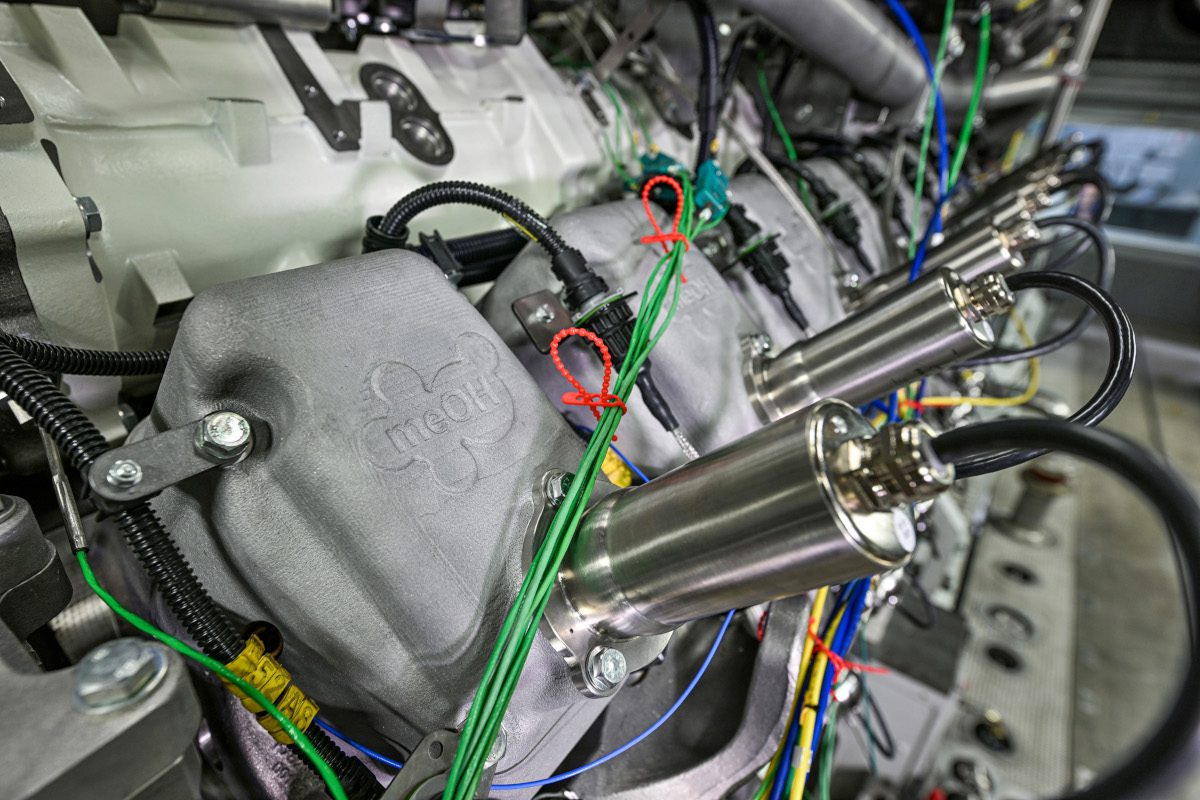
A complex metallic electromechanical assembly comprising cuboidal structures, cylindrical elements and wiring

An important signal
“With this successful test run, we are sending a clear signal: green methanol is a future-oriented fuel – and the technology for it is here,” said Denise Kurtulus, Senior Vice President Global Marine at Rolls-Royce. “The single-fuel methanol engine is an attractive solution, especially for operators of ferries, yachts or supply vessels who want to reduce their carbon footprint. The task now is to create the framework conditions for wider use.”

Alongside the single-fuel methanol engine, Rolls-Royce is also developing a dual-fuel concept that can operate on both methanol and diesel — serving as a bridging technology until green methanol becomes more widely available.

Why methanol?
Green methanol is seen as one of the most promising alternative fuels for the maritime industry. When produced using renewable electricity in a power-to-X process, it offers CO₂-neutral operation, is biodegradable, and emits significantly fewer pollutants than fossil fuels.

It also has advantages in being liquid and easy to store. Compared to hydrogen, it doesn’t require pressurised tanks or other forms of specialized handling.

“For us, methanol is the fuel of the future in shipping – clean, efficient, and climate-friendly,” said Kurtulus. “It burns with significantly lower emissions than fossil fuels and has a high energy density compared to other sustainable energy sources.”


ShareTweetSharePinSendShare

Related Articles

Nature groups say nuclear review exaggerates the cost of preventing harm to nature
News

Nature groups say nuclear review exaggerates the cost of preventing harm to nature

January 20, 2026
End trade-off between recycling targets and toxic exposure, Zero Waste Europe urges EU
News

End trade-off between recycling targets and toxic exposure, Zero Waste Europe urges EU

January 19, 2026
Rare earth magnet recycling centre launched in West Midlands
News

Rare earth magnet recycling centre launched in West Midlands

January 19, 2026
Interactive map shows how well English highway authorities are performing on road maintenance
News

Interactive map shows how well English highway authorities are performing on road maintenance

January 15, 2026
Dual-layer system intercepts most micro- and nanoplastics from landfill leachate, say researchers
News

Dual-layer system intercepts most micro- and nanoplastics from landfill leachate, say researchers

January 13, 2026
Laser cladding demonstrated for rail track repairs by Sheffield group
News

Laser cladding demonstrated for rail track repairs by Sheffield group

January 13, 2026

Leave a Reply Cancel reply

Your email address will not be published. Required fields are marked *

Recommended

In Murphy’s Final Weeks, NJ Climate Advocates Race to Lock in 100 Percent Clean Power

In Murphy’s Final Weeks, NJ Climate Advocates Race to Lock in 100 Percent Clean Power

December 20, 2025
UK’s first battery-powered EDM monitor to gain MCERTS certification

UK’s first battery-powered EDM monitor to gain MCERTS certification

April 11, 2024

Don't miss it

The fine particle threat from DC motors
Air

The fine particle threat from DC motors

January 20, 2026
Air alliance: Merger brings AQMesh into larger gas analysis portfolio
Air

Air alliance: Merger brings AQMesh into larger gas analysis portfolio

January 20, 2026
Uncharted dust | Envirotec
Air

Uncharted dust | Envirotec

January 20, 2026
“You can’t control what you can’t measure”: Keeping track of IAQ
Air

“You can’t control what you can’t measure”: Keeping track of IAQ

January 20, 2026
PM2.5 from tyre and brake wear can be remedied by a simple switch to new brake pads
Air

PM2.5 from tyre and brake wear can be remedied by a simple switch to new brake pads

January 20, 2026
Water Discovery Challenge returns to bring more fresh thinking innovators into the water sector
Water

Water Discovery Challenge returns to bring more fresh thinking innovators into the water sector

January 20, 2026
Environmental Magazine

Environmental Magazine, Latest News, Opinions, Analysis Environmental Magazine. Follow us for more news about Enviroment and climate change from all around the world.

Learn more

Sections

  • Activism
  • Air
  • Climate Change
  • Energy
  • Fossil Fuels
  • News
  • Uncategorized
  • Water

Topics

Activism Air Climate Change Energy Fossil Fuels News Uncategorized Water

Recent News

The fine particle threat from DC motors

The fine particle threat from DC motors

January 20, 2026
Air alliance: Merger brings AQMesh into larger gas analysis portfolio

Air alliance: Merger brings AQMesh into larger gas analysis portfolio

January 20, 2026

© 2023 Environmental Magazine. All rights reserved.

No Result
View All Result
  • Home
  • News
  • Climate Change
  • Energy
  • Recycling
  • Air
  • Fossil Fuels
  • Water

© 2023 Environmental Magazine. All rights reserved.

This website uses cookies. By continuing to use this website you are giving consent to cookies being used. Visit our Privacy and Cookie Policy.