

A new attribution report published Thursday shows that global warming made the extreme hot and dry conditions preceding this summer’s wildfires in Portugal and Spain 40 times more likely and 30 percent more intense than in pre-industrial climate conditions.
The fires have killed at least eight people, and tens of thousands were evacuated as health-damaging smoke spread over France and as far as the United Kingdom and Scandinavia.
Science indicates that the challenges will intensify in the coming decades with further warming, and researchers are clear that the highest priority is reducing planet-warming greenhouse gas emissions.
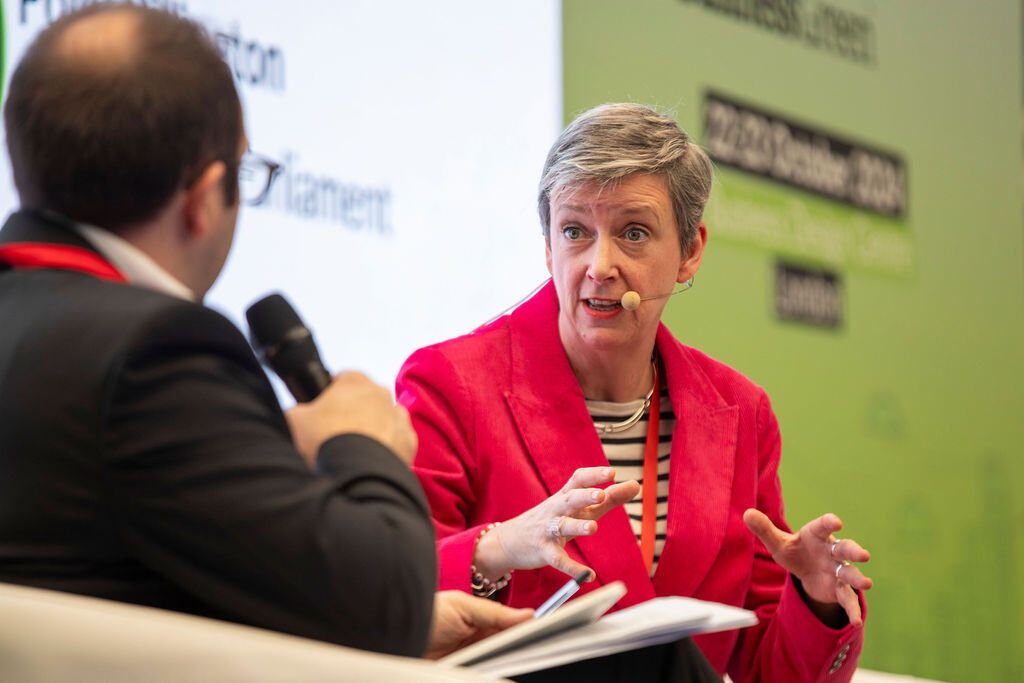
The researchers who studied the Iberian fires are “very confident” that climate change is the most significant factor driving the extreme fire weather, compared to any possible natural variability, said Friederike Otto, lead scientist with World Weather Attribution, an international research group focused on the links between human-caused warming and climate extremes.
Taken together with a related analysis of earlier summer wildfires in Greece, Turkey and Cyprus, she said the research shows “an extremely strong signal of human-induced climate change in this complex measure of fire weather.”
Otto said the 0.2 degrees Celsius increase of Earth’s average global surface temperature since the last Intergovernmental Panel on Climate Change report in 2021 shows that human-caused warming is accelerating. This is most visible in the growing number of extreme weather events that are the end effect of climate change, “where it hits society really hard,” Otto said. “And the more we burn fossil fuels, the harder it is.”
To evaluate how global warming affects wildfire conditions in the study area, the researchers examined changes over time in the Daily Severity Index, a metric that considers temperature, humidity, wind speed and precipitation to estimate the potential intensity of a wildfire and how difficult it will be to extinguish.
The wildfires started at the end of July, fueled by temperatures above 100 degrees Fahrenheit in a heatwave made more than 5 degrees Fahrenheit warmer by climate change, according to the WWA report. In Spain, which is slightly larger than California, wildfires this year so far have burned across nearly 1,500 square miles, nearly five times the annual average. In Portugal, approximately the size of Indiana, wildfires burned across about 1,000 square miles, roughly 3 percent of the country’s land area.

Across Europe, This year is already the worst wildfire season on record, with the total burned area exceeding 1 million hectares (3,861 square miles) for the first time.
“The sheer size of these fires has been astonishing,” said Clair Barnes, a researcher at Imperial College London’s Centre for Environmental Policy who worked on the attribution report. “Unfortunately, these fires are a sign of what is to come. With every fraction of a degree of warming, extreme, long-lasting heatwaves will continue to intensify, increasing the chance of huge wildfires like the ones that burned vast areas of the Iberian Peninsula.”
The study also showed the current strain on firefighting resources in Europe.
In mid-August, Spain made its first-ever request for international firefighting reinforcements, in what Prime Minister Pedro Sánchez called the largest-ever fire response facilitated by the European Union. During that same week, Greece, Bulgaria, Albania and Montenegro also asked for international help as fires tore through the eastern Mediterranean.
“Firefighters are increasingly working in chaotic and unpredictable conditions, tackling fires that behave in ways they’ve never seen before,” said Theodore Keeping, a climate and wildfire researcher with the Centre for Environmental Policy, who contributed to the report.
Can Europe Adapt to Fire?
Just a couple of months before the searing heat and destructive fires, the European Academies Science Advisory Council (EASAC) wrote in a special report that “Europe will increasingly have to learn to live with fire and adapt society to a new challenging reality.”
“It was scary how it just happened a couple of months later,” said Thomas Elmqvist, a natural resource professor at the Stockholm Resilience Centre who coordinated EASAC’s wildfire report. While the rising wildfire risks are well-known in the Mediterranean region, he said, other parts of Europe also need to prepare.
This story is funded by readers like you.
Our nonprofit newsroom provides award-winning climate coverage free of charge and advertising. We rely on donations from readers like you to keep going. Please donate now to support our work.
Donate Now
The report underscored that, in densely populated Europe, more urban areas are at risk than in North America and Asia. It urged governments to make significant investments in building fire-literate and resilient communities, with a strong emphasis on learning to live with fire.
Elmqvist said new threats may emerge quickly where people are not expecting them, including more widespread and persistent fires in the Arctic.
“That could happen again if we get extremely dry summers and peatlands start to dry out,” he said. “Then you could get fires that could continue for years.”
He also said there should be more monitoring of potential wildfire risks in Eastern Europe, including eastern Germany and parts of Czechoslovakia and Poland. After World War II, some of these areas were covered with dense evergreen plantations.
“They are quite mature now,” Elmqvist said. “If we get very dry conditions, we could get big, big forest fires.” With wind patterns common to the area, fires in that region could spread unhealthy smoke pollution across large parts of central Europe for weeks at a time, he added.
Global warming is only one part of the wildfire equation, he said. The EASAC report highlights various landscape changes over the last several decades as key factors, including the proliferation of tree plantations and abandonment of agricultural lands as part of a general depopulation trend in some rural regions.
As research has shown in other parts of the world, increasing wet and dry extremes also matter.
“They were all very happy in the Iberian Peninsula because they got so much rain in March and April that really boosted vegetation,” Elmqvist said. “But then came the drought, so this really high volume of biomass suddenly dried and there was more fuel than average available for these fires.”
EASAC’s mandate is to offer the best science-based policy advice, and the wildfire report provides a recipe for reducing risks, Elmqvist said. First, the European Union needs to follow through on its emissions-reduction goals to reduce the warming trend that is the root cause of rising fire risks. And the EU should also implement its adopted policies and laws on supporting biodiversity and restoring natural systems that help draw greenhouse gases out of the atmosphere, the report says. Those policies would at the same time promote more diverse forests and increase their resilience to fire.
The report also recommends more investment in rural Europe to support small-scale farming.
“We need much more grazing, both in open fields and also in forests,” Elmqvist said. “I would be so happy if they directed more money to these small-scale land owners across Europe, because they could help avoid these catastrophic fires that we saw in Spain and Portugal.”
About This Story
Perhaps you noticed: This story, like all the news we publish, is free to read. That’s because Inside Climate News is a 501c3 nonprofit organization. We do not charge a subscription fee, lock our news behind a paywall, or clutter our website with ads. We make our news on climate and the environment freely available to you and anyone who wants it.
That’s not all. We also share our news for free with scores of other media organizations around the country. Many of them can’t afford to do environmental journalism of their own. We’ve built bureaus from coast to coast to report local stories, collaborate with local newsrooms and co-publish articles so that this vital work is shared as widely as possible.
Two of us launched ICN in 2007. Six years later we earned a Pulitzer Prize for National Reporting, and now we run the oldest and largest dedicated climate newsroom in the nation. We tell the story in all its complexity. We hold polluters accountable. We expose environmental injustice. We debunk misinformation. We scrutinize solutions and inspire action.
Donations from readers like you fund every aspect of what we do. If you don’t already, will you support our ongoing work, our reporting on the biggest crisis facing our planet, and help us reach even more readers in more places?
Please take a moment to make a tax-deductible donation. Every one of them makes a difference.
Thank you,

Bob Berwyn
Reporter, Austria
Bob Berwyn is an Austria-based reporter who has covered climate science and international climate policy for more than a decade. Previously, he reported on the environment, endangered species and public lands for several Colorado newspapers, and also worked as editor and assistant editor at community newspapers in the Colorado Rockies.