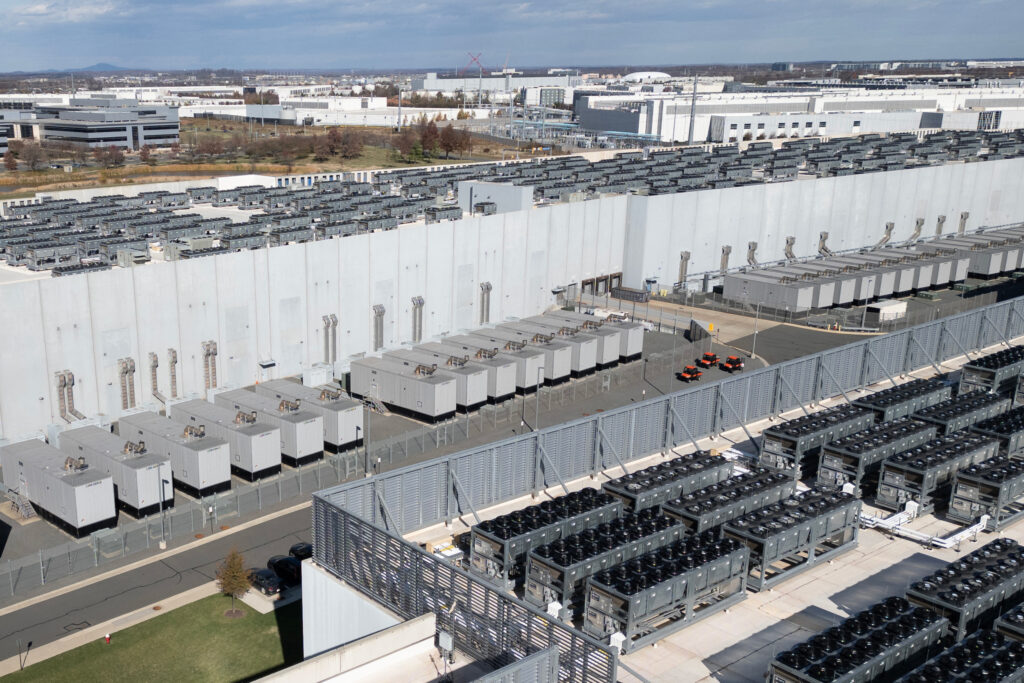


Presented as a first-of-its-kind strategic roadmap, a new report from consulting firm Ramboll attempts to plot a sustainable path ahead for this infrastructure category.
Released at Climate Week NYC on 23 September, the authors of ‘Developing sustainable data centres: A strategic roadmap to achieve net zero carbon and reduce environmental impact’ say it offers full value chain solutions for the design, development and delivery of data centres. It outlines “a series of achievable benchmarks for owners, developers, operators, and consultants, directly tackling the core challenges to data centre sustainability: embodied carbon, operational carbon, biodiversity, circularity, energy, and water.”
“The construction of data centres powered by the rise of artificial intelligence is booming across the globe, driving unprecedented demand for electricity and significantly contributing to global greenhouse gas emissions, increased water consumption, waste production, habitat destruction, and resource depletion,” says Ed Ansett, Ramboll’s Global Director of Technology and Innovation. “These challenges can be managed and mitigated if data centres are built with climate, biodiversity, and circularity in mind from the very start.”
Tackling operational and embodied carbon
Data centres accounted for about 1.5 per cent of global electricity consumption last year, a figure expected to double by 2030, according to the International Energy Agency (IEA). Due to the large quantities of energy consumed, operational carbon is the dominant component of total carbon emitted by data centres.
The report seems to reveal that achieving a net zero operational carbon benchmark is within reach through optimised energy efficiency and renewable energy procurement, energy reuse and export, and demand response.
Embodied carbon, contained in the structure and materials of data centres, can be reduced by using lower carbon steel and concrete, locally sourced materials, or reused materials from decommissioned buildings.
Designing for positive net outcomes for biodiversity
Integrating biodiversity considerations into the planning, design, construction, and operation of data centres is vital to minimise the negative impact on ecosystems, protect existing natural habitats, and promote diversity of species within and around the data centres.
For example, the report recommends conducting early-stage ecological surveys to identify protected species, habitats, and ecological corridors, as well as engaging landscape architects early in the process to influence site layouts
Focus on circularity and water neutrality
Data centres can further minimise their environmental footprint by implementing circularity practices. The proposed circularity benchmark for data centres is that all materials are reused, reusable or recyclable, with zero output to landfill or incineration.
Notoriously, data centres consume vast quantities of water, causing concern in water-scarce areas. The problem can be addressed with overall water neutrality, which is achievable with appropriate water reduction and reuse strategies. Data centre operators should avoid water-based cooling, maximise cycles of concentration, and use additional water resources such as rainwater.
“There are economic benefits for data centre owners if they focus on circular practices,” explains Ed Ansett. “For instance, the sole physical byproduct of data centre energy consumption is heat, which has historically been unused and released to the atmosphere. Data centres are in an excellent position to export what would otherwise be wasted energy.”