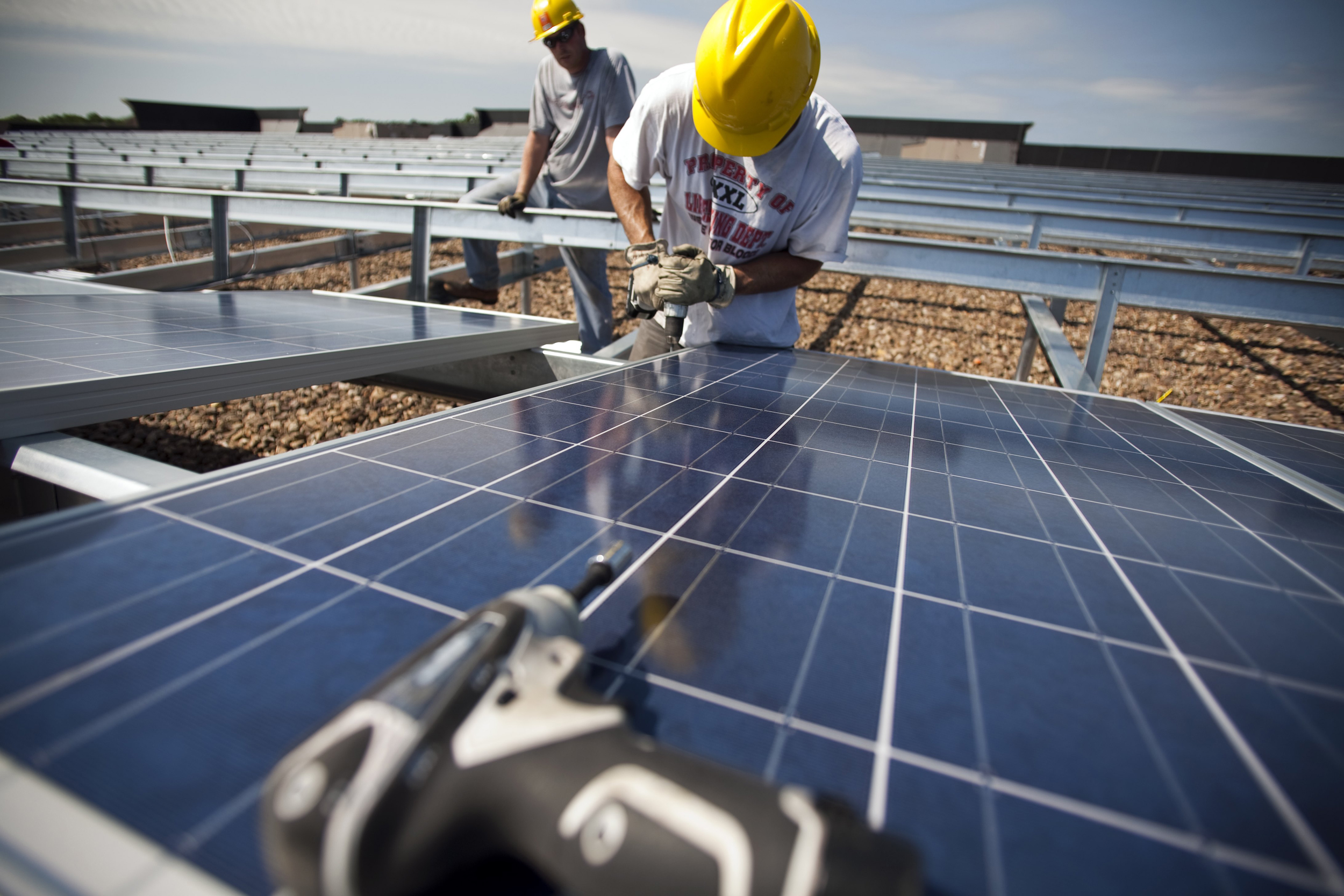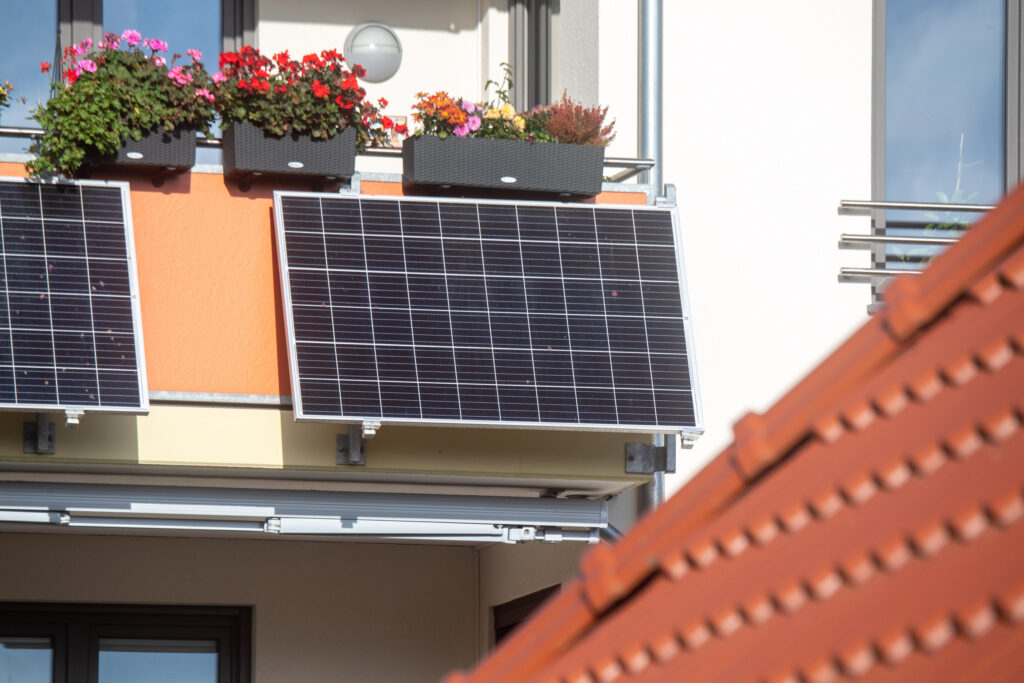


Solar energy has a pivotal role to play in the energy transition, but photovoltaic systems are expensive. An average homeowner can expect to pay tens of thousands of dollars for enough panels to provide their electricity while the sun is shining and offset some of what they pay for energy when it’s not. Government rebates and tax credits are an increasingly popular way to lower costs. Another method is group-buying initiatives.
These initiatives offer collections of customers to solar companies willing to offer a 15 to 20 percent group discount. Almost 600 homeowners in the Denver area have installed solar on their roofs in the last year and a half through Solar Switch, a national group-buying program. And while the main appeal of these programs is offering a cheaper option for homeowners to get solar, they also help protect some from predatory installers.
Ryan Stucki, CEO of Smart Wave Solar, a company founded in 2019 that operates in Colorado and Utah, said many solar companies go door-to-door in neighborhoods using pushy sales tactics to saddle homeowners with expensive panels. By going directly to homes, these door-knocking companies can get homeowners to sign contracts without comparing the prices with those of other providers.
“They can get people to sign a contract at a high price because they didn’t have to compete against other solar companies,” Stucki said. “That’s not good for the industry. What’s good for the industry is competition.”
Group-buying efforts are a way to build that competition, Stucki said. Installers compete in a reverse auction, or bidding war, to try and win a collection of many clients that come as a package deal, driving down the cost for the group of homeowners. For Smart Wave, which has participated in three group-buying programs over the past year, this process is not only great for homeowners, but great for them.
“I would do these all day long if I could,” Stucki said, explaining that the volume of customers makes up for the discount provided.
Many different ingredients are needed to fully protect solar consumers, from state-based standards to national industry best practices, said Corey Ramsden, a VP for Solar United Neighbors, a national nonprofit that helps facilitate group-buying programs, including Solar Switch. But group-buying efforts could be part of that recipe. By only allowing companies whose financials, products and business practices have been vetted, group-buying initiatives could prevent some homeowners from being duped by predatory companies.
“Organized buying programs certainly have a role to play in that,” Ramsden said. “It’s one way to reduce the people impacted by bad behavior that we’re seeing in some markets.”
Not all companies, however, are sold on the group-buying experience. Namaste Solar, an employee-owned B Corp—a business that is verified to meet high environmental, social and governance standards—founded in Boulder, Colorado, does not participate in any such programs due to concerns around employee well-being and company stability. Anna Perry, director of residential sales for Namaste, said in order to win the business of a group-buying initiative, companies have to further compress the already slim margins of the solar industry. Where that squeeze is felt worries her.
“Participating in these kinds of programs would prevent us from paying our installers a living wage,” Perry said.
Namaste Solar starts its installers at $22 an hour, and, as an employee-owned co-op, there’s the option for co-ownership. Smart Wave, by contrast, starts their installers at $19 an hour, but told Inside Climate News that rate doesn’t account for bonuses and commissions installers can earn. Namaste is a commission-free company.
Perry said another concern for Namaste, which has been around for 19 years, is financial sustainability. Many solar companies go out of business because they offer unsustainable prices to win business, she said, and group-buying initiatives, with their bidding wars, could accelerate this trend, at least in theory.
“This is a 25-plus-year purchase you’re making,” Perry said, adding that when a solar company goes out of business, its customers have to find another company to service their panels if something goes wrong. Ideally, you’d buy from a company with business practices that ensure it will be around for the life of your panels, she suggested.

Some of this worry can be mitigated by the companies facilitating group-buying programs. iChoosr, the main company behind the Solar Switch program, screens solar companies before letting them bid on the program. In assessing companies’ sales approach and business practices, iChoosr can hopefully weed out those engaged in unsustainable pricing.
Fred Wu, director of community engagement for iChoosr, said in addition to ensuring the financial stability and quality customer service of solar companies it lets bid on projects, iChoosr also ensures those companies will be able to handle the volume brought by a group-buying venture. Should a company win the reverse auction, they could gain 300 customers in a matter of weeks who want to have solar panels on their roofs sooner than later.
“We want those customers to be able to get their installations within a reasonable time frame,” Wu said. “So we’re assessing not only the sales and service capacity of each of these companies, but also their delivery and installation crews.”
Wu acknowledged that some solar companies have told iChoosr that a bidding war-induced “race to the bottom” could reduce the panel and install quality for group-buying consumers, or erode the financial sustainability of participating companies. But he said the specifications iChoosr puts in place around panel quality and warranties, and its use of companies with local experience and positive reputations, help prevent this.
“At the end of the day, there would be no more groups of customers to serve if the quality of the delivery and product were going downhill,” Wu said, adding that the solar companies that work in the group-buying programs have also appeared to do well. “It fits their business model.”
The programs could also help some solar companies find more customers outside the initiatives. Sandbox Solar, based in Fort Collins, Colorado, has participated in several group-buying programs and told Inside Climate News that while Sandbox does take a hit on margins, the company thinks of the lost profits as a marketing expense. If Sandbox is able to win the business of a group-buying program and provide great service, satisfied customers could mention the company to future neighbors thinking about going solar.
“Up here in the Fort Collins area, Sandbox does really well because most of our leads are word of mouth,” said Justin Chinn, a VP for Sandbox Solar. “But as we try to grow our market share it can be hard to get your foot in the door in certain places.”
Maybe the biggest potential benefit of group-buying solar programs is that they should, theoretically, speed the pace of solar adoption. As Ramsden from Solar United Neighbors told Inside Climate News, some people will always prefer to do things on their own—researching companies and solar technology themselves to figure out exactly what best suits their needs. But others “just want to show up to a party somebody else has organized.” If homeowners have that option and take the plunge—and if those living nearby see panels going up with ease—it could start the ripple effect needed to help hit energy transition targets.
“There’s plenty of good research over the years that says when neighbors go solar, other people in the neighborhood do too,” Ramsden said. “That’s ultimately what’s needed for a healthy solar market: people to see that it’s possible and that other people are also doing it.”
About This Story
Perhaps you noticed: This story, like all the news we publish, is free to read. That’s because Inside Climate News is a 501c3 nonprofit organization. We do not charge a subscription fee, lock our news behind a paywall, or clutter our website with ads. We make our news on climate and the environment freely available to you and anyone who wants it.
That’s not all. We also share our news for free with scores of other media organizations around the country. Many of them can’t afford to do environmental journalism of their own. We’ve built bureaus from coast to coast to report local stories, collaborate with local newsrooms and co-publish articles so that this vital work is shared as widely as possible.
Two of us launched ICN in 2007. Six years later we earned a Pulitzer Prize for National Reporting, and now we run the oldest and largest dedicated climate newsroom in the nation. We tell the story in all its complexity. We hold polluters accountable. We expose environmental injustice. We debunk misinformation. We scrutinize solutions and inspire action.
Donations from readers like you fund every aspect of what we do. If you don’t already, will you support our ongoing work, our reporting on the biggest crisis facing our planet, and help us reach even more readers in more places?
Please take a moment to make a tax-deductible donation. Every one of them makes a difference.
Thank you,