

When the Infrastructure Investment and Jobs Act was signed into law in 2021, authorizing more than $11 billion in new funding to reclaim lands and waterways damaged by abandoned coal mines, the people who lead this work on the ground were ecstatic.
“We were to the moon,” said Amanda Pitzer, the executive director at Friends of the Cheat, a nonprofit organization in West Virginia that works to restore the Cheat River watershed. “Once that big influx of money was announced, with West Virginia on track to receive $2.1 billion over those 15 years, we thought, ‘Now’s the time. Now’s the time to invest in water treatment.’”
But Congress wants to claw back some of that funding.
Last week, the U.S. House of Representatives passed an appropriations bill that would withdraw $500 million of the money allocated in 2021 for abandoned mine cleanup projects. The states that stand to lose the most are Pennsylvania, West Virginia, Illinois and Kentucky, according to an analysis by Appalachian Voices, an environmental organization that works on conservation issues in central and southern Appalachia. The bill must still pass the Senate, which plans to take it up this week, and be signed by the president before it becomes law.
“We’re horribly disappointed,” Pitzer said. “Less money means less reclamation, period.” Among the projects that Pitzer’s organization champions are the building and maintenance of treatment systems that clean up acid mine drainage, a type of pollution that harms aquatic wildlife.
In West Virginia, she said, Abandoned Mine Land funding has also been used to help build public water lines in communities where pollution has affected drinking water supplies. Although significant progress has been made in cleaning up the Cheat River since the 1990s, much more work remains to be done, Pitzer said.
The House bill proposes using the siphoned funding to pay for wildland fire management and U.S. Forest Service operations. “I think it’s highly inappropriate of Congress to rob Peter to pay Paul,” said Andy McAllister, the regional coordinator of the Western Pennsylvania Coalition for Abandoned Mine Reclamation.
McAllister was particularly upset about the “yes” votes from Pennsylvania’s congressional delegation in the House. All but one member voted for the bill.
Pennsylvania has the most abandoned mines of any state, McAllister said. Decades of coal mining in Pennsylvania have created a range of environmental and public safety problems, from underground fires and subsidence to sinkholes and pollution affecting more than 5,500 miles of waterways.
Last year, the Pennsylvania Department of Environmental Protection estimated it would need $5 billion to fully remediate abandoned mine lands and the waterways they contaminated. Forty-five of Pennsylvania’s 67 counties are impacted.
“The bottom line is, just like it always is, we got more problems than we got money,” McAllister said.
Experts are worried that this “repurposing” of the fund could continue beyond this year, with Congress dipping into the money for other reasons. “The AML fund is not a slush fund,” Pitzer said. “It just feels very shortsighted.”
Kevin Zedack, government affairs specialist at Appalachian Voices, said his group assumes that passing this bill will lead to an annual reduction in funding. Zedack and McAllister said they have not heard back from legislators they’ve reached out to with their concerns.
The offices of Pennsylvania’s senators, Republican Dave McCormick and Democrat John Fetterman, did not respond to requests for comment from Inside Climate News.
Zedack and McAllister both pointed out that the loss of funding will harm local economies. Unremediated mine land can’t be used for development, for example.
“Projects that are funded through this provide jobs in historically depressed areas,” McAllister said. Those opportunities can help to offset job losses from the declining coal industry.
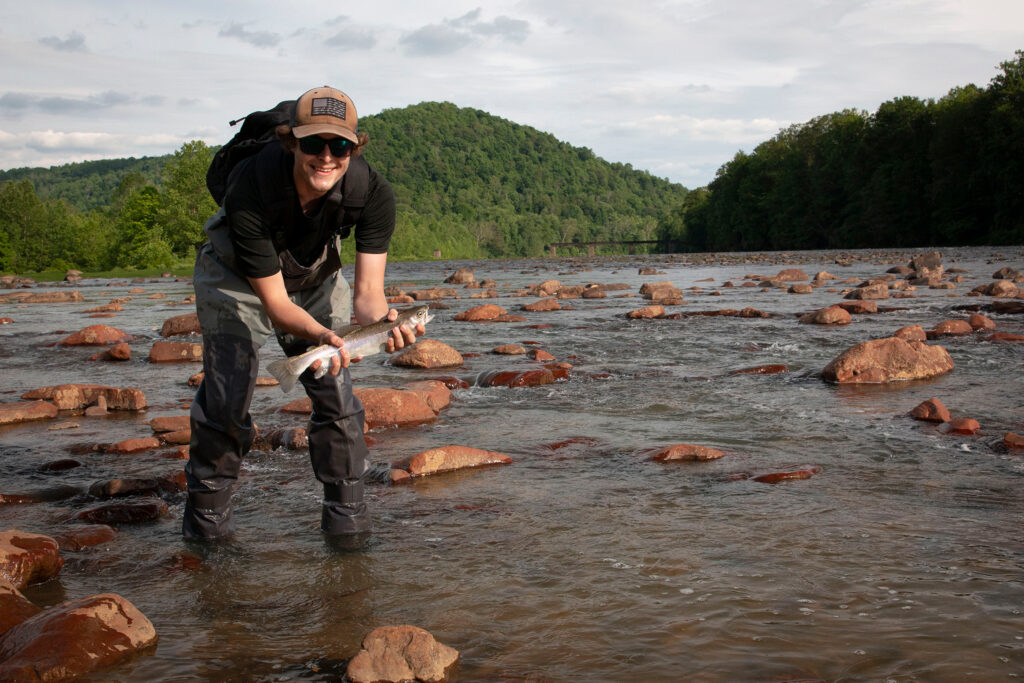
Joe Pizarchik, the former head of the federal Office of Surface Mining Reclamation and Enforcement, which oversees AML funding, grew up in western Pennsylvania. The region is also losing out on huge amounts of tourism revenue, he said. Many waterways are so impaired by mining pollution that they can’t be used for fishing or recreation.
Pizarchik said this isn’t the first time the federal government has reduced the funding available to help communities in coal country since the Surface Mining Control and Reclamation Act was first passed in 1977.
“There was a fee put in place on every ton of coal produced to help clean up the messes of the past,” he said. Over time, the fees have shrunk. “Congress is taking back money again to continue to punish the impoverished communities that have been suffering for a century,” he said.
“To the federal government, it’s a drop in the bucket,” said Bobby Hughes, executive director of the Eastern Pennsylvania Coalition for Abandoned Mine Reclamation. “To us here in Pennsylvania, it’s a vital and essential lifeline to doing more projects in our local communities. We are living the impacts of this legacy.”
Pitzer agreed. “The program was initially structured to collect a fee to pay for sins of the past, and that money should stay in coal country. It should not be redirected to other needs and other places,” Pitzer said. “This was a promise made to these communities and raiding the fund is breaking that promise.”
About This Story
Perhaps you noticed: This story, like all the news we publish, is free to read. That’s because Inside Climate News is a 501c3 nonprofit organization. We do not charge a subscription fee, lock our news behind a paywall, or clutter our website with ads. We make our news on climate and the environment freely available to you and anyone who wants it.
That’s not all. We also share our news for free with scores of other media organizations around the country. Many of them can’t afford to do environmental journalism of their own. We’ve built bureaus from coast to coast to report local stories, collaborate with local newsrooms and co-publish articles so that this vital work is shared as widely as possible.
Two of us launched ICN in 2007. Six years later we earned a Pulitzer Prize for National Reporting, and now we run the oldest and largest dedicated climate newsroom in the nation. We tell the story in all its complexity. We hold polluters accountable. We expose environmental injustice. We debunk misinformation. We scrutinize solutions and inspire action.
Donations from readers like you fund every aspect of what we do. If you don’t already, will you support our ongoing work, our reporting on the biggest crisis facing our planet, and help us reach even more readers in more places?
Please take a moment to make a tax-deductible donation. Every one of them makes a difference.
Thank you,

Kiley Bense
Reporter, Pennsylvania
Kiley Bense covers climate change and the environment with a focus on Pennsylvania, politics, energy, and public health. She has reported on the effects of the fracking boom in Pennsylvania, the expansion of the American plastics industry, and the intersection of climate change and culture. Her previous work has appeared in the New York Times, the Atlantic, Smithsonian Magazine, the Believer, and Sierra Magazine, and she holds master’s degrees in journalism and creative writing from Columbia University. She is based in Pennsylvania.