

Tuesday, January 6, 2026
  • Privacy Policy
  • Contact
  • Terms & Conditions
Environmental Magazine
Advertisement
  • Home
  • News
  • Climate Change
  • Energy
  • Recycling
  • Air
  • Fossil Fuels
  • Water
No Result
View All Result
Environmental Magazine
  • Home
  • News
  • Climate Change
  • Energy
  • Recycling
  • Air
  • Fossil Fuels
  • Water
No Result
View All Result
Environmental Magazine
No Result
View All Result
Home News

Autonomous drifting robot survives under East Antarctic ice shelf to take first-of-its-kind measurements

December 11, 2025
in News
A A

A robotic float has been used to measure the temperature and salinity within a hitherto mysterious realm of the ocean, underneath massive floating ice shelves in East Antarctica.

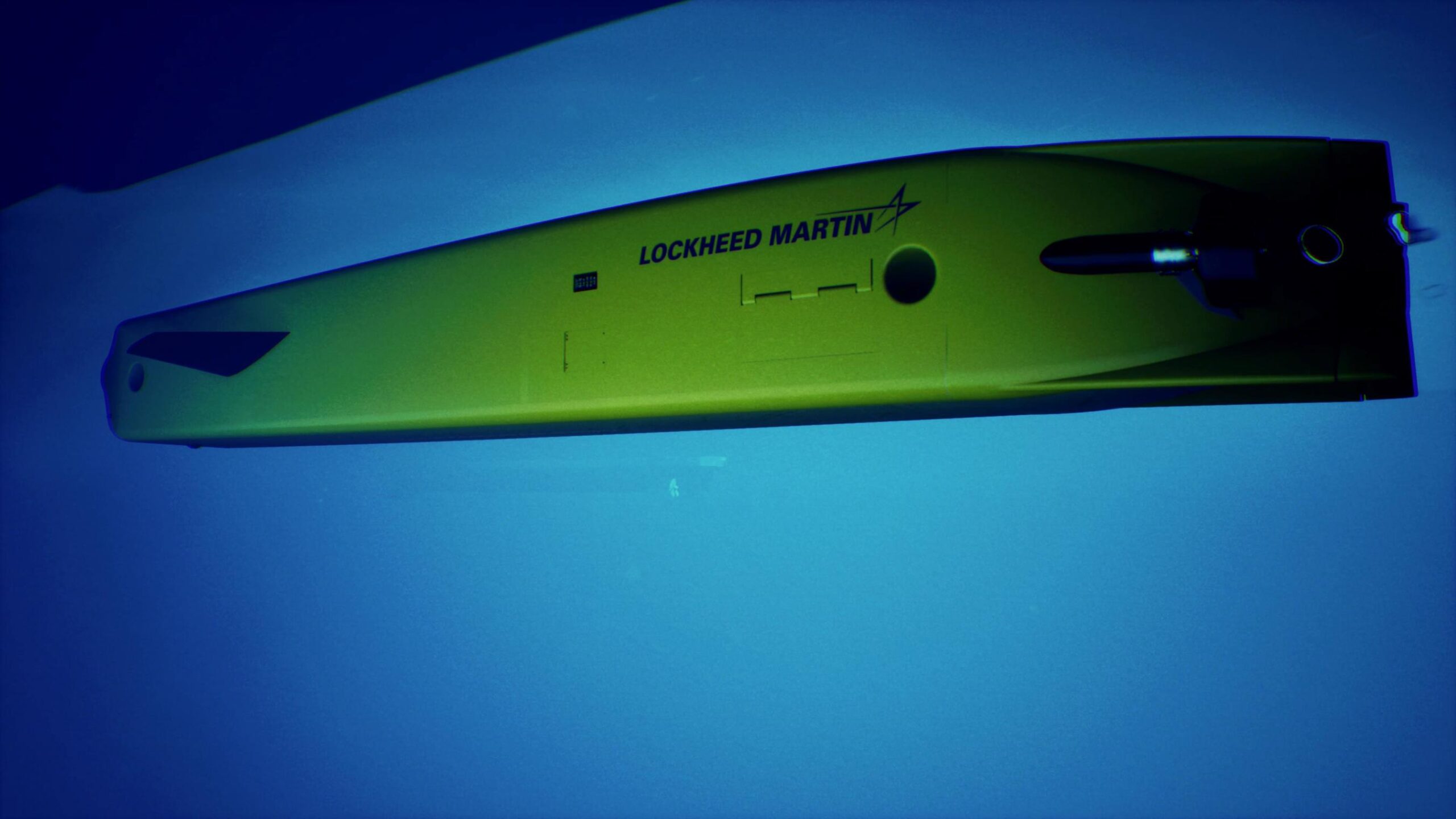
This kind of Argo float – a free-drifting, torpedo-shaped autonomous robot – is normally used in the open ocean, where it is able to surface regularly and transmit data. These vehicles are also not equipped to steer, instead drifting passively except for vertical movement. In this case, a special ice-capable Argo float was used.

It has drifted under ths ice for two-and-a-half years, equipped with oceanographic sensors and has collected nearly 200 profiles of the ocean on a 300-kilometre journey under the Denman and Shackleton ice shelves. The data haul includes the first-ever ocean transect beneath an East Antarctic ice shelf.
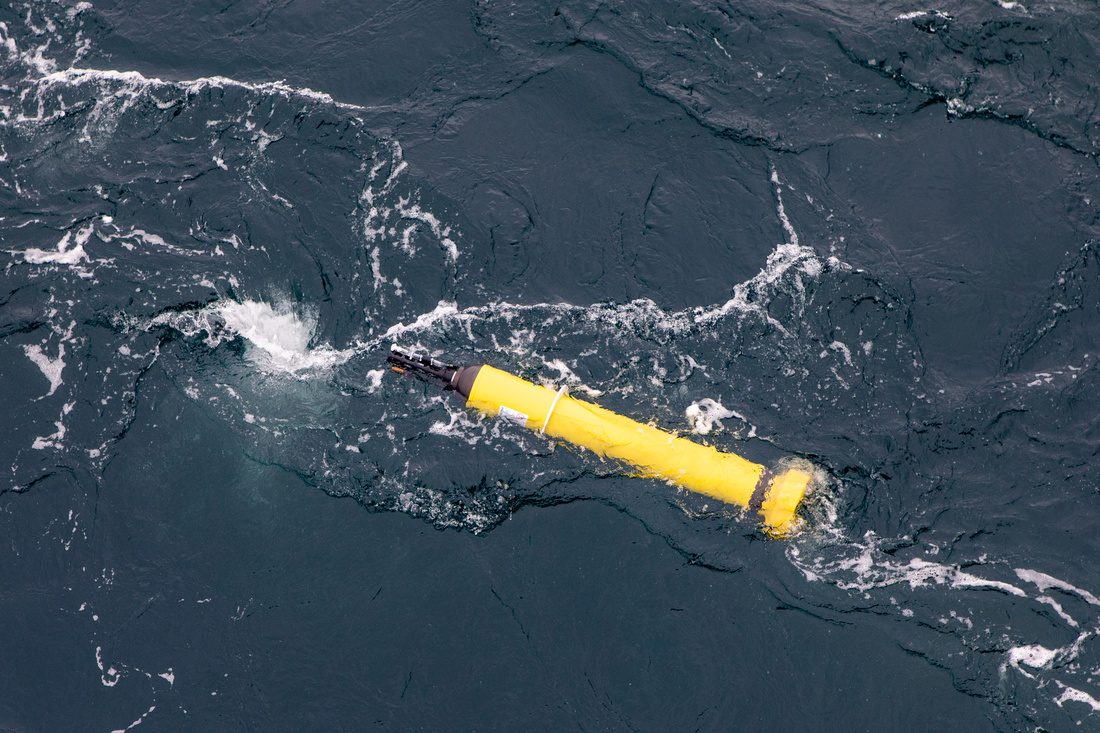
Yellow, cylindrical device - with torpedo-like shape - floats at the surface of the ocean, as seen from slightly above and to one side

“We got lucky,” said oceanographer Dr Steve Rintoul from CSIRO, Australia’s national science agency, and one of the authors of the study.1 CSIRO partnered with the Australian Antarctic Program Partnership at the University of Tasmania.

“Our intrepid float drifted beneath the ice and spent eight months under the Denman and Shackleton ice shelves, collecting profiles from the seafloor to the base of the ice every five days.

“These unprecedented observations provide new insights into the vulnerability of the ice shelves.”
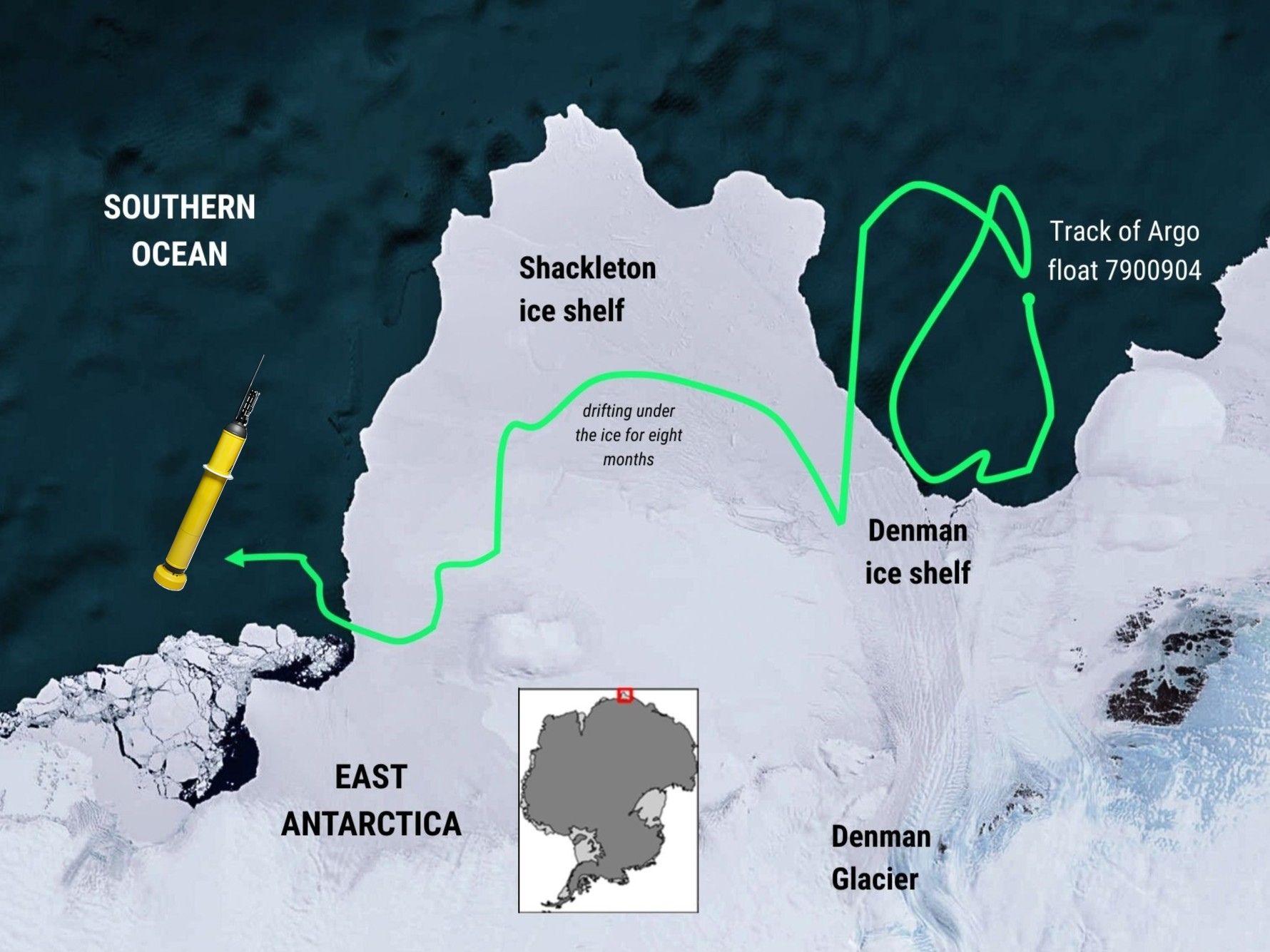
Diagram showing rough map of the area of East Antarctica tracked by the Argo float

The measurements reveal the Shackleton ice shelf (the most northerly in East Antarctica) is, for now, not exposed to warm water capable of melting it from below, and therefore less vulnerable.2

However, the Denman Glacier, with its potential 1.5-metre contribution to global sea level rise, is delicately poised: warm water is reaching underneath and small changes in the thickness of the warm water layer could drive much higher melt rates that lead to unstable retreat.

The transfer of heat from the ocean to the ice depends on the ocean conditions in the 10-metre thick ‘boundary layer’ immediately below the ice shelf.

“A great advantage of floats is that they can measure the properties of the boundary layer that control the melt rate,” said Dr Rintoul.

“The float measurements will be used to improve how these processes are represented in computer models, reducing the uncertainty in projections of future sea level rise.

“Deploying more floats along the Antarctic continental shelf would transform our understanding of the vulnerability of ice shelves to changes in the ocean.

“This, in turn, would help reduce the largest uncertainty in estimates of future sea level rise,” he said.

Leader of the Australian Antarctic Program Partnership, Prof Delphine Lannuzel, sampled the ocean near the ice shelves during the Denman Marine Voyage earlier this year.

“Against the enormity of such a wild region, this is an amazing story of the little float that could,” she said.

“Under incredibly testing conditions, a relatively tiny instrument has delivered us a wealth of invaluable information.”

Notes
[1] The authors are from CSIRO, the Australian Antarctic Program Partnership and the Institute for Marine and Antarctic Studies at the University of Tasmania. They acknowledge support from Australia’s Integrated Marine Observing System (IMOS) — IMOS is enabled by the National Collaborative Research Infrastructure Strategy (NCRIS).
[2] Published in Science Advances: Rintoul S.R., van Wijk E.M., Herraiz-Borreguero, L. and Rosevear, M.G. (2025) ‘Circulation and ocean–ice shelf interaction beneath the Denman and Shackleton Ice Shelves’, Sci. Adv. 11, 10.1126/sciadv.adx1024

ShareTweetSharePinSendShare

Related Articles

World’s first dynamic green ammonia plant begins operation in Denmark
News

World’s first dynamic green ammonia plant begins operation in Denmark

January 5, 2026
Campaigners highlight a plastic hole in Scottish circularity plans
News

Campaigners highlight a plastic hole in Scottish circularity plans

January 4, 2026
Royal Academy of Engineering awards £39 million funding to 13 high-impact climate innovations
News

Royal Academy of Engineering awards £39 million funding to 13 high-impact climate innovations

December 18, 2025
US groups demonstrate commerical scale PFAS destruction of high-flow industrial wastewater
News

US groups demonstrate commerical scale PFAS destruction of high-flow industrial wastewater

December 17, 2025
BNG reforms not as drastic as feared, but still significantly weaken nature protections
News

BNG reforms not as drastic as feared, but still significantly weaken nature protections

December 17, 2025
Businesses and experts back Biodiversity Net Gain for small sites
News

Businesses and experts back Biodiversity Net Gain for small sites

December 16, 2025

Leave a Reply Cancel reply

Your email address will not be published. Required fields are marked *

Recommended

Trump Hails  Billion in Corporate Investment to Make Pennsylvania an AI Hub, Fueled by Natural Gas

Trump Hails $90 Billion in Corporate Investment to Make Pennsylvania an AI Hub, Fueled by Natural Gas

July 15, 2025
University of York single use plastic scheme saves 1m cups from landfill

University of York single use plastic scheme saves 1m cups from landfill

March 26, 2022

Don't miss it

Venezuelan Oil Brought to the U.S. Would Be Refined in Black Gulf Communities
Fossil Fuels

Venezuelan Oil Brought to the U.S. Would Be Refined in Black Gulf Communities

January 6, 2026
Study explores the lingering threat of “thirdhand smoke” in homes
Air

Study explores the lingering threat of “thirdhand smoke” in homes

January 6, 2026
The Loosely Regulated Petrochemical Barge Industry Is Commandeering a Texas River
Fossil Fuels

The Loosely Regulated Petrochemical Barge Industry Is Commandeering a Texas River

January 6, 2026
Whose pollution is it anyway? Project will use bacteriophages to point the finger
Water

Whose pollution is it anyway? Project will use bacteriophages to point the finger

January 5, 2026
Water research body says updated Carbon Accounting Workbook is now live
Air

Water research body says updated Carbon Accounting Workbook is now live

January 5, 2026
Cleaning up PFAS with PFAS will backfire, warn scientists
Water

Cleaning up PFAS with PFAS will backfire, warn scientists

January 5, 2026
Environmental Magazine

Environmental Magazine, Latest News, Opinions, Analysis Environmental Magazine. Follow us for more news about Enviroment and climate change from all around the world.

Learn more

Sections

  • Activism
  • Air
  • Climate Change
  • Energy
  • Fossil Fuels
  • News
  • Uncategorized
  • Water

Topics

Activism Air Climate Change Energy Fossil Fuels News Uncategorized Water

Recent News

Venezuelan Oil Brought to the U.S. Would Be Refined in Black Gulf Communities

Venezuelan Oil Brought to the U.S. Would Be Refined in Black Gulf Communities

January 6, 2026
Study explores the lingering threat of “thirdhand smoke” in homes

Study explores the lingering threat of “thirdhand smoke” in homes

January 6, 2026

© 2023 Environmental Magazine. All rights reserved.

No Result
View All Result
  • Home
  • News
  • Climate Change
  • Energy
  • Recycling
  • Air
  • Fossil Fuels
  • Water

© 2023 Environmental Magazine. All rights reserved.

This website uses cookies. By continuing to use this website you are giving consent to cookies being used. Visit our Privacy and Cookie Policy.