

In late 2023, an unlikely state in the country’s industrial heartland passed nation-leading climate laws—Michigan. The “bold” and “ambitious” plan drew praise for Gov. Gretchen Whitmer, a potential Democratic 2028 presidential candidate.
But the laws, which require Michigan to generate all of its electricity from carbon-free sources by 2040, are likely going to be derailed.
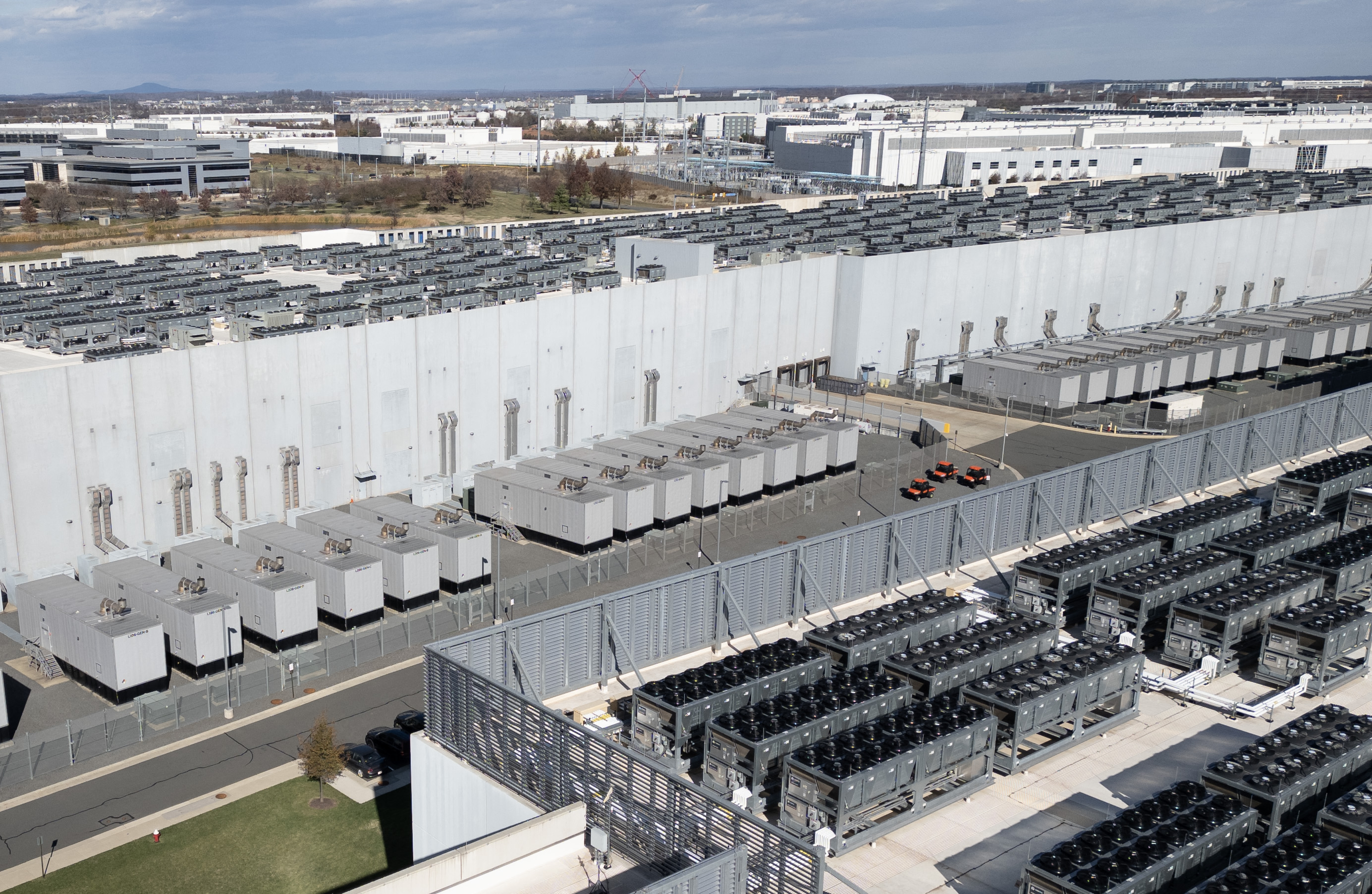
Soon after they were signed, Whitmer backed tax incentive bills for energy-hungry data centers. An “off ramp” provision in the climate laws allows fossil fuel plants to stay online or be built past 2040 if clean energy can’t meet demand. The data centers are already poised to trigger the off ramp and utilities are planning new gas plants.
“Anything positive was effectively undone by the data center tax credits, and we’re seeing that now,” said Dylan Wegela, a Democratic Socialist state representative.
Though many Democrats pushed for requirements for data centers to generate their own renewable energy and save the climate law, Whitmer publicly did nothing to preserve her signature environmental measure. The apparent lack of interest “shows where the priorities are,” said Christy McGillivray, previously a lobbyist with Sierra Club Michigan, which fought to save the climate laws.
Wegela echoed that: “Not saying anything is also saying something in another way.”
The likely death of Whitmer’s climate bills is emblematic of the broader frustration and tension in how Whitmer approached environmental issues. Her 2018 win generated optimism in the wake of the environmentally disastrous era under former Republican Gov. Rick Snyder that culminated in the Flint water crisis.
But when conflicts between the interests of polluters who served Whitmer’s economic agenda and public health arose, the governor virtually always sided with industry, which often included large campaign donors, sources said. Nearly 25 legislators, environmental activists, attorneys and residents spoke with Inside Climate News for this story.
“You’re either going to fight for the environment or you’re not, and she didn’t,” said a former legislator who introduced environmental bills that did not move. They did not use their name to speak freely without retribution.
As Whitmer approaches her final year in office, virtually every major item on environmental groups’ wish list remains.
Among those: “polluter pay” legislation, community solar, fixing hobbled regulatory agencies, water affordability, addressing air pollution in overburdened neighborhoods, protections from data center pollution, killing Enbridge’s Line 5 oil pipeline and water infrastructure repairs to protect metro Detroit from climate change-induced flooding.
Perhaps most frustratingly for advocates, dozens of measures aimed at reforming the deeply unpopular monopoly utilities, DTE Energy and Consumers Energy, failed.
“It’s really been disappointing overall in terms of thinking about what could have been accomplished but wasn’t,” the former legislator said.
Though sources criticized the Whitmer administration, all agreed it has managed the environment better than any previous GOP administrations. And they pointed to positives—the repeal of a Snyder-era law that prohibited the state from putting in place stricter pollution limits than the EPA, a law that requires lead filters in schools and moderately stricter regulatory oversight of utilities by Whitmer appointees.
A Whitmer spokesperson did not respond to a request for comment.
Sources also said the Whitmer administration was not solely to blame, and pointed to pro-business Democrats in the legislature and industry influence across the state government as significant obstacles to the environmental agenda. Michigan’s campaign finance laws are lax, dark money flows with little oversight and many of Whitmer’s biggest donors staunchly opposed environmental priorities. Among those are DTE Energy, and groups that represent major polluters, like the Michigan Chamber of Commerce and Michigan Manufacturers Association.
DTE Energy, the Michigan Chamber of Commerce and Michigan Manufacturers Association did not respond to requests for comment.
“The pattern in Lansing has been when something is going to cause the big corporations to pay, environmental proposals will stall,” said Jenn Hill, a former Democratic state representative from Marquette in Michigan’s Upper Peninsula.
Whitmer’s environmental inaction may also have to do with potential political ambitions, said Chris Gilmer-Hill, policy associate with the Michigan Environmental Justice Coalition.
“The lane that she sees for herself is a pro-business moderate that ‘brought manufacturing back to Michigan,’ and she sees that path as involving working with corporations and giving them handouts so she has a record of economic development to run on,” Gilmer-Hill said.
Whitmer has touted her job creation progress spurred by astronomical levels of corporate subsidies. Through April, the administration during its tenure had promised $2.46 billion in tax incentives to businesses. About $1 billion had been paid, and about 80 percent of the promised jobs never materialized, an analysis by the nonprofit newsroom Bridge Michigan found. The jobs that were created cost taxpayers about $76,000 per job, and economists across the political spectrum questioned their value.
The jobs came at the expense of environmental and public health needs, like water infrastructure, advocates and lawmakers say.
“The governor wasn’t out here working hard on those issues or focusing on them at all,” said Rachel Hood, a former Democratic legislator from the Lansing area. “These are causing real harm to real people in the state who are carrying an undue burden.”
Fixing the “Damn Roads,” but Not Regulatory Agencies
The tension between business interests and overburdened communities during the Whitmer era often played out in battles over arcane regulatory rules and the permitting process. The administration had many chances to make decisions that would have reduced pollution in communities, but often sided with business, public health advocates say.
From the beginning of her campaign, Whitmer’s tagline has been “Fix The Damn Roads,” but fulfilling that promise requires boosting concrete production. In its laser focus on roads, the Whitmer administration often allowed concrete producers to emit higher levels of dangerous toxins in largely low income and majority-Black neighborhoods, advocates say.
Central in battles over the concrete plants are permitting decisions made by the Michigan Department of Environment, Great Lakes and Energy (EGLE), the state’s main environmental regulatory agency. Permitting is a highly consequential step in environmental regulation.
In 2022, just outside Flint, EGLE approved a permit request to allow a new asphalt-mixing plant to be built and emit sulfur dioxide, particulate matter and lead, just 1,500 feet from public housing, and next door to a community center. The EPA and HUD raised civil rights concerns and advised against the permit’s approval in formal comments.
Still, EGLE approved it.
Earthjustice and others filed federal civil rights complaints, and, as part of that negotiation, EGLE was poised to improve its permitting practices, said Debbie Chizewer, an Earthjustice attorney. But Republican attorneys general were at the time challenging the legality of the Biden EPA’s civil rights enforcement, and EGLE saw an opening to scrap the new protections at the last minute, Chizewer said.
“It was part of a broader pattern of when given an opportunity to really protect communities from disproportionate exposure to air pollution, EGLE did not do it,” Chizewer said. The residents near Flint are still exposed to the plant’s sulfur dioxide, particulate matter and lead.
Similarly, concrete giant Edward C. Levy Co. proposed a slag-grinding facility for a heavily polluted southwest Detroit neighborhood that air monitors showed would cause the region to violate federal air-quality standards.
To get around the violation, Levy and EGLE used data from air monitors six miles away in an area where the air was cleaner. The readings in the cleaner area made it appear as if Levy would not violate EPA limits.
These situations are not isolated. State regulators similarly circumvented EPA rules and best practices to approve air pollution permits across the state on almost every major project from 2016-2023, a recentGuardian investigation found.
In Michigan, EGLE has long faced criticism for not enforcing environmental rules and laws. The problems in part trace back to Republican Gov. John Engler’s 1991 executive orders that gutted and restructured the agency to serve polluters instead of regulating them, said the former Sierra Club lobbyist McGillivray.
Engler largely shifted pollution permit decisions from trained civil servants with technical expertise to political appointees who may be susceptible to industry pressure, McGillivray said. It is impossible for the public to know exactly where and how in the agency decisions to grant a permit are made, but she added “there’s a pattern here, and it’s systemic.”
“And there’s a paper trail that shows exactly what John Engler did, which is reorganize the agency to create the situation that we’re in today,” McGillivray said.
Whitmer has not responded to calls to make structural changes at EGLE to repair the Engler-era damage, McGillivray added.
The Engler changes—and Whitmer inaction—has a direct connection to the acrid air Theresa Landrum breathes in southwest Detroit, not far from Levy’s concrete plant. The Whitmer administration invited the environmental activist to serve on the Michigan Advisory Environmental Justice Council so she could advise on environmental justice issues, but the governor has failed to curb pollution in the area, Landrum said. Still, Landrum remains hopeful, and she pointed to the stalled out Protecting Overburdened Communities Act as a good starting point.
“I don’t feel that the governor has been strong enough on EJ, but, in her last year, I hope that she will take a harder stance with supporting communities that are overburdened,” Landrum said.
Failing to Fix DTE Energy and Consumers Energy
Less than a month into Whitmer’s first term in January 2019, a frigid blast of arctic air dropped temperatures as low as -43 degrees in some areas, forcing school and workplace closures while confining residents to their homes.
Amid the freeze, Consumers Energy issued an emergency alert over Michiganders’ cellphones, urging them to turn down their heat as the grid strained. Several days later, about 200,000 would lose power when an ice storm hit. That summer, a strong storm in DTE territory knocked out power to 100,000 customers, leaving some in the dark and exposed to high heat for over a week.
The outages ignited simmering frustration with the utilities. DTE had not adequately maintained its grid for decades, leaving it vulnerable to storms that are growing increasingly frequent and strong as the climate changes. Simultaneously, Michigan’s energy rates were increasing faster than in 48 other states.
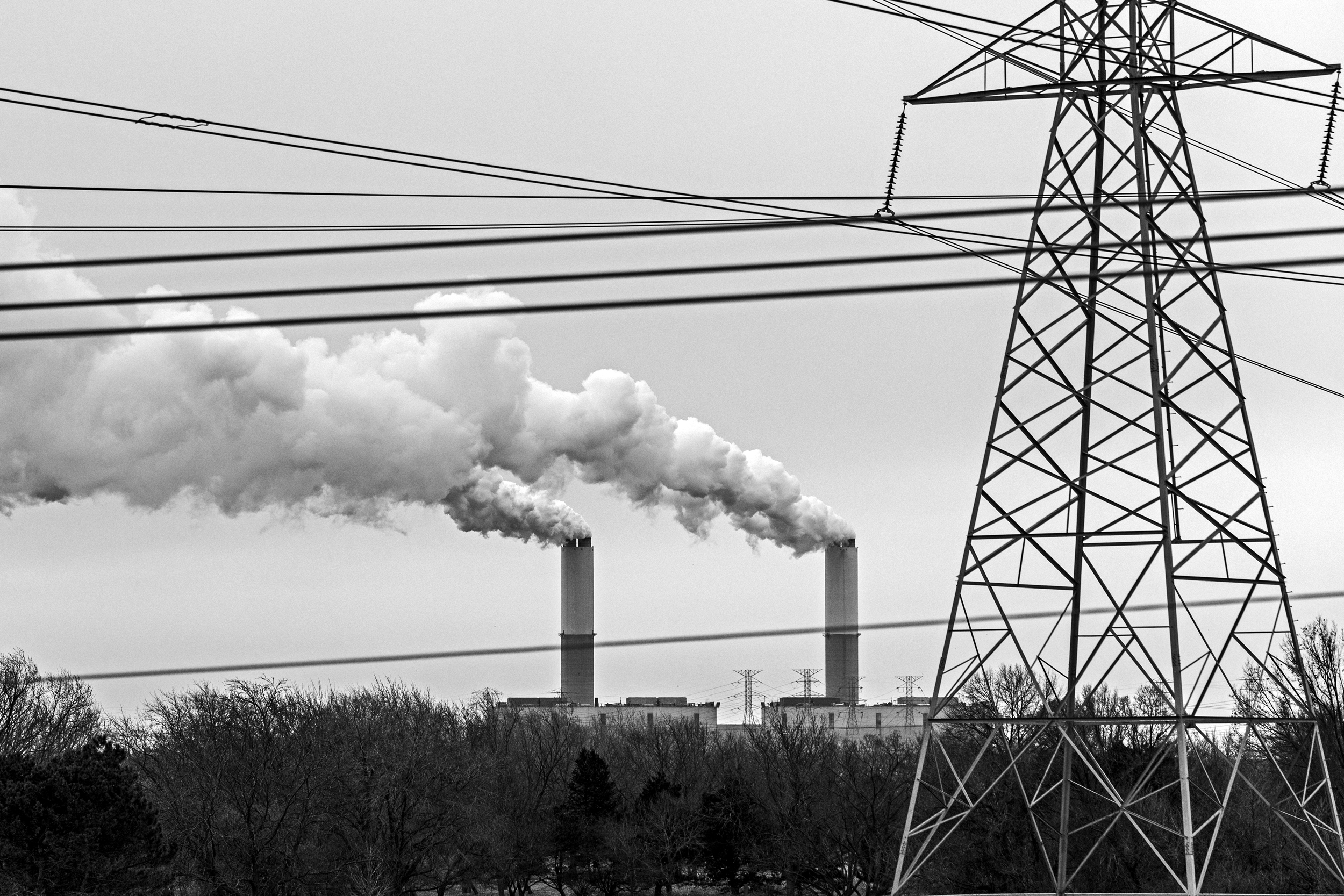
Whitmer’s election brought hope for change. But the same problems largely persist, and Michigan still has among the nation’s highest rates and worst reliability.
Dozens of bills aimed at strengthening the grid, protecting consumers and pushing utilities toward renewables during the Whitmer era died. Among those were bills that would have required credits for residents who endured long outages and bills that would have required renewable distributed generation. The latter would have established small-scale, community-level solar and wind generation, which decentralizes the power system and improves reliability.
Another bill that would have boosted the rate utilities paid residents for small-scale renewable energy production, like rooftop solar, failed. Rooftop solar still does not provide a major financial benefit for those who install panels.
Legislation that would have prohibited utilities from making campaign contributions and to require disclosure of dark money contributions also died, as did bills that would have allowed customers to buy clean energy from a company other than the monopoly utility.
Sources in part blame the utilities’ vast political spending. DTE and Consumers Energy have given nearly $1.8 million to the governor via PACs or affiliated dark money nonprofits since 2018, an analysis by energy industry analyst Energy and Policy Institute show. That does not include direct donations from executives or employees.
“DTE has a sweet deal in the state of Michigan because they’ve bought so many politicians, including the governor,” said Betsy Coffia, a Democratic state representative from Traverse City.
In a statement, DTE said the company is “committed to being a responsible corporate citizen and complies with all applicable laws regarding corporate donations and political contributions.”
“The political contributions the company makes are supported by the DTE voluntary employee PAC or DTE shareholders—not from customer revenue,” a spokesperson said.
Though Whitmer never publicly opposed utility reform, she also never called for it despite public outrage, the danger in the outages and rapidly increasing rates. Multiple legislators said the administration and party leadership told Democratic lawmakers not to introduce legislation that DTE opposed during the 2023 session, when Democrats held full control of the government, until lame duck. But the bills would not end up moving in lame duck.
This story is funded by readers like you.
Our nonprofit newsroom provides award-winning climate coverage free of charge and advertising. We rely on donations from readers like you to keep going. Please donate now to support our work.
Donate Now
Ultimately, the corporations’ interests did not align with those of consumers and the environment. As with other environmental legislation, Whitmer largely sided with donors and corporations, said Gilmer-Hill.
“If there was one thing that I was to hang my hat on in terms of killing environmental legislation, it would be the monopoly utility influence,” Gilmer-Hill said.
However, there were some bright spots. The Michigan Public Services Commission, which is now run by three Whitmer appointees, has required DTE to take steps to strengthen its grid, move toward renewables and limit rate increases.
But when a MPSC commissioner was viewed as too strong of a clean energy and consumer advocate, Whitmer replaced her with a former legislative staffer who is viewed as an industry ally.
“That was the governor’s very deliberate choice,” Coffia said.
A Democratic Trifecta Squandered
During Whitmer’s first term, environmental proposals faced a virtually insurmountable obstacle: a hostile GOP that controlled part of the legislature. But in the 2022 midterms, Democrats, for the first time in 46 years, took full control, winning the House, Senate and governor’s office.
But environmental legislation still did not move. Throughout 2023 and most of 2024, legislators who were proposing a range of bills to strengthen environmental protections said they were told by the administration and party leadership not to introduce bills opposed by DTE. Similarly, measures with broad public support, like polluter pay, stalled. Some legislators said they were told to wait until the lame duck period at the end of the session.
Advocates in part blame Joe Tate, the pro-business former speaker of the House, for blocking environmental bills from moving, but Whitmer was largely silent on most environmental legislation during the trifecta, advocates noted. Tate did not respond to a request for comment.
“Without ascribing motivations and who knew what when, you can put up a list of what moved and what didn’t,” said McGillivray, the former Sierra Club lobbyist. “It is incredibly notable that when Democrats achieved their first trifecta in 42 years, and they had the power to enact their environmental agenda, very little of it moved.”
Throughout 2024, a fight over the inclusion of consumer protections and renewable energy to the data center bill—a measure opposed by big tech lobbyists—bitterly divided the caucus. That culminated in December 2024 in a dramatic intra-caucus lame duck fight.
Polluter-pays legislation, bills on tougher utility regulation, changes to the law that would empower EGLE to take on polluters, new hazardous waste rules, community solar incentives and more died.
Whitmer, however, signed a tax-incentive bill for data centers that will likely derail her climate plan.
“The outcome of all this is that regular people are hurting and the state of Michigan has not done enough to help,” McGillivray said.
About This Story
Perhaps you noticed: This story, like all the news we publish, is free to read. That’s because Inside Climate News is a 501c3 nonprofit organization. We do not charge a subscription fee, lock our news behind a paywall, or clutter our website with ads. We make our news on climate and the environment freely available to you and anyone who wants it.
That’s not all. We also share our news for free with scores of other media organizations around the country. Many of them can’t afford to do environmental journalism of their own. We’ve built bureaus from coast to coast to report local stories, collaborate with local newsrooms and co-publish articles so that this vital work is shared as widely as possible.
Two of us launched ICN in 2007. Six years later we earned a Pulitzer Prize for National Reporting, and now we run the oldest and largest dedicated climate newsroom in the nation. We tell the story in all its complexity. We hold polluters accountable. We expose environmental injustice. We debunk misinformation. We scrutinize solutions and inspire action.
Donations from readers like you fund every aspect of what we do. If you don’t already, will you support our ongoing work, our reporting on the biggest crisis facing our planet, and help us reach even more readers in more places?
Please take a moment to make a tax-deductible donation. Every one of them makes a difference.
Thank you,

Tom Perkins
Contributor
Tom Perkins is a freelancer living in Detroit who focuses on toxic chemicals and corporate wrongdoing.