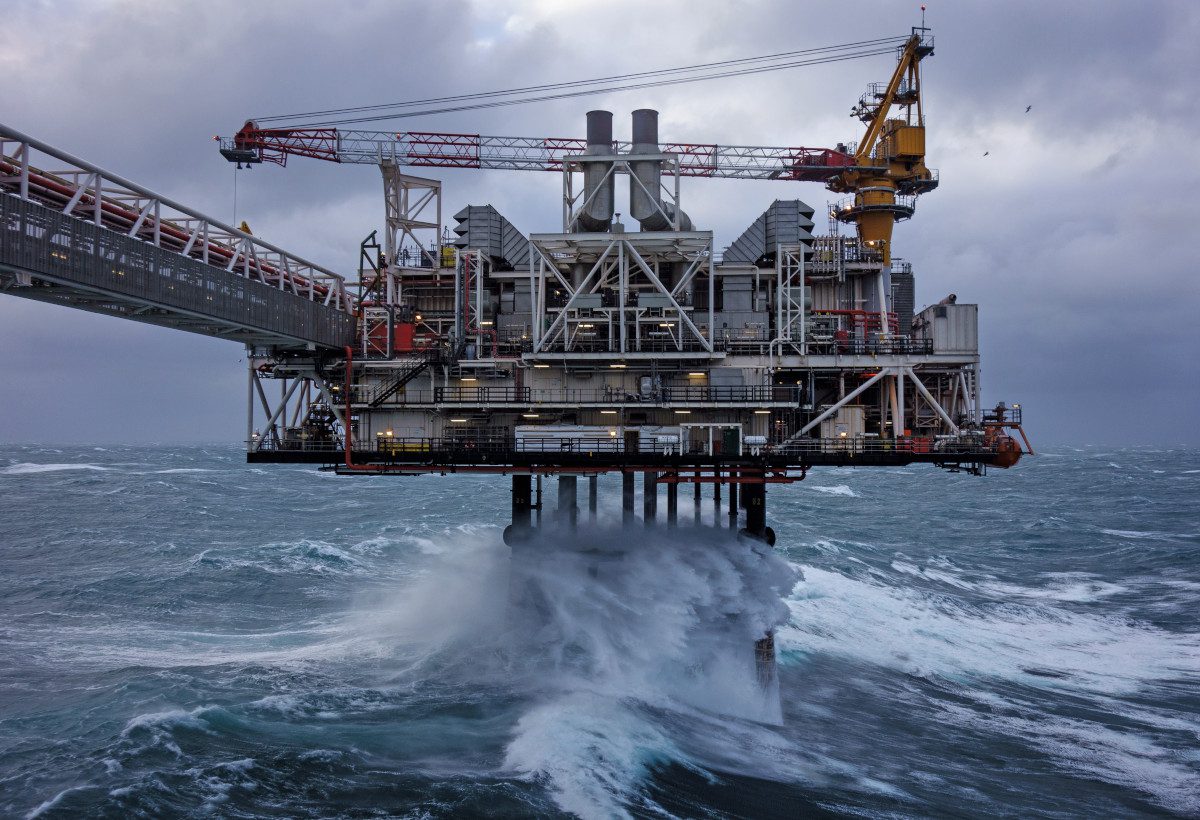


A jury in Plaquemines Parish, Louisiana, thought it had put the issue to rest.
In April 2025, after an 18-day trial, the group of south Louisianans awarded two coastal parish governments $744.6 million in damages, finding that Chevron had contributed to the decline of the state’s shoreline and wetlands.
In the face of that landmark ruling, Chevron and oil companies facing similar suits fought back.
On Monday, eight of the U.S. Supreme Court’s nine justices heard the companies’ appeal. Lawyers representing Chevron, Texaco and Exxon Mobil argued that the case should be litigated in federal, not state, court. Justice Samuel Alito recused himself from further consideration of the case, though he’d already participated in the court’s decision to address the issue.
Lawyers for Chevron argued that the company should be permitted to remove lawsuits against it from state to federal court because its actions, which stretch back to the World War II era, were at times done at the encouragement and direction of the federal government.
Paul Clement, a seasoned advocate before the nation’s highest court now representing Chevron, told the justices the controversy amounted to a “relatively straightforward case.” Because of the federal government’s outsized involvement in the oil market beginning in the 1940s, he argued, the court should require that suits over oil companies’ related actions should be heard by federal, not state, judges.
Justice Elena Kagan questioned whether the oil company’s suggested legal theory would lead to absurd outcomes, like requiring suits against vertically integrated producers to be heard in federal court while suits against oil refiners, for example, would remain in state courtrooms.
Clement suggested the court ignore the contradiction, calling it “a surface anomaly.”
Ben Aguiñaga, Louisiana’s solicitor general, told justices that Clement’s argument before the court, focused in large part on oil companies’ actions during the World War II era, strayed far from the on-the-ground, contemporary evidence that was presented during the state court trial in Pointe à la Hache.
“They do not dispute that they dumped billions of gallons of produced water from oil wells directly into our marsh,” he said of Chevron’s executives.
Aguiñaga pointed the court to its own decision in Watson, a 2007 case where the body unanimously decided that Phillip Morris, a tobacco company, could not remove lawsuits against it to federal court simply because it operated under the close supervision of government regulators.
The parishes’ successful lawsuit, which alleged Chevron had violated a 1978 Louisiana coastal management law, was rightly heard in state courts, Aguiñaga argued, because that’s where the expertise on the relevant law lies.
“We want the actual experts interpreting state law, especially when we get the Louisiana Supreme Court on an important statute like this, and especially with respect to a problem that is so sweeping in scope,” he said.
Legal experts say the oil companies view the federal courts as a friendlier venue that will be more receptive to their arguments that they are owed some protection from liability because of their role in national security. The court’s decision will determine the venue for a slew of similar cases, including 40 lawsuits by Louisiana officials. It also could have bearing on litigation now underway around the country over oil company liability for the costs of climate change.
While the legal outlines of the Louisiana case don’t seem to fall along traditional political lines, the court’s liberal justices appeared more skeptical of the oil companies’ insistence that the cases be moved to federal courts during Monday’s arguments.
Justice Sonia Sotomayor said that the companies’ suggested scope of when a case should be forced into a federal courtroom was too broad.
“They way you’re defining this, but for a nail, something could fall apart,” Sotomayor said.
But Clement told justices that federal law is broad in its categorization of cases that can be removed from state courts.
This story is funded by readers like you.
Our nonprofit newsroom provides award-winning climate coverage free of charge and advertising. We rely on donations from readers like you to keep going. Please donate now to support our work.
Donate Now
“If we are going to get into a big debate about exactly what happened in World War II, boy, I think that should take place in federal court,” he said.
The case puts lawyers for Republican-led Louisiana up against both Chevron and the Trump administration, which filed a brief in the case and delivered arguments at Monday’s hearing supporting the removal of the case to federal court.
The implications of the court’s decision could be significant, with both the $744 million judgement and future precedent at stake.
Whatever the court’s decision, Louisiana’s loss of coastline is likely to continue. The state has lost more than 2,000 square miles of land in the last century, according to the U.S. Geological Survey, though Chevron maintains it has not caused the state’s coastal woes.
An environmental impact like that shouldn’t be ignored, Aguiñaga said. “That’s why this is such a massive deal for the state of Louisiana.”
Marianne Lavelle contributed reporting for this story.
About This Story
Perhaps you noticed: This story, like all the news we publish, is free to read. That’s because Inside Climate News is a 501c3 nonprofit organization. We do not charge a subscription fee, lock our news behind a paywall, or clutter our website with ads. We make our news on climate and the environment freely available to you and anyone who wants it.
That’s not all. We also share our news for free with scores of other media organizations around the country. Many of them can’t afford to do environmental journalism of their own. We’ve built bureaus from coast to coast to report local stories, collaborate with local newsrooms and co-publish articles so that this vital work is shared as widely as possible.
Two of us launched ICN in 2007. Six years later we earned a Pulitzer Prize for National Reporting, and now we run the oldest and largest dedicated climate newsroom in the nation. We tell the story in all its complexity. We hold polluters accountable. We expose environmental injustice. We debunk misinformation. We scrutinize solutions and inspire action.
Donations from readers like you fund every aspect of what we do. If you don’t already, will you support our ongoing work, our reporting on the biggest crisis facing our planet, and help us reach even more readers in more places?
Please take a moment to make a tax-deductible donation. Every one of them makes a difference.
Thank you,

Lee Hedgepeth
Reporter, Alabama
Lee Hedgepeth is Inside Climate News’ Alabama reporter. Raised in Grand Bay, Alabama, a small town on the Gulf Coast, Lee holds master’s degrees in community journalism and political development from the University of Alabama and Tulane University. Lee is the founder of Tread, a newsletter of Southern journalism, and has also worked for news outlets across Alabama, including CBS 42, Alabama Political Reporter and the Anniston Star. His reporting has focused on issues impacting members of marginalized groups, including homelessness, poverty, and the death penalty. His award-winning journalism has appeared in publications across the country and has been cited by the New York Times, the Wall Street Journal and the Washington Post, among others.