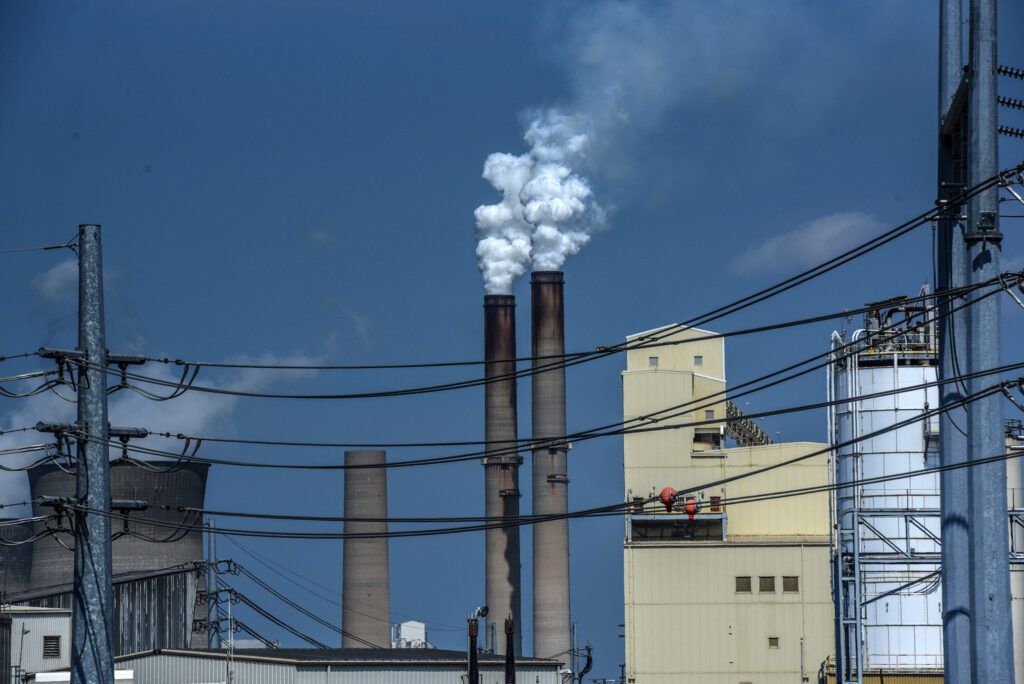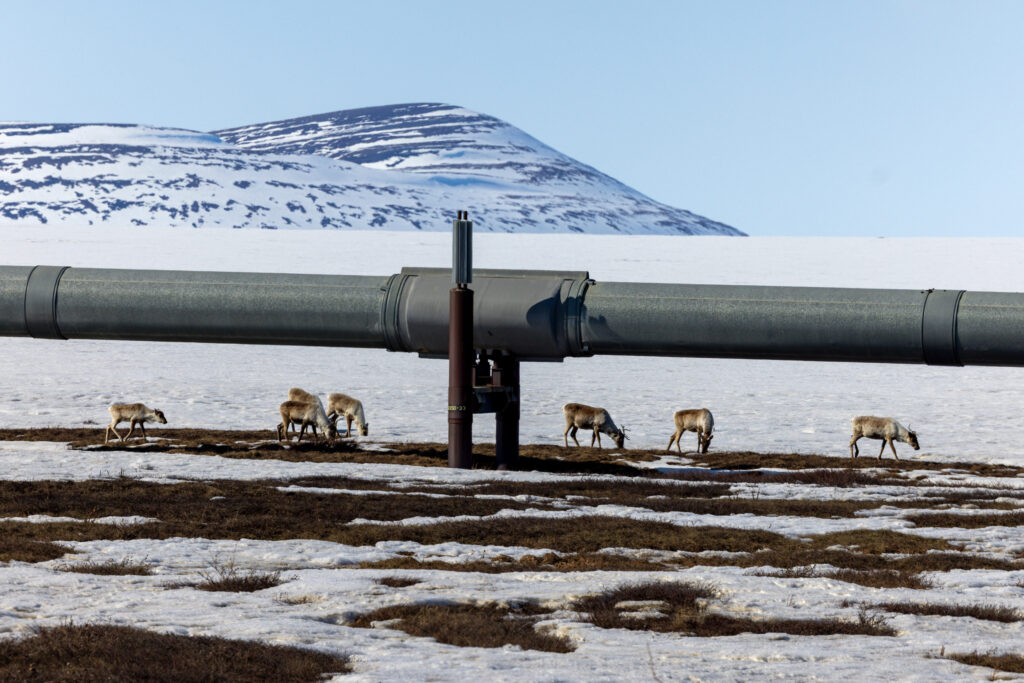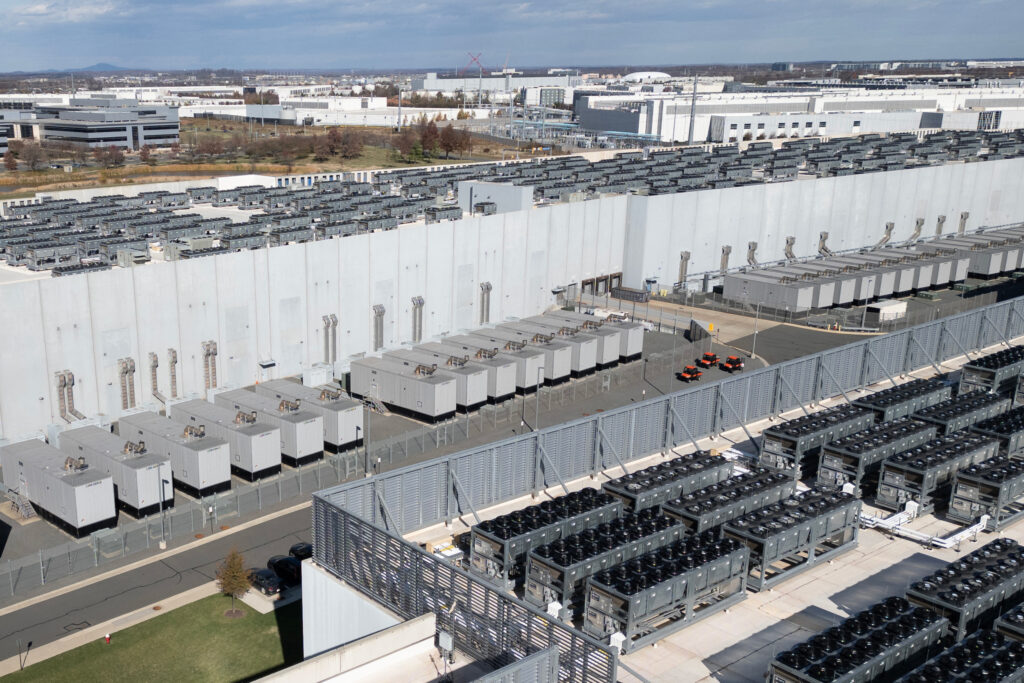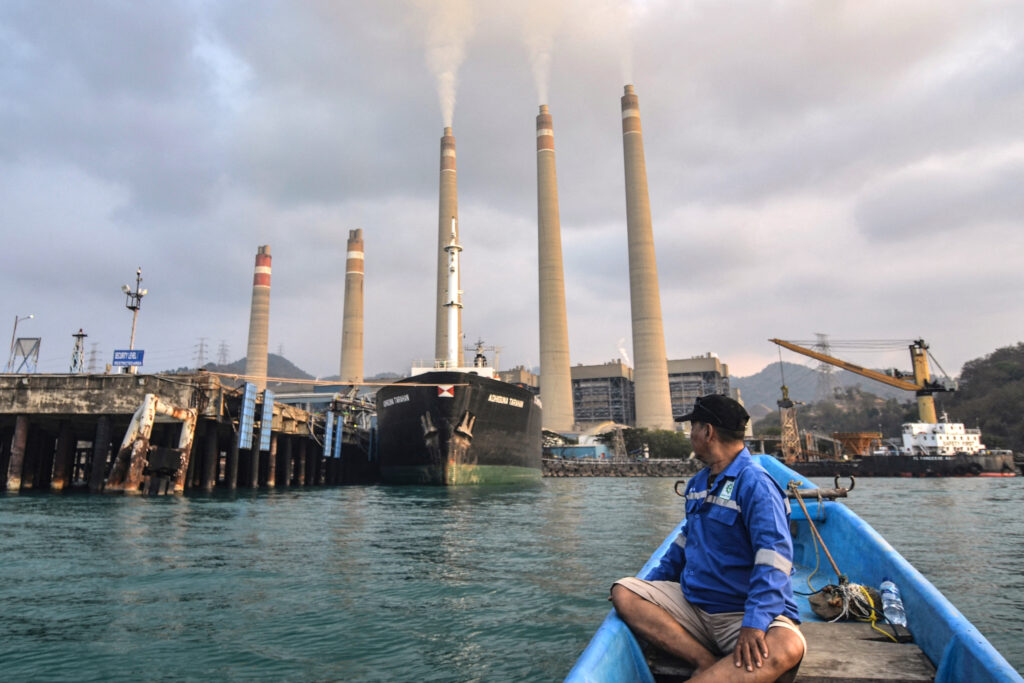


Fewer inspections, weaker enforcement and less oversight: Deep cuts to state budgets and at the Environmental Protection Agency are preventing regulators from fully protecting the public from pollution, according to a report released today by the Environmental Integrity Project.
The financial crisis at these agencies is occurring amid the expansion of the fossil fuel, plastics and petrochemical industries, said EIP Executive Director Jen Duggan.
When states have fewer resources, Duggan said, “those protections, those rights that every American has under our environmental laws, are not being realized.”
President Trump’s budget proposal would decimate 2026 spending at the EPA by 55 percent, or $4.2 billion, according to the report. House Republicans are recommending cutting it by a quarter, while the Senate Appropriations Committee voted for a reduction of just 5 percent.
If enacted, these reductions would exacerbate the EPA’s financial plight. Over the last 15 years, the agency’s budget has been slashed by 40 percent, Duggan said, and its workforce by 18 percent. Since Trump began his second term, more than 3,000 EPA workers have retired or have been terminated as part of the administration’s gutting of the agency.
The upshot of these cuts is that states have to pick up the slack, which is central to EPA Administrator Lee Zeldin’s vision for the agency. In March, on the day he announced “the biggest deregulatory action in history,” Zeldin said he intended to “give power back to the states.”
However, the Trump administration has proposed eliminating most EPA grants to the states, undercutting their agencies’ ability to wield that power.
Texas lawmakers have cut by a third the budget for the Texas Commission on Environmental Quality over the last decade, accounting for inflation, the EIP report says. The agency has also struggled to retain employees; 30 percent of its workforce has less than two years of experience, and half have less than five years.
Kathryn Guerra worked for nearly four years at the Texas Commission on Environmental Quality, where she helped small businesses and local governments comply with regulations. Most recently, Guerra worked in the EPA Region 6 office overseeing environmental justice efforts, which the Trump administration eliminated this year.
She’s now the TCEQ campaign director for Public Citizen, a nonprofit advocacy group.
The funding cuts to TCEQ described in the report “render the agency largely ineffective,” Guerra said, “and cuts to the EPA will worsen that ineffectiveness.”
According to TCEQ’s biennial report to the Texas legislature, it takes an average of 351 days to process one enforcement case. The agency’s most recent enforcement report shows a backlog of 1,400 enforcement cases, Guerra said.
“Ultimately it means communities don’t get relief from the environmental harms those polluters are causing,” she said.
States with the deepest budget cuts to environmental agencies from 2010–2024, according to the report, are:
- Mississippi—71 percent
- South Dakota—61 percent
- Alabama—49 percent
- Texas—33 percent
- Montana—32 percent
North Carolina is among the states whose budgets have contracted in the past 15 years. While the EIP report said the state Department of Environmental Quality’s budget had declined 32 percent from 2010-2014, an agency restructuring in 2015 makes quantifying the depth of the reductions difficult.
“These cuts have real impacts on the people of our state,” said Drew Ball, director of Southeast Campaigns for the Natural Resources Defense Council, on a press call about the report.
Ball also serves as a Buncombe County Commissioner in an area wrecked by Hurricane Helene in 2024.
“When a family in eastern North Carolina notices their tap water turning cloudy after a heavy rain, there are fewer staff who can investigate,” he went on. “There are fewer inspectors available to respond when hurricanes send flood waters through low lying areas, mixing industrial pollution, animal waste and storm water, the staff responsible for tracking and responding to those threats are being asked to do far more with far less.”
During the 2008 recession, North Carolina lawmakers cut DEQ’s budget, part of a statewide belt-tightening. However, the Republican-led legislature has not fully restored those reductions in more economically robust times and during an era of increased population growth.
From 2020 to 2024, census data show the state’s population has grown by more than 5 percent. But over the same period, when accounting for inflation, DEQ’s budget decreased.
In 2019, the DEQ budget was $97.4 million, according to state documents, equivalent to $123.7 million today.
The 2023 DEQ budget totalled $108.7 million, or $115.8 million in today’s money. That’s a 6 percent decrease compared with four years earlier.
Some of the agency’s functions rely on permitting fees. In at least one instance, a healthier environment has resulted in unexpected financial consequences. As state and federal regulations have made the air cleaner, Title V facilities, the largest air pollution sources, have decreased their emissions, according to a 2023 DEQ report to the legislature.
This has translated to a drop in “billable tons”—54 percent over a decade—that generate a portion of the agency’s revenue. Yet the state’s 300 Title V facilities still must be inspected and their permits renewed, even as the number of staff has decreased by 19 percent.
In 2024, the legislature increased the permit fee to help close the gap.
North Carolina had the largest staffing cuts at environmental agencies from 2010 to 2024, according to the report, though the same caveat related to the 2015 restructuring applies.
States with the next largest staffing cuts, 2010-2024, are:
- Connecticut—26 percent
- Arizona—25 percent
- Louisiana—24 percent
- Missouri and Kansas—20 percent
Adding to the budgetary crisis, it’s also been difficult for North Carolina DEQ to retain or hire employees. At its peak three years ago, the agency had vacancy rates that exceeded 20 percent. DEQ officials said at the time that agency wages, whose boundaries are set by the legislature, can’t compete with the private sector.
“Many families today live with waste in roadside ditches, wells that are too contaminated to drink from and constant fear about what the next storm will carry into their yards,” Ball said. “Yet the very agency responsible for protecting these families is facing a growing burden, with shrinking staff, shrinking budgets and shrinking political support, and now the federal government is proposing the deepest cuts to EPA in 40 years. That’s a recipe for disaster in states like ours.”
About This Story
Perhaps you noticed: This story, like all the news we publish, is free to read. That’s because Inside Climate News is a 501c3 nonprofit organization. We do not charge a subscription fee, lock our news behind a paywall, or clutter our website with ads. We make our news on climate and the environment freely available to you and anyone who wants it.
That’s not all. We also share our news for free with scores of other media organizations around the country. Many of them can’t afford to do environmental journalism of their own. We’ve built bureaus from coast to coast to report local stories, collaborate with local newsrooms and co-publish articles so that this vital work is shared as widely as possible.
Two of us launched ICN in 2007. Six years later we earned a Pulitzer Prize for National Reporting, and now we run the oldest and largest dedicated climate newsroom in the nation. We tell the story in all its complexity. We hold polluters accountable. We expose environmental injustice. We debunk misinformation. We scrutinize solutions and inspire action.
Donations from readers like you fund every aspect of what we do. If you don’t already, will you support our ongoing work, our reporting on the biggest crisis facing our planet, and help us reach even more readers in more places?
Please take a moment to make a tax-deductible donation. Every one of them makes a difference.
Thank you,

Lisa Sorg
Reporter, North Carolina
Lisa Sorg is the North Carolina reporter for Inside Climate News. A journalist for 30 years, Sorg covers energy, climate environment and agriculture, as well as the social justice impacts of pollution and corporate malfeasance.
She has won dozens of awards for her news, public service and investigative reporting. In 2022, she received the Stokes Award from the National Press Foundation for her two-part story about the environmental damage from a former missile plant on a Black and Latinx neighborhood in Burlington. Sorg was previously an environmental investigative reporter at NC Newsline, a nonprofit media outlet based in Raleigh. She has also worked at alt-weeklies, dailies and magazines. Originally from rural Indiana, she lives in Durham, N.C.