

From our collaborating partner “Living on Earth,” public radio’s environmental news magazine, an interview by host Steve Curwood with journalist Isabel Hilton.
As the United States fully withdrew from the United Nations climate negotiations in the fall of 2025, China stepped forward with an absolute emissions-reduction target of at least 7 percent by 2035. While the U.S. is the world’s largest historic emitter of greenhouse gases, China is the largest present-day emitter.
With the U.S. now gone from the negotiating table, China is effectively in charge of the terms of international climate agreements. And since energy drives so much of modern commerce, China is already seizing the moment to develop its economy by supplying the world with the clean technologies of the future, as the U.S. lags behind.
Analysis by Carbon Brief shows that in 2025 solar power, electric vehicles and other clean-energy technologies powered more than a third of China’s gross domestic product growth at the same time the U.S. economy had lower growth and higher inflation.
Isabel Hilton is a former BBC journalist and founder of Dialogue Earth, which started as China Dialogue. This interview has been edited for length and clarity.
STEVE CURWOOD: What is China’s political and economic position in the world today, given the U.S. has abandoned the international negotiations and declared an end of federal support for climate mitigation and adaptation?
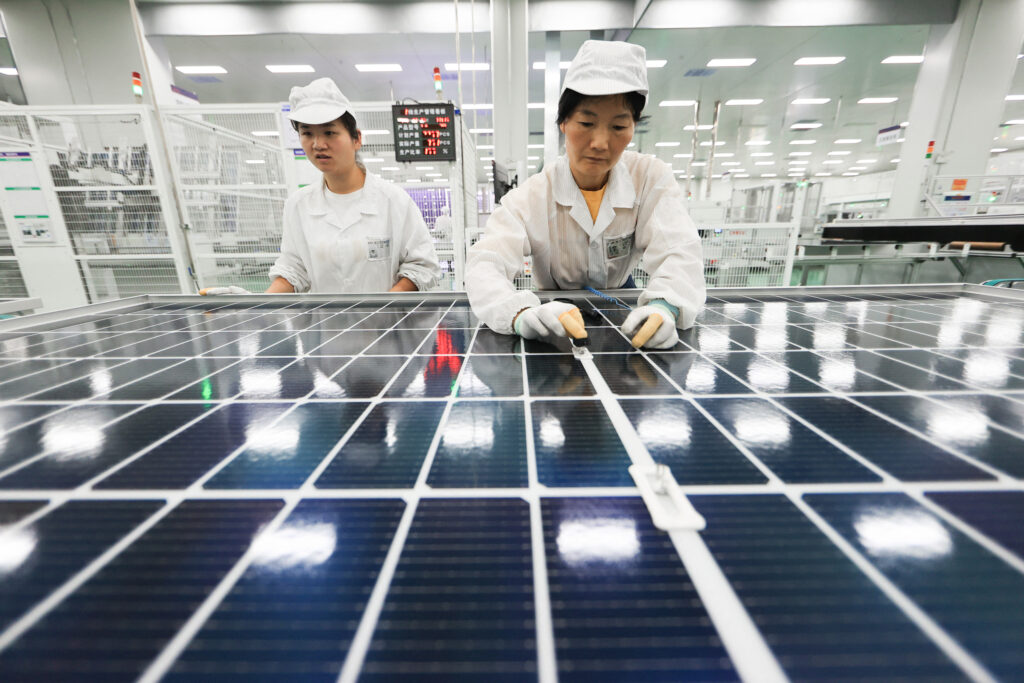
ISABEL HILTON: China’s position in terms of climate negotiations is stronger than it ever was. China remains a very big emitter, but it’s also the world’s second-largest economy. It’s the largest trading partner of dozens of countries around the world, and it’s now the biggest supplier of low-carbon goods and everything you need for the energy transition. It has a virtual monopoly position on a lot of those technologies, and it is the biggest installer of clean energy by far in the world. Last year it installed half of all the clean energy installations globally. So it’s a real leader, and it remains committed to climate negotiations.
There’s no climate-denial problem in China. There is an issue around responsibility, how fast China is going to move, when it’s going to peak and how fast it will draw down its own emissions. But in terms of the process, it’s a very big and central player these days.
CURWOOD: How successful is China now in making its transition to renewables in its economy? I understand they’re still building coal plants there.
HILTON: They are building coal plants, and there are a number of reasons for that. As we came out of the pandemic, there were two successive years in which, for different reasons, there were widespread power cuts in China, just as they were trying to get the economy off the ground. If you’re a provincial governor in China, you have targets to meet, you have an economy to grow and losing power is not helpful, so you essentially want to have your form of energy security. So while we’ve seen a huge growth in electrification in China and a surge in electricity demand which has substantially been met by renewables, we still have the anxiety of what happens if there is a drought and there’s no more hydropower? What happens if, for whatever reason, we lose supplies of gas and oil?

The thing that China has in super abundance is coal. They are very efficient plants, and they are now saying that they’re using them largely for the capacity market, which is slightly unconvincing, but that means that they’re not going to have the same old system where they’re committed to buy X amount of energy per year from the coal plants, which meant that they got priority access to the grid. What they’re now saying about coal plants is that they will prioritize renewable energy, and they’ll use the coal plants for backup when they need them. So that’s the story. I’m not entirely convinced, but that’s the excuse, if you like.
The other important thing is that the coal industry is very big in China, so you have a couple of provinces in the north that are almost entirely dependent on coal for their economies. It’s quite hard to shut down vested interests that are quite that big. So it will go slowly. Building new coal is not helpful, but we have to recognize that China has politics too.
CURWOOD: China is a leader now in renewable energy. How did it get there? To what extent did horrible air stimulate that move?
HILTON: Bad air was certainly around when the decision was made. In the first decade of this century, you had China with an economic model that was beginning to fail. It was the catch up, very rapid growth, “let’s go for GDP growth at all costs,” and that works for a while. You’re making a lot of cheap, low-added-value goods. But after a while that runs out of steam. You’ve used up all your first advantages, and you have to get more efficient. You have to move up the technology chain if you’re going to go on growing. Otherwise, you get stuck in the middle-income trap.
So China was looking at this, thinking, what are the technologies of the future? At a time when there was also terrible air. Pollution was a thing. People were very, very unhappy; there were big demonstrations. But also the Chinese realized that climate change was real and that China was going to be impacted heavily by it. But also, if the world was going to make a transition to clean economies, it was going to need technologies, and China decided to combine industrial ambition, economic ambition and scientific realism and invest enormously in every aspect of every technology that was going to be required for renewables. So that was wind energy, solar, carbon capture, nuclear power. There’s pretty much everything that you can think of that the 21st century is going to need. And China decided that it was going to be the world’s dominant purveyor of those goods and technologies, and it bet the economy on those with great success.
CURWOOD: Historically, the West got very rich with fossil fuels. The economy really built up with the fossil fuel economy. Given that history and China’s advance in the area of renewable energy, what does this put the United States and China vis a vis each other when it comes to economic growth and competition? To what extent is China in a position to eat America’s lunch now for further development?
HILTON: That’s certainly what it looks like because the United States has big incumbent industries, has a lot of relatively cheap fossil fuel, and industries want to defend their interests.
The U.S. has been a very stop-start player in climate right from the beginning. The current administration is probably certainly the worst, but right from the start, the United States has been, you know, not entirely a helpful player. It had its good moments, and it had its not-so-good moments, like signing up for Kyoto, then not ratifying it and so on. It is unfortunate for the world that the United States is such a big emitter.
“China decided to combine industrial ambition, economic ambition and scientific realism and invest enormously in every aspect of every technology that was going to be required for renewables.”
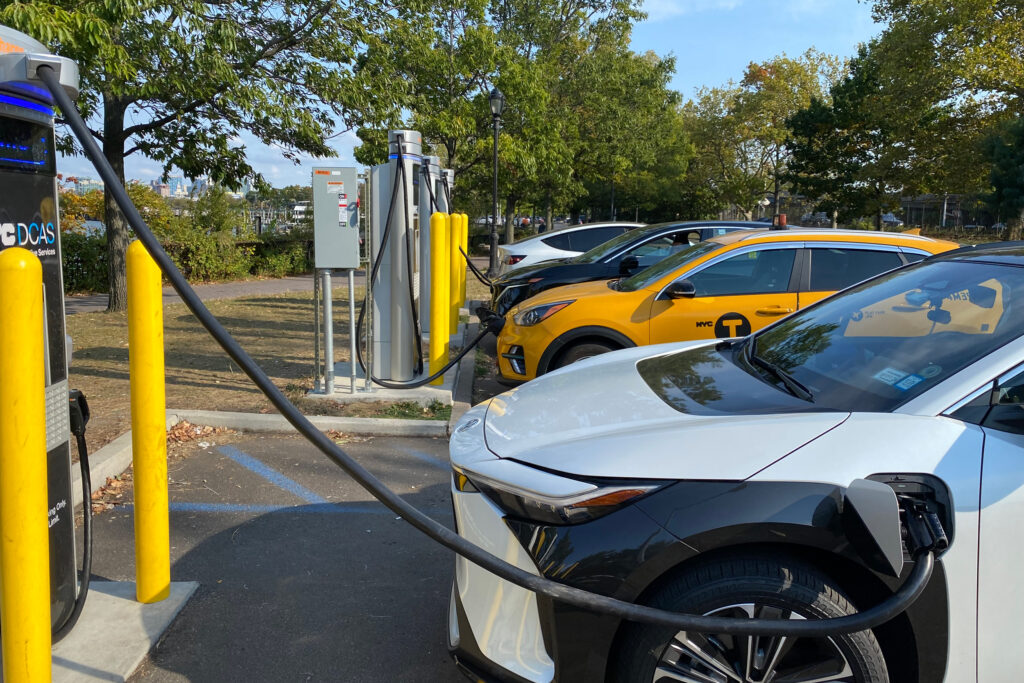
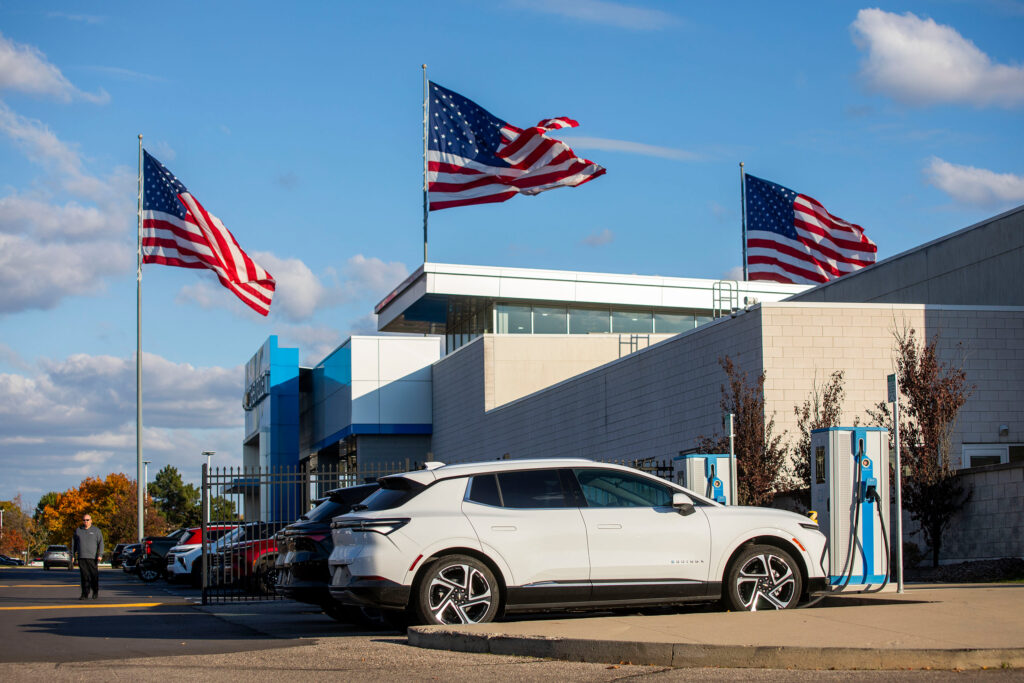
It’s unfortunate for the United States that it’s turning its back on the future. If you look at all the technologies that China now dominates—because it’s a very efficient manufacturer and has secured its supply chains—it has managed to lower the cost of those technologies. So now it’s actually cheaper to generate renewable electricity than it is to generate any kind of power with fossil fuels, and all the technologies that ride on the electric economy, and that includes electric vehicles. It includes all forms of transport. There will at some point be an electric plane. All of these things and all the associated technologies, like amazing battery technologies, are now dominated by China.
Europe and the United States are not short of innovation, but China has scale. It has an enormous domestic market and it has a planning system which committed the entire economy to go in that direction. The fact is that it’s very hard now to compete with China, and if the United States draws back from all this sector, it’s going to be very, very hard to catch up, in my view.
CURWOOD: One of the ways China has been asserting itself as the dominant force in the clean energy future is by forging trade partnerships with other nations, including Canada, which recently cut tariffs on Chinese EVs from 100 percent to just 6 percent. What does that deal mean both in terms of geopolitics and economics?
HILTON: It’s obviously distressing for the Canadian motor industry, and it raises another set of concerns. If you look at the politics of energy these days, we used to talk about energy security in terms of a reliable supply at a reasonable price. So you secured your oil wherever you secured it, and when the prices went up, your economy suffered. Now, energy security in a renewable age is a given. Supply is a given because you install your wind or your solar energy, and you have storage. There is no problem of supply, but there is a problem that all these technologies remain connected. Particularly electric vehicles remain connected to their manufacturer; they’re intelligent machines.
The difficulty with that is that it opens up a whole other set of security concerns when the origins of those technologies are not in a country that you can reliably assume is a friendly country, and that is the case with China.
We all have relations with China, but it is in some ways potentially an antagonistic power. In Europe we are deeply concerned about the China-Russia relationship because of Russia’s invasion of Ukraine. So there are all sorts of questions about security, about energy security, which are to do with critical national infrastructure and access to the grid and the collection of data and the capacity to hit a kill switch, which are embodied in things like electric vehicles. There is a whole parallel conversation going on about how you secure your systems with those technologies, or can you?
CURWOOD: What you’re alluding to is the prospect that, say, a Chinese electric vehicle might have a circuit in it that could be activated that shuts it down. And if you had a whole bunch of those vehicles, they might just be stuck [on] the side of the road because somebody doesn’t like it, sort of the way that the satellite telephony stuff that Elon Musk has, it’s been used in Ukraine, can also be shut down at a moment’s notice, that Starlink can just go away. Am I talking about the right set of concerns here?
HILTON: You are. There’s very likely to be a kill switch because the manufacturer needs to upgrade the technology. This connection has to be maintained. You get software updates over the air, you get firmware updates over the air, so that’s kind of a given.
There is also the possibility that a car could be hacked and accessed and made to commit an act of urban terrorism. A driverless car could be used as a terrorist vehicle. There are all sorts of security concerns about these technologies, and they are now being mapped on to industrial concerns.
If you look at how the Chinese treat, for example, a Tesla in China, all the data has to stay in China, and there are places you’re not allowed to drive that car. You’re not allowed to drive it near a military base. You’re not allowed to drive it around town if a leader like Xi Jinping is visiting. So the Chinese are very well aware that there are security issues around electric vehicles.
This story is funded by readers like you.
Our nonprofit newsroom provides award-winning climate coverage free of charge and advertising. We rely on donations from readers like you to keep going. Please donate now to support our work.
Donate Now
CURWOOD: How important are certain minerals that the Chinese seem to have a pretty good hold of when it comes to the renewable energy business? To what extent are U.S. tech industries, as well as other industries, dependent on China for this material?
HILTON: The West abandoned the processing of critical minerals to China, because it’s a very dirty process. China has been de-risking its relations with the rest of the world since 2015, and part of the strategy of de-risking was to secure supply chains. So it made a concerted effort to source critical minerals all over the world, particularly in Congo or in Chile, in the lithium triangle in Latin America.
But it’s not just the mining, it is particularly the processing that China virtually monopolizes, and that is going to take some time for Europe or the United States to substitute, because we have left the technology to the Chinese. They’ve got very good at it. And we would be starting from scratch. Other countries would be starting from scratch.
So although sourcing of these minerals is not a major problem, rendering them useful is and they are absolutely essential. They’re essential to batteries. They are essential to the defense industry. Even if the United States is turning its back on renewables, at least at the official level, it has a defense industry. Everything you drive, everything you fly, uses these critical minerals. So it’s a very, very big and potentially powerful monopoly that China has at the moment.
CURWOOD: Those minerals were also used in the iPhones or the smartphones, right?
HILTON: They’re in everything. Your house is full of them. Your pocket has quite a few. They are, in a way, as essential to the contemporary economy, to the digital world, as oil or coal was to the old industrial world.
CURWOOD: To what extent is progress on the climate a political, ideological warfare matter between the U.S. and China?
HILTON: It’s very hard to understand why the U.S. administration has taken the turn that it did. It’s quite clear that the Chinese decided to build their capacity in renewable technologies, and they did it with great success. The benefits to the world are that they have lowered the price of all these technologies to the point that the price barrier has virtually gone and that means that countries that have yet to build their energy systems don’t have to go through the high-emitting fossil fuel stage. They can go straight to renewables.
Now, if you’re in the oil business, that’s a threat. If you’re in the coal business, that’s a threat. I don’t think that political pressure from the United States to keep the oil and the coal business going is going to be very successful, because in the end, business is business, and the administration’s efforts to stimulate the domestic coal business in the U.S. didn’t work first time around, and I very much doubt they’ll work this time around, because those days are kind of over.
In geopolitical and ideological terms, it’s greatly to China’s benefit to be seen as a responsible climate player. Twenty years ago, China was the bad boy of climate, because it was a very high emitter. It is still a very high emitter. It still needs to get its emissions down, but reputationally, it’s not nearly as bad as it was 20 years ago. Reputationally, it has quite a few cards to play, including its phenomenal installation of renewable energy at home and its supply of cheap and reliable technologies abroad.
About This Story
Perhaps you noticed: This story, like all the news we publish, is free to read. That’s because Inside Climate News is a 501c3 nonprofit organization. We do not charge a subscription fee, lock our news behind a paywall, or clutter our website with ads. We make our news on climate and the environment freely available to you and anyone who wants it.
That’s not all. We also share our news for free with scores of other media organizations around the country. Many of them can’t afford to do environmental journalism of their own. We’ve built bureaus from coast to coast to report local stories, collaborate with local newsrooms and co-publish articles so that this vital work is shared as widely as possible.
Two of us launched ICN in 2007. Six years later we earned a Pulitzer Prize for National Reporting, and now we run the oldest and largest dedicated climate newsroom in the nation. We tell the story in all its complexity. We hold polluters accountable. We expose environmental injustice. We debunk misinformation. We scrutinize solutions and inspire action.
Donations from readers like you fund every aspect of what we do. If you don’t already, will you support our ongoing work, our reporting on the biggest crisis facing our planet, and help us reach even more readers in more places?
Please take a moment to make a tax-deductible donation. Every one of them makes a difference.
Thank you,