

With the repeal of the Environmental Protection Agency’s scientific finding on the dangers of greenhouse gases, the Trump administration is aiming to take out many federal actions on climate change in one blast.
The first impact of this deregulatory detonation will be on cars. The EPA packaged its withdrawal of the 17-year-old endangerment finding with elimination of the ambitious tailpipe pollution standards adopted by the Biden administration. It’s a move designed to alter the choices consumers are likely to see in showrooms, the kinds of vehicles rolling off assembly lines and the technology evolution unfolding in U.S. manufacturing.
In fact, the change is already underway. Ford announced in December it would stop making its F-150 Lightning pickup truck and would otherwise scale back its electric vehicle plans. General Motors ended plans to build EVs at its Orion plant in Michigan, shifting the facility to production of big gas-powered models like the luxury Cadillac Escalade SUV and the Chevrolet Silverado pickup truck. Stellantis has cancelled plans for a fully electric Ram 1500 truck and has scrapped several plug-in hybrids, including the Chrysler Pacifica and Jeep Grand Cherokee 4xe.
There’s little doubt that the auto industry is pivoting—for the time being, anyway—to a future of higher emissions in the United States. EPA’s rescission of tailpipe pollution standards wipes out what the Biden administration had calculated would be a 7.2 billion-metric-ton cut in greenhouse gas emissions, the largest single step that any nation has taken on climate change.
But there are sharply different views on what this decision means for American consumers and carmakers. President Donald Trump and his top officials on Thursday touted a cascade of benefits they see rippling throughout the economy, starting with more affordable vehicles.
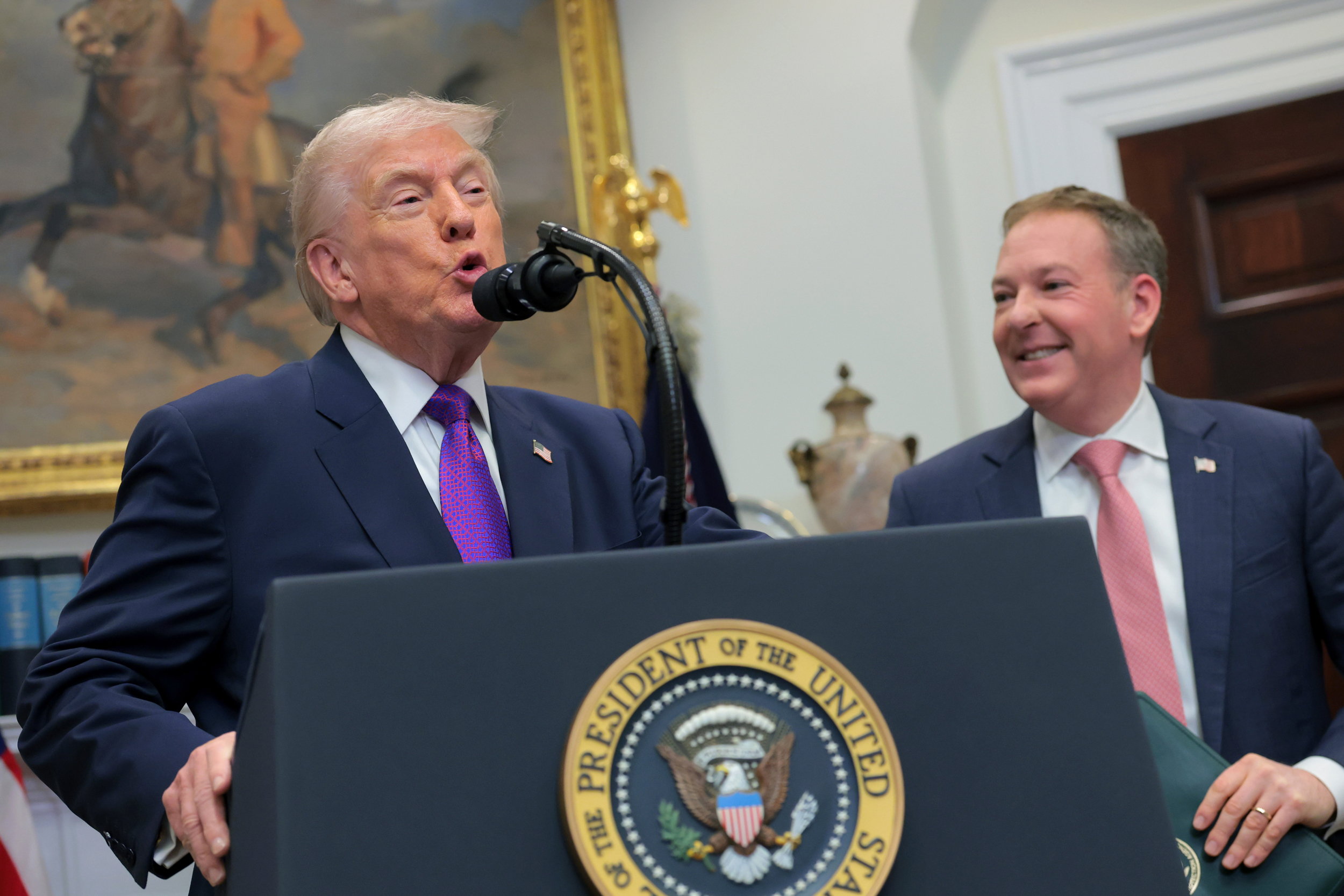
“You’re going to get a better car, a car that starts easier, a car that works better, for a lot less money,” said Trump from a podium in the White House’s Roosevelt Room, as he unveiled what he described as the biggest deregulatory action in history.
Critics of the move argue, however, that U.S. car buyers will be left with fewer choices as the pressure for automakers to expand their EV offerings ends. They contend that U.S. automakers will be hurt in the long run as they fall further behind China in a global market that remains committed to a transition to EVs.
“American families will suffer long-term harms so that giant auto and oil companies can pocket short-term profits,” said Dan Becker, director of the Center for Biological Diversity’s Safe Climate Transport Campaign. “They’re popping champagne corks at the OPEC and GM headquarters but also in Beijing, where China’s EV makers will face no competition from the U.S. to dominate the world’s clean car market.”
EV Sales Slip Domestically, Sail Globally
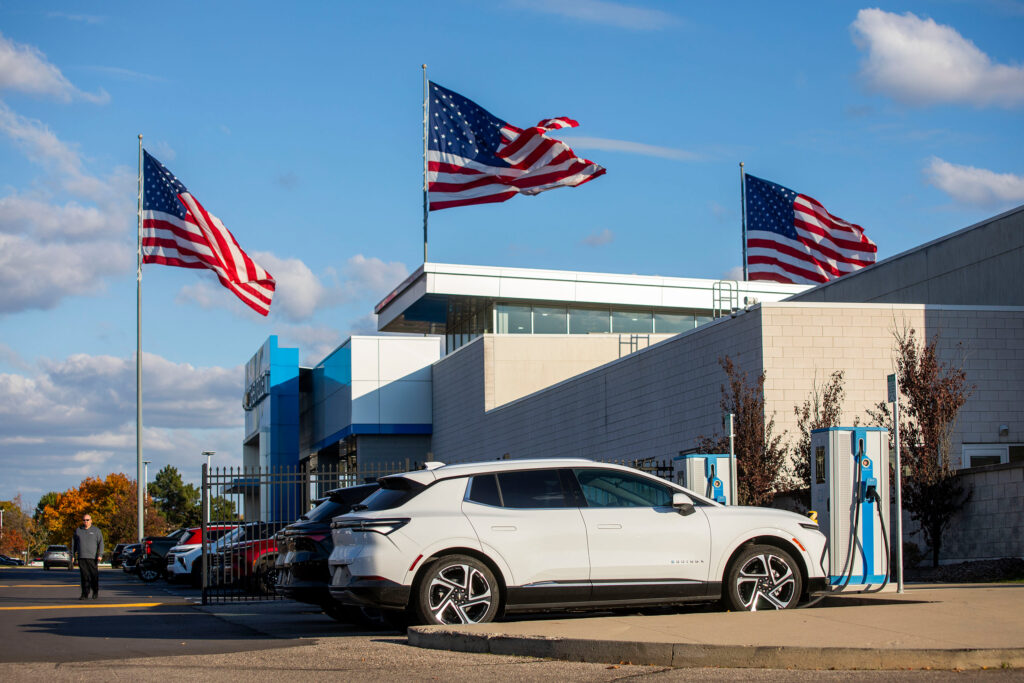
The United States already is on a different trajectory than the rest of the world when it comes to EVs. In 2025, EV sales fell 4 percent in the United States while growing 33 percent in Europe and 20 percent worldwide, according to the United Kingdom-based research firm Rho Motion.
EPA Administrator Lee Zeldin, appearing alongside Trump at the White House, said the Biden rules were forcing automakers to build vehicles that U.S. consumers did not want. “No longer will automakers be pressured to shift their fleets toward electric vehicles, vehicles that are still sitting unsold on dealer lots all across America,” Zeldin said.
But EV sales in the United States had five consecutive years of growth before last year’s fall-off, which was at least partly due to the Trump administration rolling back federal support for EVs—most importantly, Congress’ repeal of the $7,500 federal consumer tax credit in the One Big Beautiful Bill Act. After the tax credit expired last Sept. 30, EV sales in the United States plummeted.
In recent weeks, Ford, GM and Stellantis wrote off a collective $52.1 billion in investments they had made in electric vehicles. Those losses exceed the $34.1 billion in total profits for the “Big Three” in 2024.
Trump argues the lifting of regulations will accelerate a revival of the industry that is already underway. He talked about his January visit to Ford’s Dearborn Truck Plant in Michigan, when executive chairman Bill Ford Jr. said the plant was expanding to 24-hour shifts, six days a week to build its iconic F-150 pickup truck.
“Perhaps no industry has benefited more from our historic deregulation campaign than the U.S. auto industry,” Trump said on Thursday.
After the president announced the endangerment finding repeal, John Bozzella, president and CEO of the auto industry’s main trade group, the Alliance for Automotive Innovation, put out a supportive statement, saying the action will “correct some of the unachievable emissions regulations enacted under the previous administration.” Although Bozzella had appeared alongside Biden administration officials and a phalanx of EVs at the rollout of the regulations in 2024, he has been urging the Trump administration to ease the rules.
“I’ve said it before: Automotive emissions regulations finalized in the previous administration are extremely challenging for automakers to achieve given the current marketplace demand for EVs,” Bozzella said. “The auto industry in America remains focused on preserving vehicle choice for consumers, keeping the industry competitive, and staying on a long-term path of emissions reductions and cleaner vehicles.”
But in its comments to the EPA last fall on the repeal proposal, the auto industry alliance raised concerns that the Trump administration’s total repeal approach “has the potential to further amplify the severity of policy swings in future administrations.”
Joshua Linn, an economics professor at the University of Maryland and a senior fellow at Resources for the Future, a think tank that studies energy and the environment, said the auto industry wants “a consistent set of standards over time, because that’s going to make planning much easier.”
Linn said that the Biden administration’s tailpipe standards, which targeted a 50 percent cut in greenhouse gas emissions from 2026 levels by 2032, likely would have been difficult for automakers to meet, especially in the later years, when deeper greenhouse gas emissions cuts were being required. The Trump administration could have addressed those concerns by easing the rules, but this action is much more extreme, Linn said, and it goes beyond what would be best both for automakers and consumers.
This story is funded by readers like you.
Our nonprofit newsroom provides award-winning climate coverage free of charge and advertising. We rely on donations from readers like you to keep going. Please donate now to support our work.
Donate Now
Stringent standards likely would help U.S. automakers to develop vehicles that could be sold in international markets where there are strong emissions requirements, Linn said. Instead, those markets are being dominated by Chinese competitors that are making high-tech, affordable EVs, especially BYD, which in 2025 surpassed Ford to become the world’s sixth-largest automaker, with 4.6 million vehicles sold.
Zeldin said consumers would benefit, now that U.S. carmakers no longer were being pushed into electrification of their fleets. “If you want an electric vehicle, buy that,” he said. “If you want a diesel truck, then buy that. If you want a gas-powered vehicle or a hybrid, well, more power to you. That’s what freedom and choice look like.”
But U.S. consumers don’t have access to low-cost EVs that are available elsewhere. The U.S. government has long had high tariffs designed to keep Chinese EVs out of the domestic market, and now, U.S. consumers won’t have a choice of comparable affordable EVs from U.S. automakers any time soon, either.
“Consumers are worse off,” Linn said.
Michael Berube, president and CEO of the clean vehicle advocacy group CALSTART, says the timing couldn’t be worse. “Weakening vehicle standards and undermining the endangerment finding injects uncertainty into the market at a moment when global competition for clean vehicle leadership is accelerating,” he said. “We risk ceding our leadership just as global demand for low- and zero-emission technologies continues to surge.”
Research by Rhodium Group indicates that EV sales in the United States, which were projected to be as much as 71 percent of the light-duty vehicle market in 2040 under Biden policy, will grow at about half the pace.
Paying Less at the Dealer, More at the Pump
The Trump administration’s transportation department has a separate rulemaking underway to ease fuel economy standards for new cars. Instead of ramping up from a current average of 30.4 miles per gallon to 50.4 miles per gallon by model year 2031, as they would have had to do under the Biden pollution rules, carmakers would have a more modest goal of 34.5 miles per gallon.
As a result, the Trump team calculates the price of new vehicles will be about $2,330 less than it would have been under the Biden standards—a dramatic increase in claimed savings compared to the $1,000 they had calculated when first making the proposal last summer. The EPA detailed a number of changes in its economic projections, including the possibility of far lower gasoline prices in the future.
But even the original economic analysis acknowledged trade-offs: It said U.S. car owners will be buying about 100 billion gallons more gasoline through 2050 as a result of the changes, costing up to $185 billion more at the gas pump. The Trump administration’s revised analysis concludes that the costs are far outweighed by other benefits, such as the lower cost of vehicles, especially in a future scenario in which oil prices are much lower.
As for the side effects, air pollution will be commensurate with that gasoline use—not only carbon dioxide but also harmful particulate matter and smog. The Biden administration had calculated that by reducing fossil fuel pollution, its car standards would have provided $13 billion in annual health benefits to Americans, especially people of color and those with low incomes who live in urban corridors. In counterpoint, the Trump administration argues its eased regulations will save lives, as consumers will be better able to afford new cars that provide more safety features.
For those who have worked for years to get cleaner vehicles on U.S. roadways, the costs seem staggering. “To be honest with you, I’m heartbroken,” said Margo Oge, who spent 32 years at the EPA, including as director of the EPA’s office of transportation and air quality over three administrations, from 1994 to 2012. Now board chair emeritus of the International Council on Clean Transportation, Oge is worried about both the health and economic toll.
“Things are just going to get worse with air pollution, climate impacts and economic impacts … because every other country is moving forward except us. We’re going backwards,” she said. “The country is going to be an island of obsolete technologies, while everybody else is moving toward electrification.”
About This Story
Perhaps you noticed: This story, like all the news we publish, is free to read. That’s because Inside Climate News is a 501c3 nonprofit organization. We do not charge a subscription fee, lock our news behind a paywall, or clutter our website with ads. We make our news on climate and the environment freely available to you and anyone who wants it.
That’s not all. We also share our news for free with scores of other media organizations around the country. Many of them can’t afford to do environmental journalism of their own. We’ve built bureaus from coast to coast to report local stories, collaborate with local newsrooms and co-publish articles so that this vital work is shared as widely as possible.
Two of us launched ICN in 2007. Six years later we earned a Pulitzer Prize for National Reporting, and now we run the oldest and largest dedicated climate newsroom in the nation. We tell the story in all its complexity. We hold polluters accountable. We expose environmental injustice. We debunk misinformation. We scrutinize solutions and inspire action.
Donations from readers like you fund every aspect of what we do. If you don’t already, will you support our ongoing work, our reporting on the biggest crisis facing our planet, and help us reach even more readers in more places?
Please take a moment to make a tax-deductible donation. Every one of them makes a difference.
Thank you,

Marianne Lavelle
Bureau Chief, Washington, D.C.
Marianne Lavelle is the Washington, D.C. bureau chief for Inside Climate News. She has covered environment, science, law, and business in Washington, D.C. for more than two decades. She has won the Polk Award, the Investigative Editors and Reporters Award, and numerous other honors. Lavelle spent four years as online energy news editor and writer at National Geographic. She spearheaded a project on climate lobbying for the nonprofit journalism organization, the Center for Public Integrity. She also has worked at U.S. News and World Report magazine and The National Law Journal. While there, she led the award-winning 1992 investigation, “Unequal Protection,” on the disparity in environmental law enforcement against polluters in minority and white communities. Lavelle received her master’s degree from Columbia University Graduate School of Journalism, and is a graduate of Villanova University.

Dan Gearino
Reporter, Clean Energy
Dan Gearino covers the business and policy of renewable energy and utilities, often with an emphasis on the midwestern United States. He is the main author of ICN’s Inside Clean Energy newsletter. He came to ICN in 2018 after a nine-year tenure at The Columbus Dispatch, where he covered the business of energy. Before that, he covered politics and business in Iowa and in New Hampshire. He grew up in Warren County, Iowa, just south of Des Moines, and lives in Columbus, Ohio.