

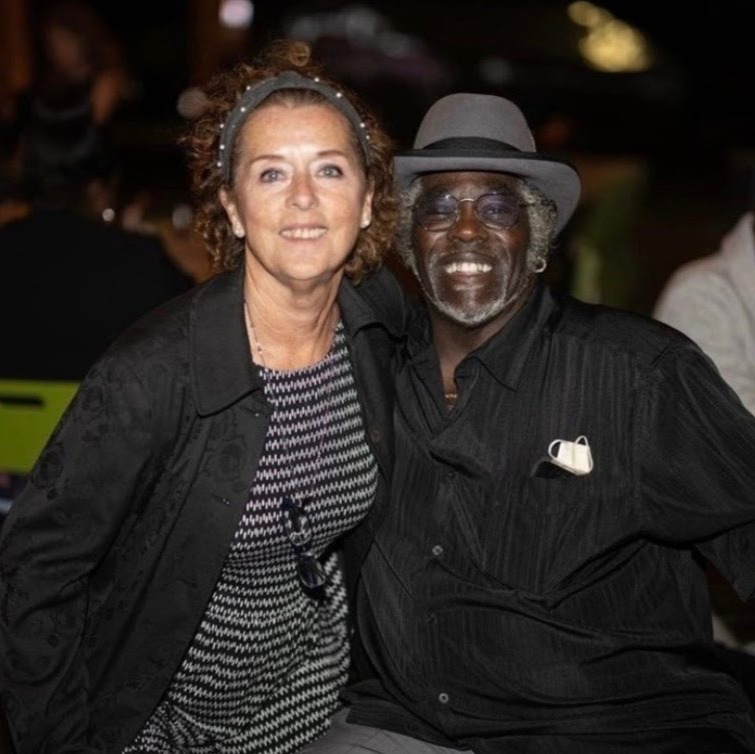
BIRMINGHAM, Ala.—Haley Lewis dreamed about Charlie Powell last night.
It’s been more than a month since Powell, a staple in Birmingham’s advocacy community, died at age 72. Lewis, his friend and an attorney at the Environmental Integrity Project, is only beginning to come to grips with the loss.
Powell was the founder of People Against Neighborhood Industrial Contamination (PANIC), a grassroots organization focused on organizing residents in north Birmingham and beyond around environmental advocacy.
Lewis said Powell was a leader and mentor, and she’s focused on carrying on the legacy he left behind, including fighting to protect environmental protections she fought alongside him to secure.
Among those protections was a Biden-era federal rule requiring fenceline monitoring and improved workplace practices at 11 coke oven facilities across the country.
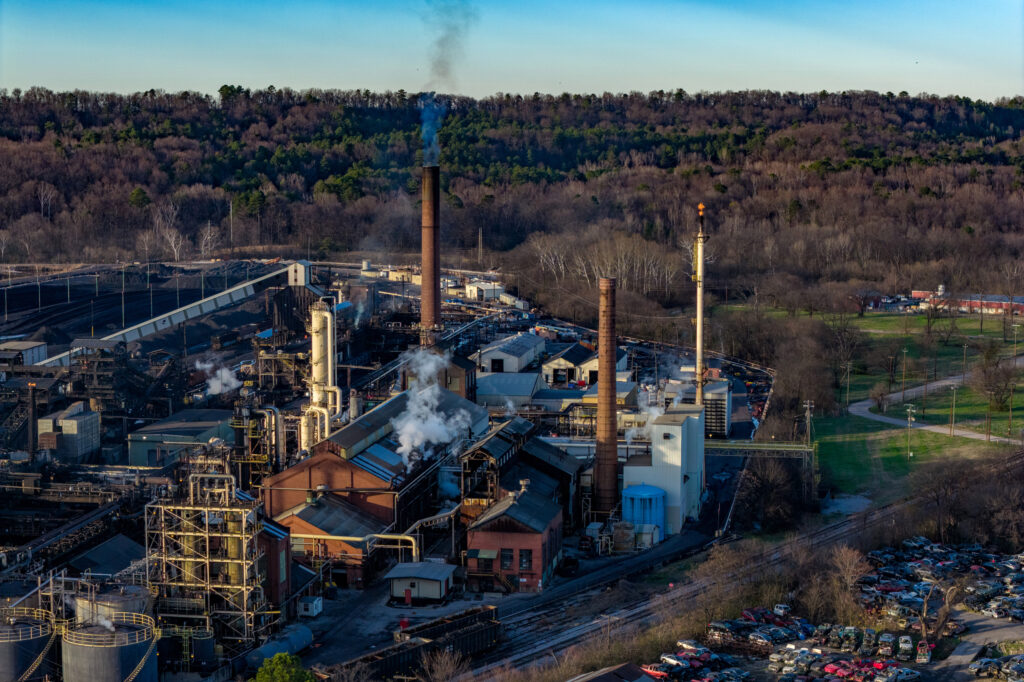
Coke ovens are high‑temperature, oxygen‑free chambers used to bake certain types of bituminous coal into coke, a nearly pure carbon fuel used in blast furnaces for steelmaking. Coal is heated to roughly 1,000–1,400 degrees Celsius, emitting particulate matter, volatile organic compounds, polycyclic aromatic hydrocarbons (PAHs), benzene and other light oils, ammonia, sulfur compounds, nitrogen oxides, carbon monoxide, cyanide compounds, metals such as cadmium and arsenic and other hazardous air pollutants. Many of these are carcinogenic.
In 2025, the Trump administration announced it would exempt coke oven operators from the new requirements for two years under a provision of the Clean Air Act allowing such exceptions only if “the President determines that the technology to implement such standard is not available and that it is in the national security interests of the United States to do so.”
Jaclyn Brass, a staff attorney for the Southern Environmental Law Center, said that the White House’s decision to exempt coke oven operators from fenceline monitoring and other new regulations meets neither requirement.
“It’s a pretty clear case that he does not have the authority to do this,” Brass said.
It’s undisputed that the technology exists to comply with the fenceline monitoring requirements because it’s already been done, Brass said, when facilities complied for a brief period before the current administration came to power.
During that time, fenceline monitoring showed elevated levels of benzene at several coke oven facilities. Monitoring programs in Indiana, Pennsylvania and Alabama recorded benzene levels from nearly two to more than 14 times the occupational exposure limit recommended by the American Council of Governmental Industrial Hygienists (ACGIH).
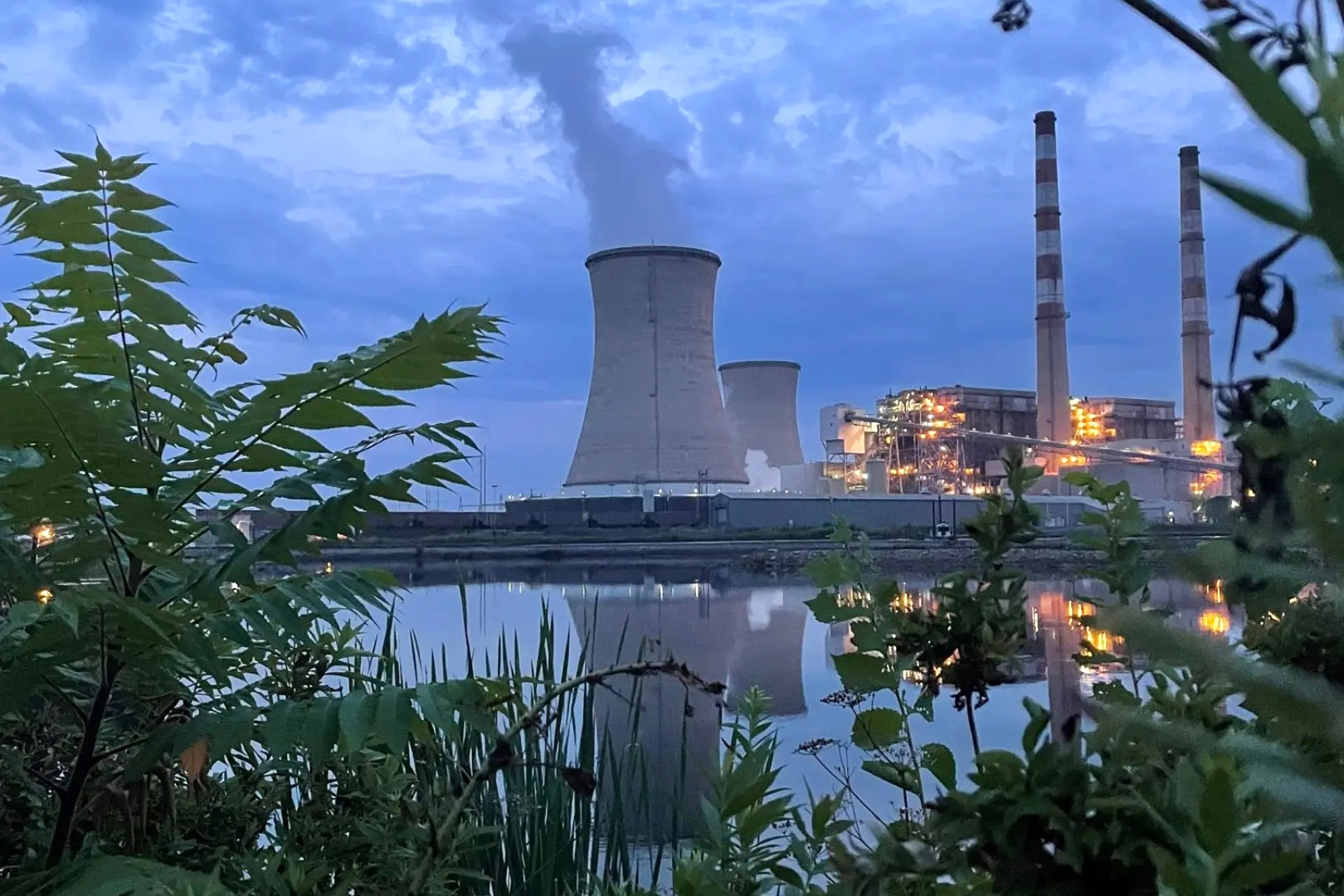
At ABC Coke in Alabama, monitoring equipment recorded benzene levels more than 60 percent above ACGIH’s threshold limit, increasing cancer risks in the mostly Black areas of north Birmingham and Tarrant by as much as 1.7 cases in every 10,000 people.
At the U.S. Steel Clairton Coke Works in Pennsylvania, benzene levels were 933 percent above that threshold, increasing cancer risks by as much as 26.5 cases in every 10,000 people.
Brass said Trump’s claims around coke ovens are also dispelled by his own environmental agency. In 2025, Trump’s EPA said it “does not believe that the currently available information supports a conclusion that regulated parties would face significant immediate compliance challenges.”
To challenge Trump’s two-year exemption, a group of environmental and grassroots nonprofits have filed suit against the administration, asking a judge to declare the decision unlawful and invalid.
“For generations, communities surrounding ABC Coke here in Alabama have endured exposure to toxic pollution from one of the dirtiest industrial practices in our country. That’s why we’re taking a stand,” said Jilisa Milton, executive director of GASP, a Birmingham-based nonprofit focused on improving air quality. “Folks who have not visited metro Birmingham may not understand what being surrounded by polluting industries does to a community’s health and spirit. We’re tired of suffering so dirty industries like ABC Coke can get a pass.”
The Trump administration has not yet responded to the suit in court. The EPA did not respond to a request for comment.
Haley Lewis said she deeply regrets not being able to tell Charlie Powell about the coke ovens lawsuit before his death.
“He would’ve been excited about it,” she said. “He was always in the fight. He was my dear friend, and I’ll miss him dearly.”
Lewis said she’s preparing for a public hearing on Feb. 24 on whether the Jefferson County Department of Health will renew ABC Coke’s air permit. Those who are interested in moving Powell’s legacy forward, she said, should consider attending.
“Mr. Powell definitely would have been there,” she said. “You can count on that.”
About This Story
Perhaps you noticed: This story, like all the news we publish, is free to read. That’s because Inside Climate News is a 501c3 nonprofit organization. We do not charge a subscription fee, lock our news behind a paywall, or clutter our website with ads. We make our news on climate and the environment freely available to you and anyone who wants it.
That’s not all. We also share our news for free with scores of other media organizations around the country. Many of them can’t afford to do environmental journalism of their own. We’ve built bureaus from coast to coast to report local stories, collaborate with local newsrooms and co-publish articles so that this vital work is shared as widely as possible.
Two of us launched ICN in 2007. Six years later we earned a Pulitzer Prize for National Reporting, and now we run the oldest and largest dedicated climate newsroom in the nation. We tell the story in all its complexity. We hold polluters accountable. We expose environmental injustice. We debunk misinformation. We scrutinize solutions and inspire action.
Donations from readers like you fund every aspect of what we do. If you don’t already, will you support our ongoing work, our reporting on the biggest crisis facing our planet, and help us reach even more readers in more places?
Please take a moment to make a tax-deductible donation. Every one of them makes a difference.
Thank you,

Lee Hedgepeth
Reporter, Alabama
Lee Hedgepeth is Inside Climate News’ Alabama reporter. Raised in Grand Bay, Alabama, a small town on the Gulf Coast, Lee holds master’s degrees in community journalism and political development from the University of Alabama and Tulane University. Lee is the founder of Tread, a newsletter of Southern journalism, and has also worked for news outlets across Alabama, including CBS 42, Alabama Political Reporter and the Anniston Star. His reporting has focused on issues impacting members of marginalized groups, including homelessness, poverty, and the death penalty. His award-winning journalism has appeared in publications across the country and has been cited by the New York Times, the Wall Street Journal and the Washington Post, among others.