


Latvian startup Deep Space Energy has raised €350K in pre-seed funding from investors, in addition to €580K in public contracts and grants from the European Space Agency (ESA), NATO DIANA, and the Latvian government. The funding will support a further move towards commercialisation of the group’s novel radioisotopic generator
The pre-seed funding round was led by Outlast Fund and Linas Sargautis, an angel investor and a former co-founder of NanoAvionics.
Deep Space Energy said its efforts will strengthen the European sovereign space and defence industry and power Moon surface exploration.
The firm is developing a power generator technology that is based on radioisotopes, materials derived from nuclear waste, which generate heat through natural decay. According to Mihails Ščepanskis, founder and CEO of the company, their solution converts that heat into electric power, requiring five times less radioisotope fuel than a thermo-electric generator (RTG), currently used in space.
“Our technology, which has already been validated in the laboratory, has several applications across the defence and space sectors. First, we’re developing an auxiliary energy source to enhance the resilience of strategic satellites. It provides the redundancy of satellite power systems by supplying backup power that does not depend on solar energy, making it crucial for high-value military reconnaissance assets,” Ščepanskis says.
The group said the radioisotope-based energy generator is not being designed in connection with any kind of weaponry. It will target high-value, dual-use satellites to increase their resilience and operational reliability. The primary focus is on satellites operating in Medium Earth Orbit (MEO), Geostationary Orbit (GEO) and Highly Elliptical Orbit (HEO), which are all critical for modern military reconnaissance and early-warning systems.
These satellites support a range of defence functions, from synthetic aperture radar (SAR) satellites for detecting troop concentrations through clouds and foliage, to signal intelligence for intercepting communications and radio transmissions, as well as missile-launch detection, which is essential for anti-missile defence systems.
Ščepanskis said the ongoing war in Ukraine has demonstrated the decisive role of satellite-based reconnaissance data in modern warfare. In 2025, Ukraine lost its beachhead in the Russian Kursk Oblast, at a time when the US temporarily terminated the sharing of satellite intelligence. This he suggested as spotlighting both the strategic importance of satellite-based reconnaissance data and the strategic vulnerability of Europe, which largely relies on the US defence space assets, especially for high-value GEO satellites.
“As Europe is trying to become more independent, it is imperative to produce satellites with advanced capabilities on our own. Our technology provides an auxiliary energy source for satellites, which makes them more resilient to non-kinetic attacks and malfunctions,” he adds.
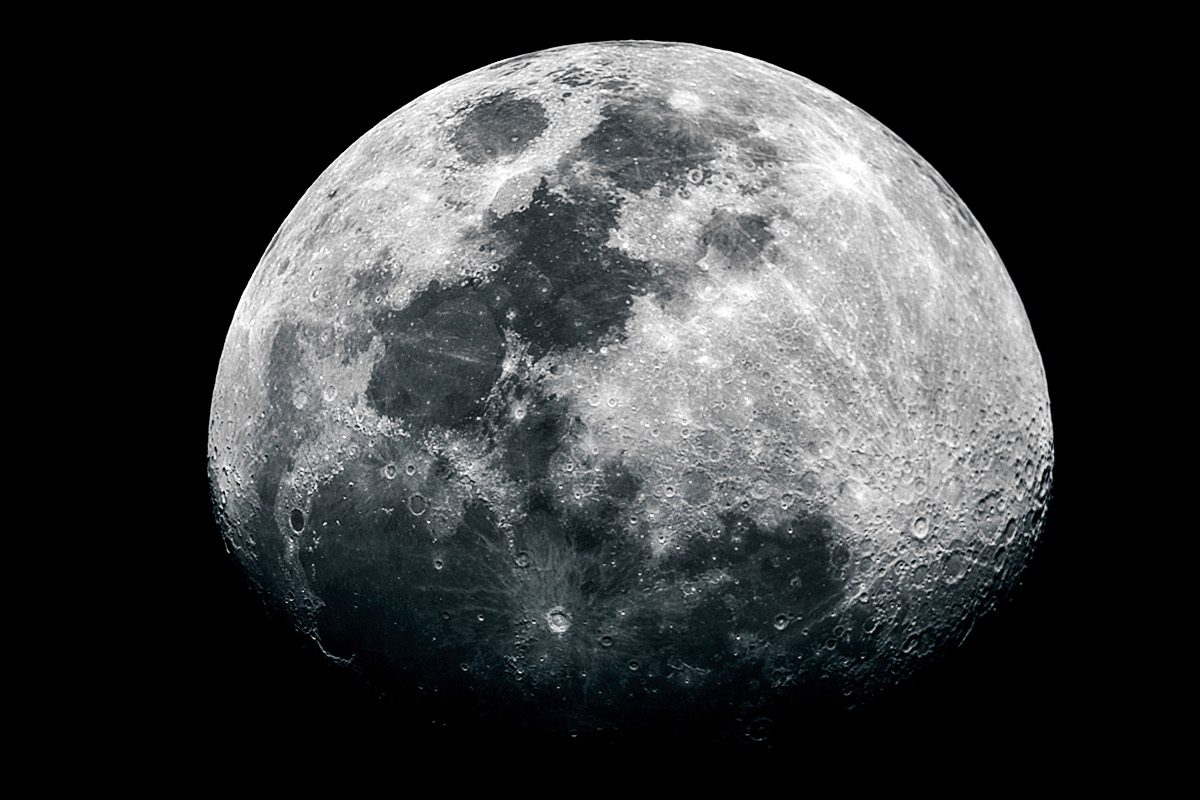
In the long term, the company said it aims to focus on the Moon economy. The radioisotope power generator will address critical energy challenges in the next phase of lunar exploration, including NASA and ESA’s Artemis, Argonaut and lunar rover programmes, as well as the Moon Village framework. In particular, the technology is designed to support lunar night survival and operations in permanently shadowed regions, enabling extended scouting and prospecting missions.
On the Moon, where the temperatures at night drop below 150°C, and nights last for roughly 354 hours, moonrovers can’t rely on solar power.
The company’s technology requires approximately 2kg of Americium-241 fuel to generate 50W of power for a lunar rover, compared with around 10kg of radioisotope material needed by legacy RTG systems for comparable output. Given current projections that Americium-241 production capacity will reach around 10kg per year by the mid-2030s, this efficiency could enable lunar exploration missions to begin more than five years earlier and at up to five times the mission volume.
As a result, commercial lunar activities and resource utilisation could emerge significantly sooner than previously expected.
According to Ščepanskis, the company’s technology can significantly enhance the economics of moon rover missions by enabling them to last multiple day-night cycles up to a few years. The sole expenses of bringing payload to the Moon cost up to a million euros per kilogram; thus, by enhancing the lifetime of the rovers, the company helps to save hundreds of millions.
Egita Poļanska, partner at the lead investor Outlast Fund, said that the company’s direction aligns with the fund’s strategic goals.
“Space energy tech has been stuck with certain limitations for decades, but we’re finally seeing the pieces come together for a real breakthrough – new materials, smarter power systems, and actual commercial demand for lunar operations. Deep Space Energy is building the infrastructure that will literally power the next chapter of space exploration and industry. As Europe ramps up its space ambitions, we need our own companies to lead in these foundational technologies. We’re thrilled to back this team and honestly pretty excited to have an actual moonshot in our portfolio, in the most literal sense possible,” she says.
Linas Sargautis has also participated in the round and joined the company’s leadership team as an advisor, emphasising that such investments put the Baltics in the spotlight as an emerging space hub.
“The Baltic region is increasingly recognised for its innovation in space technology, with Deep Space Energy serving as another strong example. By supporting Deep Space Energy, we are helping to establish a solid foundation for the future of space frontier exploration, such as lunar and deep-space missions, expanding humanity’s knowledge and footprint, while also contributing to European space defence capabilities.”