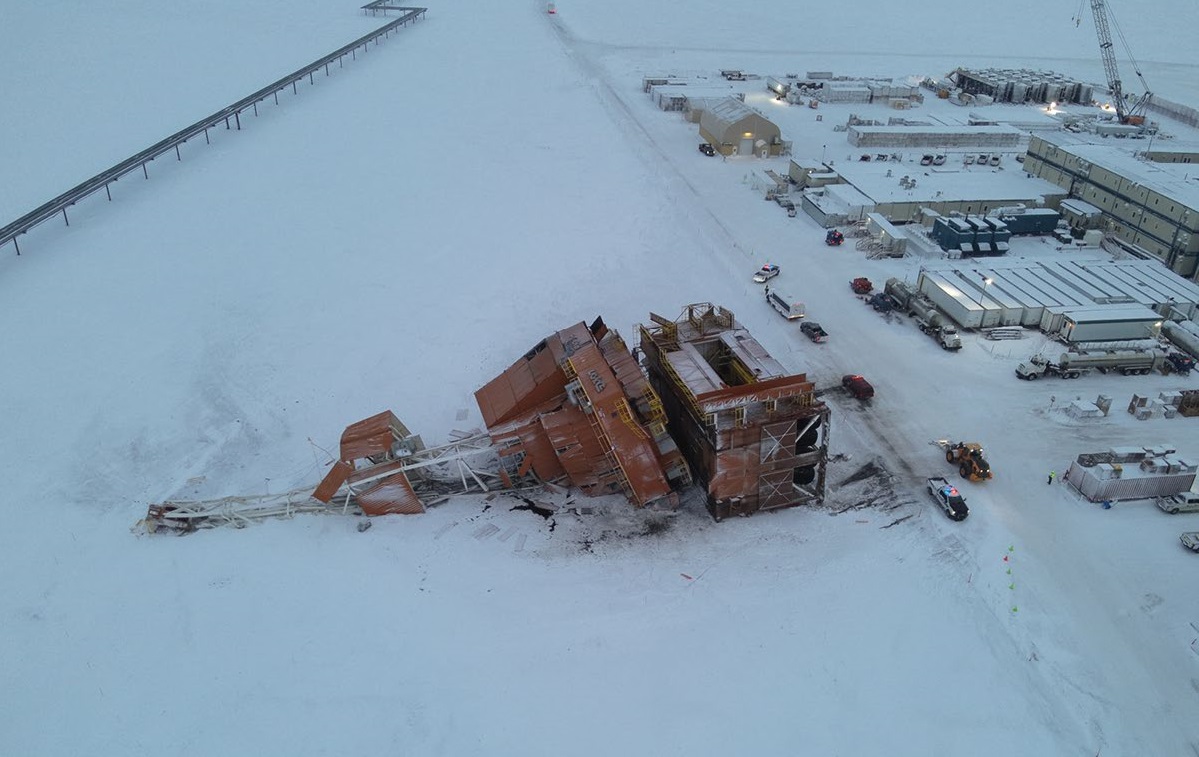


When ConocoPhillips won federal approval last year to explore for oil in the Alaskan Arctic, environmental groups warned the proposal was rushed through without adequate protections. Last week, an oil rig toppled onto the tundra as it was on its way to drill for that effort, igniting a fire and spilling diesel fuel onto the snow-covered land.
Now, five days after the incident, the weather is so severe that no crew is on site to respond to the spill or assess the scope of any damage, said Kimberley Maher, state on-scene coordinator for Alaska’s Department of Environmental Conservation.
“We are working together to put the plans in place as soon as there is a weather window to continue cleanup efforts,” Maher said.
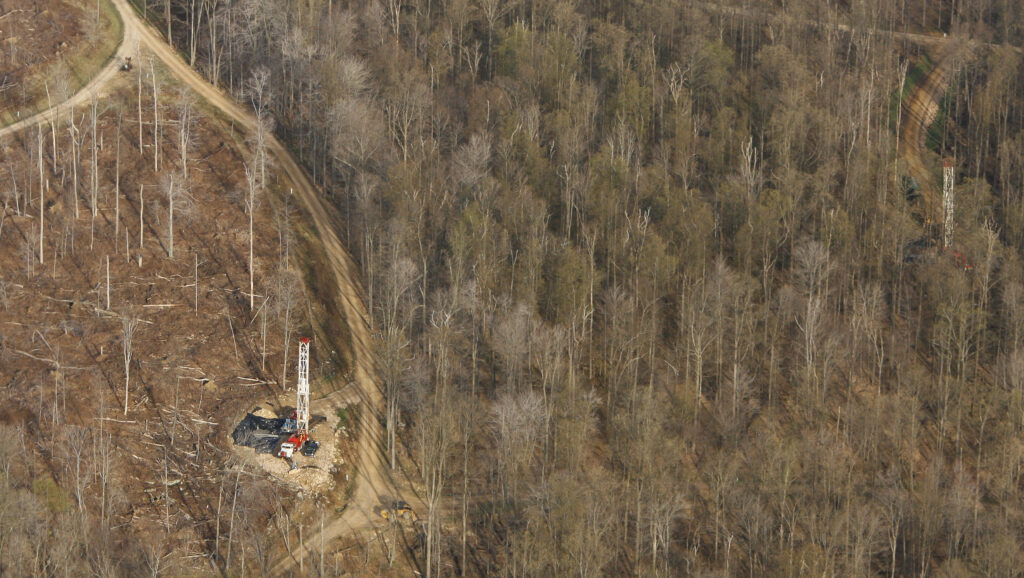
The exploration program is pushing industrial activity deeper into the National Petroleum Reserve in Alaska, which has some of the largest wilderness areas in the United States, and into prime hunting and subsistence grounds used by Iñupiat residents of the nearby village of Nuiqsut.
Last month, the advocacy group Sovereign Iñupiat for a Living Arctic and two environmental organizations challenged the exploration’s approval in a lawsuit. The groups argue that the Bureau of Land Management failed to mitigate the harm the activity would cause to the tundra, a key caribou herd and other subsistence resources. The agency gave the public only one week to comment on the proposal before approving it.
On Monday, lawyers for ConocoPhillips submitted filings to the court saying it was continuing with the exploration program using a different rig and that the incident posed “no threat to local infrastructure or communities.” The following day, Judge Sharon L. Gleason of the U.S. District Court in Alaska denied a request by the environmental groups for a preliminary injunction, allowing the exploration work to proceed.
“Sadly, ConocoPhillips will now spend the winter disrupting caribou migration and crushing fragile Arctic tundra under massive thumper trucks before a full hearing of our case against this destructive exploration plan,” said Matt Jackson, Alaska senior manager for The Wilderness Society, one of the plaintiffs, in a statement.
It was last Friday afternoon, when rig operators were moving the structure along a gravel road, that the rig “left the road and toppled onto the tundra,” according to a situation report published Monday by the Department of Environmental Conservation. The cause remained unknown and an investigation would begin “when safe to do so.”
The incident report said the rig, owned by Doyon Drilling Inc., was carrying about 4,000 gallons of diesel shortly before it fell within 50 feet of oil infrastructure and less than 500 feet from a tributary to the Colville River, a key fishing ground. A spill was then reported, raising concerns about impacts on the waterway.
The weather was unusually warm and misty at the time the rig fell, with the temperature rising to 34 degrees, according to the National Weather Service.
Rosemary Ahtuangaruak, a former mayor of Nuiqsut and longtime critic of the oil industry, said the warmth can weaken the tundra.
“When you warm up real fast like that, surface areas that are frozen can melt and become porous,” she said. Ahtuangaruak, who was away the day of the incident, is the founder and executive director of Grandmothers Growing Goodness, an advocacy group. She said oil companies generally keep backup rigs in case of accidents, to help plug well blowouts, for example, and raised the question of whether ConocoPhillips would have enough on hand now that one of its primary rigs was out of commission.
Neither ConocoPhillips nor the Bureau of Land Management responded to questions for this article.
ConocoPhillips’ expansion efforts come as the Trump administration and Republicans in Congress are rolling back protections for the petroleum reserve enacted by the Biden administration. The Trump administration has taken initial steps to open millions of acres of the reserve to leasing.
It was just this type of expansion that opponents of drilling feared would occur when the Biden administration approved ConocoPhillips’ Willow project in 2023. The project is currently under construction.
“It becomes a domino effect,” said Nauri Simmonds, executive director of Sovereign Iñupiat for a Living Arctic. “They want more and more and more. And that’s what we see around Nuiqsut.”
Read More
ConocoPhillips Wants to Explore for Oil in an Arctic Wilderness
By Nicholas Kusnetz
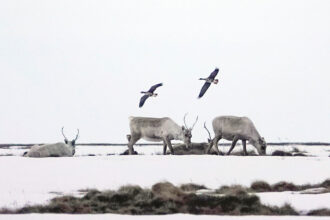
The exploration program is extending into high-density caribou habitat, areas that Simmonds said are “incredibly intertwined not only with the health of the animals but with the culture of the community.”
Simmonds lives near Anchorage but spent part of her childhood in Nuiqsut and has family there. She said the event exposed some of the divisions that have grown in the community over drilling. While ConocoPhillips said it provided prompt notification of the incident, Simmonds said word did not spread throughout the village, which she attributed to people being afraid to speak out against the oil industry.
Simmonds said the divisions and lack of communication led to a traumatizing situation. Some community members believed, erroneously, that ConocoPhillips was evacuating employees and wondered about safety in the wake of the rig falling over.
The oil sector has brought wealth and a steady stream of funding for local government budgets, Simmonds said. She used to work in the industry and enjoyed the benefits it provided, she said. She left that work in 2020 and more recently got into activism, work she views as trying to heal divisions in the community and help people connect with Iñupiat culture.
“I did not know that I had really strong feelings about what happened to our people until I got into this work,” Simmonds said. “I thought that was something that happened to other people, and I just got the benefits.”
Now, she said, some people in the community are ignoring the impacts of oil development and the importance of protecting the area.
“When protections are stripped away, the land absorbs the consequences first,” Simmonds said, “and then the community absorbs the consequences.”
About This Story
Perhaps you noticed: This story, like all the news we publish, is free to read. That’s because Inside Climate News is a 501c3 nonprofit organization. We do not charge a subscription fee, lock our news behind a paywall, or clutter our website with ads. We make our news on climate and the environment freely available to you and anyone who wants it.
That’s not all. We also share our news for free with scores of other media organizations around the country. Many of them can’t afford to do environmental journalism of their own. We’ve built bureaus from coast to coast to report local stories, collaborate with local newsrooms and co-publish articles so that this vital work is shared as widely as possible.
Two of us launched ICN in 2007. Six years later we earned a Pulitzer Prize for National Reporting, and now we run the oldest and largest dedicated climate newsroom in the nation. We tell the story in all its complexity. We hold polluters accountable. We expose environmental injustice. We debunk misinformation. We scrutinize solutions and inspire action.
Donations from readers like you fund every aspect of what we do. If you don’t already, will you support our ongoing work, our reporting on the biggest crisis facing our planet, and help us reach even more readers in more places?
Please take a moment to make a tax-deductible donation. Every one of them makes a difference.
Thank you,

Nicholas Kusnetz
Reporter, New York City
Nicholas Kusnetz is a reporter for Inside Climate News. Before joining ICN, he worked at the Center for Public Integrity and ProPublica. His work has won numerous awards, including from the Society of Environmental Journalists, the American Association for the Advancement of Science and the Society of American Business Editors and Writers, and has appeared in more than a dozen publications, including The Washington Post, Businessweek, The Nation, Fast Company and The New York Times. Nicholas can be reached on Signal at nkusnetz.15.