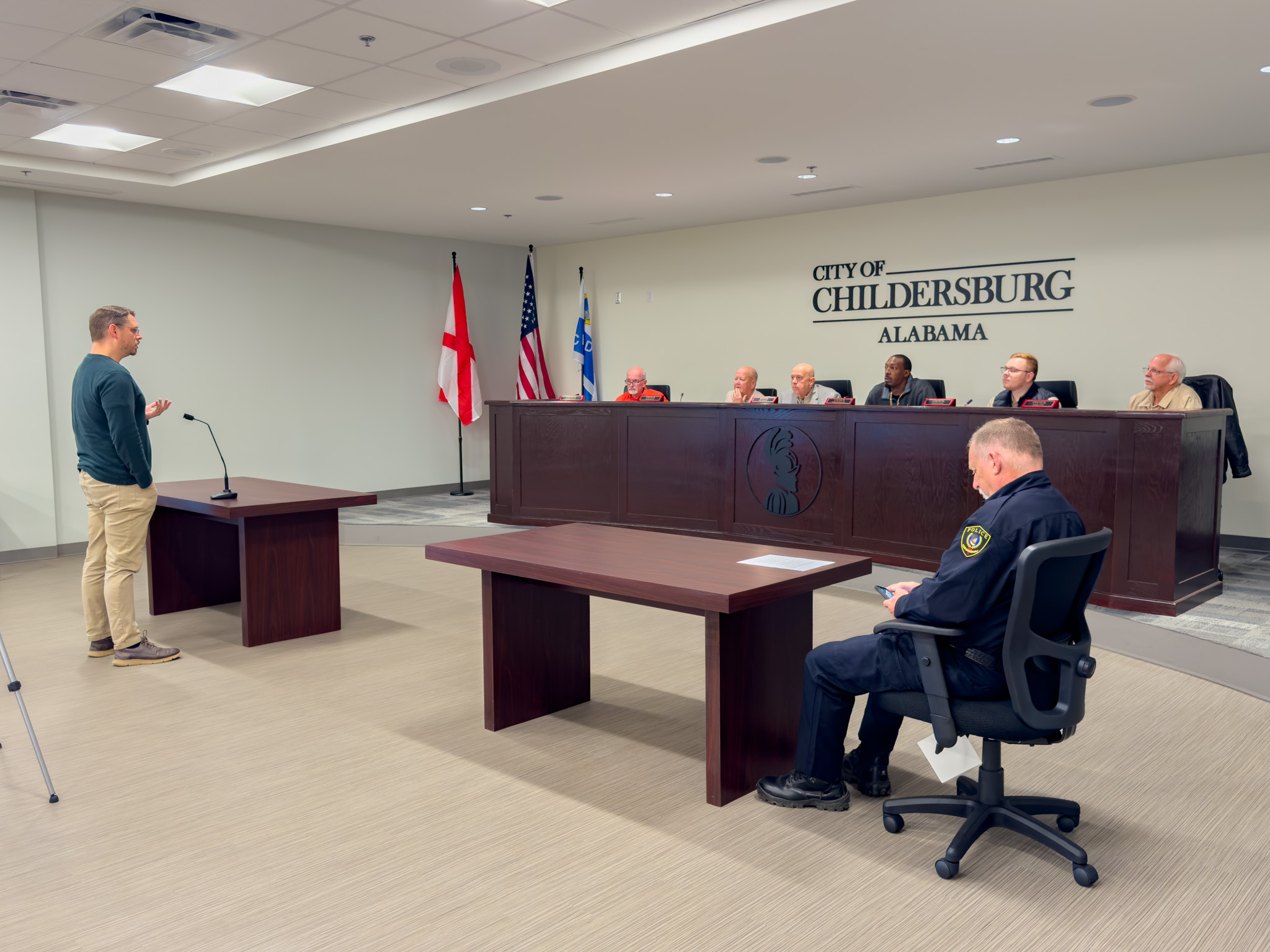


CHILDERSBURG, Ala.—At Tuesday’s City Council meeting, there were few questions and fewer answers.
Despite the lack of public detail about a proposed hyperscale data center in the town of 5,000 south of Birmingham, Childersburg City Council members unanimously approved a change to their zoning ordinance allowing the operation of the data center at a site inside a “planned unit development,” or PUD.
“Data centers are permitted as principal use within PUD zoning district, recognizing data centers as critical infrastructure facilities essential to national and regional economic interest,” the measure said in part.
The property at issue, handed over to the city by the federal government in 2003, was the site of the
a munitions operation that manufactured millions of pounds of explosives during the World War II era and produced heavy water used in the U.S. nuclear program, codenamed the Manhattan Project.
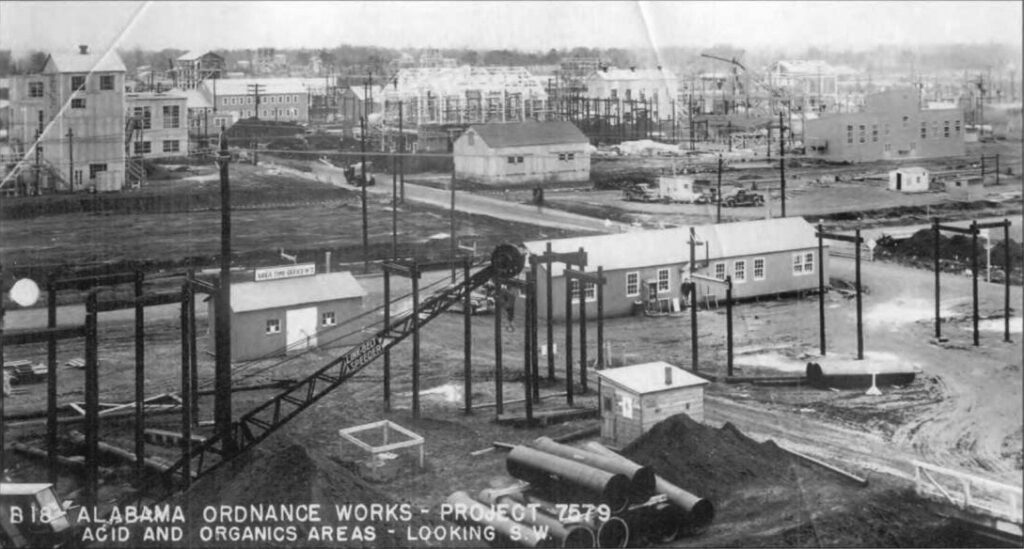
In the post-war period, the location has become a cause for concern and controversy between local, federal and military officials, all of whom have had competing interests in the future of the site along the Coosa River in central Alabama. Much of that back-and-forth has revolved around environmental contamination, both from the production of munitions and from the widespread use of asbestos there.
The site was placed on the U.S. Environmental Protection Agency’s national priorities list for remediation in 1987, but cleanup efforts have been stop-and-go since.
A 2023 Army Corps of Engineers report on the condition of the site said that without further cleanup, “industrial workers may be exposed to contaminants in environmental media through incidental ingestion, absorption of chemicals through the skin, and inhalation” and that “chemical contamination found in the soil or sediment was responsible for unacceptable worker risk.”
The report noted that the city of Childersburg planned to recruit private development on the site “while investigation of contaminated ground water on the property is ongoing.”
In the past, that history has been a hindrance in attracting development, but Mayor Ken Wesson said he and other city staffers have spent months negotiating with a developer they said may be just the partner the local government was looking for: a hyperscale data center.
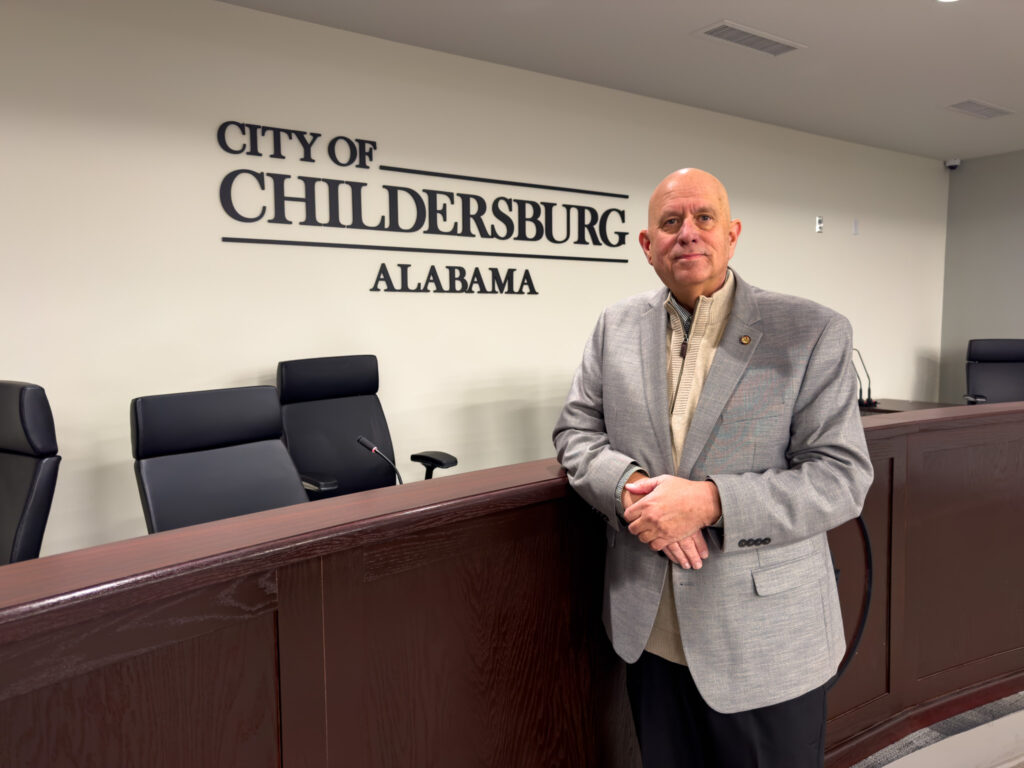
While Wesson and other City Council members emphasized at Tuesday’s meeting that the project is only in the early stages, the mayor said he feels the data center is a good fit.
During the meeting, resident Noah Beckham told council members that he thinks they should be wary of a data center aiming to locate in the small, relatively rural community.
“I have no crystal ball to look into the future and see what [a data center] would mean for Childersburg,” he said. “But what we do have are stories from all around the country. Look at the news.”
Local opposition to the construction of large data center campuses has made headlines nationally and in Alabama, where residents have regularly banded together to fight against such developments. Those living near the proposed sites say the large tech facilities will bring noise and light pollution, increase traffic and consume large amounts of water and energy, raising the possibility of increased utility rates for everyone.
Secrecy around data center developments has often become a sticking point for residents seeking answers about the projects in their backyards as the massive facilities pop up across the country.
In Bessemer, an hour west of Childersburg, residents have fought against the proposed construction of a 1,200 megawatt, 4.5 million square foot hyperscale data center. There, the mayor, city attorney and at least one county economic development staffer have signed non-disclosure agreements to the disdain of upset residents.
But after Tuesday’s Childersburg City Council meeting, Wesson told Inside Climate News that a data center developer now tentatively planned for nearby Wilsonville had also been considering the industrial site in Childersburg. The developer in Wilsonville, however, asked the mayor to sign a non-disclosure agreement, Wesson said.
Advisors and the city attorney discouraged him from signing such a document as Childersburg moves ahead with its data center plan, so he refused.
The data center developer in Childersburg, whom the mayor identified as WHP Development, only asked that he sign a “confidentiality agreement.” Wesson agreed to do so.
Asked the difference between a non-disclosure agreement and a confidentiality agreement, the mayor said the latter gives him “a lot more leeway” to share details about the process surrounding the development of the site.
Inside Climate News filed a public records request for the confidentiality agreement on Tuesday afternoon. City staffers have not yet responded.
Earlier this month, Inside Climate News published a non-disclosure agreement signed by a mayor in another small Alabama town, Columbiana. There, a new city administration is dealing with the aftermath of the former mayor’s approval of a data center expansion now universally opposed by the city’s residents.
Despite any confidentiality agreement, Wesson provided many more details about the Childersburg proposal than did Joshua Harrelson, a representative of the data center developer present at Tuesday’s meeting. Asked by an Inside Climate News reporter about the developer and the proposed project, Harrelson declined to comment further, refusing to provide even the company name.
“I just want to make sure I wasn’t violating any of our agreements with the city,” Harrelson said after the meeting.
Wesson told Inside Climate News that the $6 billion project would include a 500-megawatt data center to be located on the industrial redevelopment site and would utilize a glycol-based cooling system. The city has already signed a purchase service agreement with the developer for 486 acres in the industrial park totaling around $17 million, according to Wesson. Childersburg could expect around 220 permanent jobs and many more temporary construction jobs if the project were to be approved, the mayor said.
The sale document is an agreement in principle, Wesson said, pending the developer’s site assessment and other factors.
While Harrelson wouldn’t confirm the developer name, WHP may refer to Western Hospitality Partners, a developer proposing hyperscale data center campuses across the country. Among those projects was a proposed 600-megawatt site in Georgia dubbed Project Lincoln that was cancelled, downscaled and moved to another site after opposition from residents. Developers claimed that project, like the one at hand in Childersburg, would amount to an approximately $6 billion investment.
The company has also proposed a 1.62 million square foot data center called “Project Gravity” in northeast Pennsylvania.
Harrelson, whose LinkedIn lists him as a strategist and development professional, doesn’t appear to be entirely new to the data center industry.
A March 2025 article in The Atlanta Journal-Constitution said Harrelson was a longtime LaGrange resident and landowner working with a group of data center developers on “Project West,” a nearly $10 billion, six-building, 600 megawatt data center campus sprawling more than 500 acres.
Harrelson told the newspaper he felt he was doing something positive for the community through the data center project.
“We sat down as a family and said, ‘Are people going to know us for owning 500 acres and hunting and fishing and enjoying that, or are they going to know us for what we did for the community?’” Harrelson said. “That’s at the heart of what we’re doing.”
The newspaper noted that Harrelson declined to identify the firm he was working with on the project at the time.
Childersburg’s mayor said he’s simply glad to have a developer he believes is committed to bringing the city’s old military-industrial site into the 21st century.
This story is funded by readers like you.
Our nonprofit newsroom provides award-winning climate coverage free of charge and advertising. We rely on donations from readers like you to keep going. Please donate now to support our work.
Donate Now
“This property was used to develop a weapon of mass destruction,” Wesson said. “And so I want it to now be converted to something that leads to growth for our community, jobs and a future for our children.”
There’s still a long way to go before the deal is set in stone, Wesson said, but he’s got his fingers crossed.
It’s taken this long to get all of the relevant actors—the EPA, the military, the Army Corps of Engineers and local officials—on the same page. Wesson said he recently sat representatives from all the stakeholders down in one room to hash out a way forward.
“I affectionately called it the meeting of the liars,” Wesson joked. “But I didn’t put that on the invitation.”
Following that conversation and meetings with WHP, Wesson said he feels like the stars are now aligned to allow a data center developer to move into Childersburg.
There are still questions, Wesson said, because there’s a long road ahead.
The approval of the resolution at Tuesday’s meeting would also allow the developer’s representatives to visit the site and ensure it meets their needs. Then the process will move forward from there.
“Nothing is finalized,” Wesson said. “So the whole story can’t be told yet.”
About This Story
Perhaps you noticed: This story, like all the news we publish, is free to read. That’s because Inside Climate News is a 501c3 nonprofit organization. We do not charge a subscription fee, lock our news behind a paywall, or clutter our website with ads. We make our news on climate and the environment freely available to you and anyone who wants it.
That’s not all. We also share our news for free with scores of other media organizations around the country. Many of them can’t afford to do environmental journalism of their own. We’ve built bureaus from coast to coast to report local stories, collaborate with local newsrooms and co-publish articles so that this vital work is shared as widely as possible.
Two of us launched ICN in 2007. Six years later we earned a Pulitzer Prize for National Reporting, and now we run the oldest and largest dedicated climate newsroom in the nation. We tell the story in all its complexity. We hold polluters accountable. We expose environmental injustice. We debunk misinformation. We scrutinize solutions and inspire action.
Donations from readers like you fund every aspect of what we do. If you don’t already, will you support our ongoing work, our reporting on the biggest crisis facing our planet, and help us reach even more readers in more places?
Please take a moment to make a tax-deductible donation. Every one of them makes a difference.
Thank you,

Lee Hedgepeth
Reporter, Alabama
Lee Hedgepeth is Inside Climate News’ Alabama reporter. Raised in Grand Bay, Alabama, a small town on the Gulf Coast, Lee holds master’s degrees in community journalism and political development from the University of Alabama and Tulane University. Lee is the founder of Tread, a newsletter of Southern journalism, and has also worked for news outlets across Alabama, including CBS 42, Alabama Political Reporter and the Anniston Star. His reporting has focused on issues impacting members of marginalized groups, including homelessness, poverty, and the death penalty. His award-winning journalism has appeared in publications across the country and has been cited by the New York Times, the Wall Street Journal and the Washington Post, among others.