

A new study in Sweden indicates a need for caution in the metals recycling sector, where elevated levels of metals in the blood of workers have been discovered. Many of these are unusual elements whose toxicity has yet to be properly explored or evaluated.
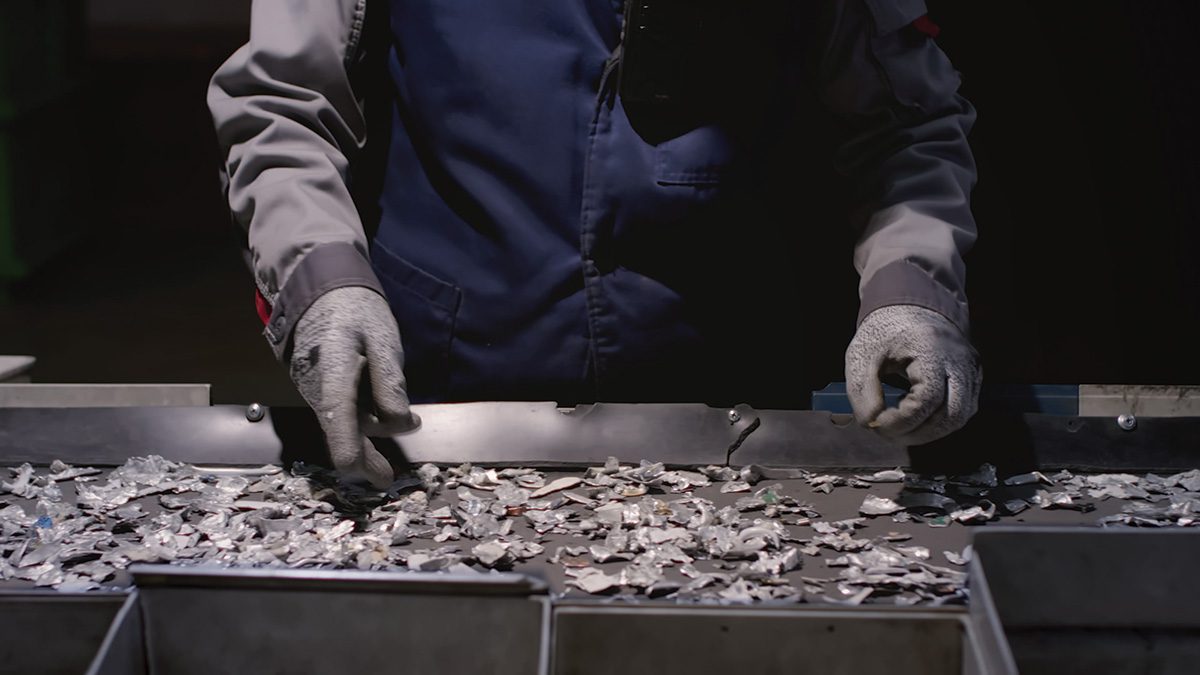
The metal recycling industry is growing, not least due to the use of metals in green energy electronic components. Researchers at Lund University have examined the inhaled air of workers at 13 recycling companies in Sweden. Among the results, high levels of lead in air and elevated levels of multiple metals have been detected in the blood of those who work in recycling.
Different forms of metals are included in, and are a prerequisite for, the manufacture of most products in today’s society – everything from building materials and industrial and healthcare products to dietary supplements. As a result, and for us to be able to achieve sustainable development, the recycling of metals is growing. However, working in recycling entails an increased risk of high exposure to toxic metals. Now, the researchers are hoping that the companies will become better at cleaning effectively and encapsulating dusty environments.
“Our assessment is that there is a lot to do, and we are cooperating actively with the companies to improve the work environment in the recycling industry,” said Karin Broberg, professor of occupational and environmental medicine at Lund University.
Within the GreenMetalWaste research project, Broberg and her research colleagues have studied metal exposure at large and small metal recycling companies. The researchers visited 13 recycling companies that mainly handle metal and electronic waste. The study, which covered 139 employees, has now been published in the International Journal of Hygiene and Environmental Health.
“The most striking thing was the high dust levels. In Sweden there is an occupational exposure limit of five milligrams of inhalable dust per cubic metre of air, and that was exceeded in 14 percent of the participants in the study,” said the study’s last author Eva Dock, researcher and occupational hygienist who works at Lund University.
Among nine percent of the 139 participants the occupational exposure limit was also exceeded for lead in the air. In some cases – where the work consisted of sorting or processing the metal waste – the occupational exposure limit was also exceeded for arsenic, copper, cadmium and antimony (a common component in flame retardant and brake linings, among others). Lead in the body can cause high blood pressure and negatively affect the heart and blood vessels, while arsenic is a carcinogen linked to lung cancer.
Dispersion danger
As dusty work tasks are generally not encapsulated during recycling, the dust – containing different metals – could spread freely in the large, open facilities. Those involved in sorting and processing the recycling waste were particularly exposed to inhaling the dust. Maintenance staff, such as cleaners, was another group often exposed to high levels of metal dust.
“It’s very important how cleaning is carried out. Vacuuming and wet mopping is much better than dry sweeping and compressed air to avoid spreading dust,” says Eva Dock.
In addition to measuring the amount of inhalable dust and metals in the air for 139 recycling workers, the levels of different metals in their urine and blood were also monitored. The results were then compared with a control group of 90 people who were not exposed to metals at work.
The results showed that 19 percent of the recycling workers had increased levels of more than ten metals in the body. And 94 percent of them had increased levels of at least six metals compared with the control group. Among the metals elevated were lead and antimony, and certain rare earth metals.
The health impacts of many metals, especially those that have recently been introduced in electronics, are not yet known. Anja Stajnko, the study’s first author, emphasises the importance of monitoring those metals in future.
“We don’t know much about the effects of rare earth metals,” said Anja Stajnko, who mentioned as examples yttrium, indium, gallium and tungsten. “Many of these metals have no occupational exposure limits, so it’s important to follow the exposures and see what effect they could have on the body.”
The Swedish Work Environment Authority has developed an action hierarchy that shows the order in which protective measures are to be taken to reduce exposures hazardous to health in the workplace. The first step is to remove or replace hazardous chemical products and working methods. This is then followed, step-by-step, by encapsulating/screening off and automating, using process ventilation and rotating duties/scheduling the work at a specific time. The final measure in the hierarchy is personal protective equipment.
Protective equipment needs to be used properly
Of the study participants, 66 percent did not use a respiratory protection equipment. Of those who did, only nine percent used their equipment correctly.
“Unfortunately, it’s often in the final step of the action hierarchy that companies start on work environment management. But for respiratory protection equipment to work properly, it must fit correctly, and beard growth, for instance, can reduce function by up to 90 percent if the mask is not positioned where it should be. In addition, you must check that the mask’s filter is changed regularly,” said Eva Dock.
The companies have now read the researchers’ results. During the winter of 2025-2026, the researchers will visit some of the companies to repeat the measurements. Researchers from Denmark and Portugal will also be involved in the follow-up part of the study.