

On a good air-quality day, many residents of the fast-growing cities along Colorado’s northern Front Range enjoy a clear view of Longs Peak, one of the state’s 58 named summits that rise more than 14,000 feet above sea level, and the only one in Rocky Mountain National Park. On a not-so-good day, the massif appears out of focus, shrouded in a cloud of haze.
Often, that smog is mostly ground-level ozone, a gas harmful not only to mountain views but also to human lungs, plants and wildlife.
Automobile exhaust, industrial pollution and weather conditions interact to form ozone that obscures views and irritates lungs, as do emissions from burning coal.
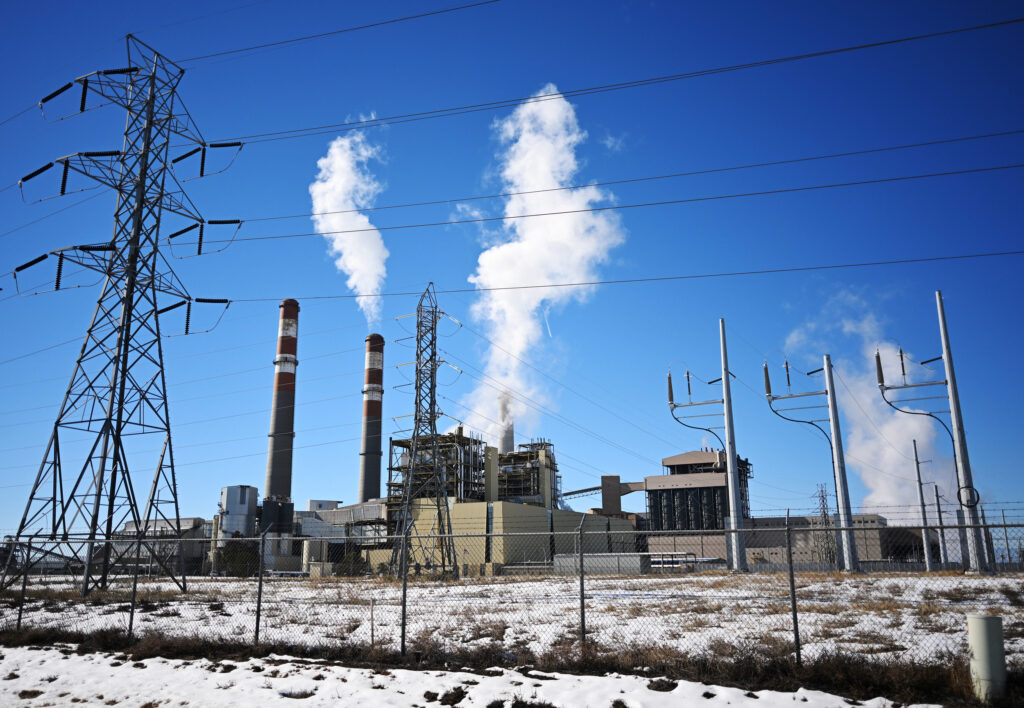
Colorado took a step toward clearing the air in 2022 when it revised its Regional Haze Plan for the period ending in 2028 and submitted it to the U.S. Environmental Protection Agency for approval. But on Jan. 9, the EPA announced that it had rejected the state’s plan, which would have reduced emissions and improved air quality by closing coal plants, among other things. The EPA claims the coal plants need to keep running to ensure grid reliability.
But for some conservation groups, the EPA’s rejection is another disappointing, frustrating and dangerous setback, not only for human health and the climate, but for public lands.
“The regional haze program [is] this time-tested, very enforceable, progressive, hopeful rule,” said Tracy Coppola, a senior program manager in Colorado for the National Parks Conservation Association. Losing this plan is “one other massive hammer to our national parks,” she said.
Originally implemented to improve air quality in national parks, regional haze rules have helped states reduce pollution from coal and other fossil fuel-fired power plants. Historically, the EPA has treated pollution thresholds as minimum standards states must meet, but EPA Region 8 administrator Cyrus Western said there was no need for Colorado to try to get below the minimum pollution threshold.
“Colorado did not need to shut down all of these coal-fired facilities to be compliant with the Clean Air Act and to assure that Coloradans have clean air,” Western said.
Six of Colorado’s eight coal-fired power plants are near national forests or grasslands. Coal electricity plants, in addition to being significant sources of carbon emissions, also spew sulfur dioxide, nitrogen dioxide and fine particulate matter, which fill the air with smog and pose threats to human health. Colorado’s Front Range has failed to meet federal air quality standards for most of this century.
With 14,000-foot peaks, world-class skiing, roaring rivers and large tracts of wildlife habitat at their fingertips, 92 percent of Colorado residents participate in outdoor recreation annually, according to estimates from the state’s Outdoor Recreation Industry Office. The Centennial state is also home to seven national forests or grasslands and four national parks. In 2024, Rocky Mountain National Park, less than 90 miles from Denver International Airport, received over 4.1 million visitors, making it one of the five most-visited national parks in the country.
But park visitors may unknowingly experience suboptimal air quality. Pollution limits visibility to about 85 percent of the natural viewshed in the park, which ranks as the fourth-haziest national park, according to the National Parks Conservation Association. National parks elsewhere in Colorado rank in the top 20.
Under the second Trump administration, national park gateway communities have grown weary of changes in and around the public lands that could destabilize their recreation-based economies. “We’ve got this several billion dollar industry for people who want to go to this national park and plan way ahead of time,” Coppola said. “This isn’t just a cosmetic thing.”
Recreating in clean air is an environmental health and justice issue for some. As Colorado drafted its now-rejected regional haze plan, environmental groups were submitting feedback to the state. “People that GreenLatinos organized with say ‘it’s about my ability to equitably enjoy the public lands,’” said Ean Tafoya, that environmental group’s Colorado director.
Tafoya noted that fossil fuel power plants are often near low-income communities and can disproportionately impact people of color. “I should be able to breathe clean air [in the mountains], unlike where I live, unfortunately,” he said.
National parks also sometimes hold air quality monitoring equipment, part of a network of 106 stations the government uses to track regional haze. At least 20 sites in protected areas, some not part of the regional haze program, are expected to fail to collect a complete dataset for 2025 due to the government shutdown, according to federal data. As a result, the EPA cannot use that data in its 2025 haze-tracking set, though workarounds are available depending on the length of the gaps. In a normal year, about 12 sites fail.
Some of the Rocky Mountain region’s most substantial polluters have historically resided in Colorado, where the Craig power plant, 46 miles west of Steamboat Springs, ranked as the sixth largest contributor to regional haze, according to National Parks Conservation Association data. Last December, President Donald Trump’s administration ordered the plant to remain open due to a “shortage of electric energy.”
Tri-State, the power supplier that operates the Craig plant, said in a statement that the facility had been scheduled to retire since 2016 “for economic reasons.” Earlier last month, a valve in the power plant failed. The expected repairs and the new order to keep the unit online will raise costs for Tri-State’s members, CEO Duane Highley said.
Western, with the EPA, said that deferred maintenance costs are a factor in rising electricity rates across the U.S. “American utility companies have, as a trend, not done a good job of adequately investing” resources in system maintenance, he said.
This story is funded by readers like you.
Our nonprofit newsroom provides award-winning climate coverage free of charge and advertising. We rely on donations from readers like you to keep going. Please donate now to support our work.
Donate Now
The momentum for prolonging the life of coal-fired power plants has grown in 2026. On Jan. 12, Colorado Springs Utilities and local lawmakers announced legislation to keep the Ray Nixon plant open past 2029. Under current state regulation, the plant is slated to close that year, but the utility has pushed back against the deadline, citing reliability challenges.
“The legal basis for us denying [Colorado’s Regional Haze Plan] was what happened with the Nixon facility down in Colorado Springs,” Western said.
Some have called the Trump administration’s actions in Colorado hypocritical, given the administration’s claim that renewable energy is largely propped up by federal subsidies.
“If the tables were turned, they would have complained that people were picking winners and losers when it came to supporting different renewable energy technologies,” said Rachael Hamby, policy director at the Center for Western Priorities. “They’re doing the exact same thing, for ideological reasons.”
“When you force those communities to hang on to a technology and an industry of the past, you’re just preventing people from taking advantage of opportunities of the future.”
— Rachael Hamby, Center for Western Priorities
Western disagreed with that characterization, claiming that renewable energy only ever gained a foothold in the market thanks to government support. “The Trump administration has come out and said, ‘No more of this. We are going to level the playing field and we are going to give these legacy sources the opportunity, the chance that they have always deserved,’” he said.
Last year, Trump and congressional Republicans passed a spending bill to repeal many of the wind, solar and battery tax incentives created or expanded under President Biden, while leaving fossil fuel subsidies—which the International Monetary Fund has estimated cost Americans $757 million annually—untouched. In its annual report on the levelized cost of energy, Lazard, a financial advisory and asset management firm, found that utility-scale solar and wind were the cheapest forms of energy—even without subsidies.
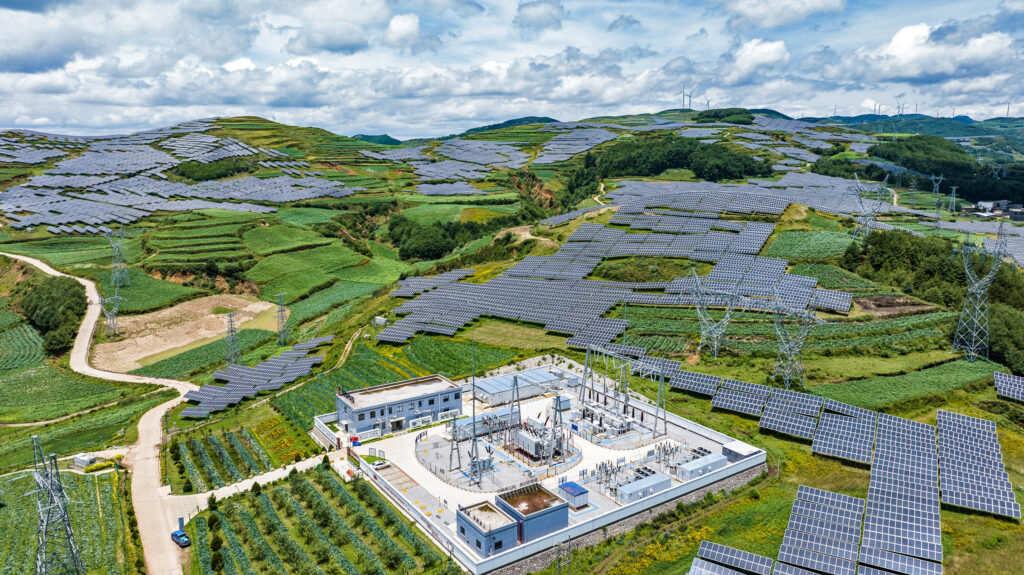
If coal mines and power plants hang on for a few more years, the Trump administration will have accomplished nothing more than delaying the inevitable, Hamby said. Renewable energy produced more electricity than coal globally in the first half of 2025 for the first time in history, according to the think tank Ember.
“Maybe you can make these desperate efforts to drag [coal] out a little bit longer, but I think all you’re doing there is hurting the people who live in these communities that are trying to plan for a future that actually is coming and that is based in reality,” Hamby said. “When you force those communities to hang on to a technology and an industry of the past, you’re just preventing people from taking advantage of opportunities of the future.”
Despite the Trump administration’s decision and the quality of the air, public lands remain a vital outlet for communities across Colorado. Tafoya said GreenLatinos is planning a day of service on public lands for Martin Luther King Jr. Day. “Our relationship with the earth is what’s been empowering us to resist and to be resilient,” he said.
The Trump administration will implement a federal plan if Colorado does not provide a new one within two years.
About This Story
Perhaps you noticed: This story, like all the news we publish, is free to read. That’s because Inside Climate News is a 501c3 nonprofit organization. We do not charge a subscription fee, lock our news behind a paywall, or clutter our website with ads. We make our news on climate and the environment freely available to you and anyone who wants it.
That’s not all. We also share our news for free with scores of other media organizations around the country. Many of them can’t afford to do environmental journalism of their own. We’ve built bureaus from coast to coast to report local stories, collaborate with local newsrooms and co-publish articles so that this vital work is shared as widely as possible.
Two of us launched ICN in 2007. Six years later we earned a Pulitzer Prize for National Reporting, and now we run the oldest and largest dedicated climate newsroom in the nation. We tell the story in all its complexity. We hold polluters accountable. We expose environmental injustice. We debunk misinformation. We scrutinize solutions and inspire action.
Donations from readers like you fund every aspect of what we do. If you don’t already, will you support our ongoing work, our reporting on the biggest crisis facing our planet, and help us reach even more readers in more places?
Please take a moment to make a tax-deductible donation. Every one of them makes a difference.
Thank you,

Jake Bolster
Reporter, Wyoming and the West
Jake Bolster reports on Wyoming and the West for Inside Climate News. Previously, he worked as a freelancer, covering climate change, energy, and the environment across the United States. He holds a Masters in Journalism from Columbia University.