

Thursday, January 29, 2026
  • Privacy Policy
  • Contact
  • Terms & Conditions
Environmental Magazine
Advertisement
  • Home
  • News
  • Climate Change
  • Energy
  • Recycling
  • Air
  • Fossil Fuels
  • Water
No Result
View All Result
Environmental Magazine
  • Home
  • News
  • Climate Change
  • Energy
  • Recycling
  • Air
  • Fossil Fuels
  • Water
No Result
View All Result
Environmental Magazine
No Result
View All Result
Home News

Autonomous drifting robot survives under East Antarctic ice shelf to take first-of-its-kind measurements

December 11, 2025
in News
A A

A robotic float has been used to measure the temperature and salinity within a hitherto mysterious realm of the ocean, underneath massive floating ice shelves in East Antarctica.

This kind of Argo float – a free-drifting, torpedo-shaped autonomous robot – is normally used in the open ocean, where it is able to surface regularly and transmit data. These vehicles are also not equipped to steer, instead drifting passively except for vertical movement. In this case, a special ice-capable Argo float was used.

It has drifted under ths ice for two-and-a-half years, equipped with oceanographic sensors and has collected nearly 200 profiles of the ocean on a 300-kilometre journey under the Denman and Shackleton ice shelves. The data haul includes the first-ever ocean transect beneath an East Antarctic ice shelf.
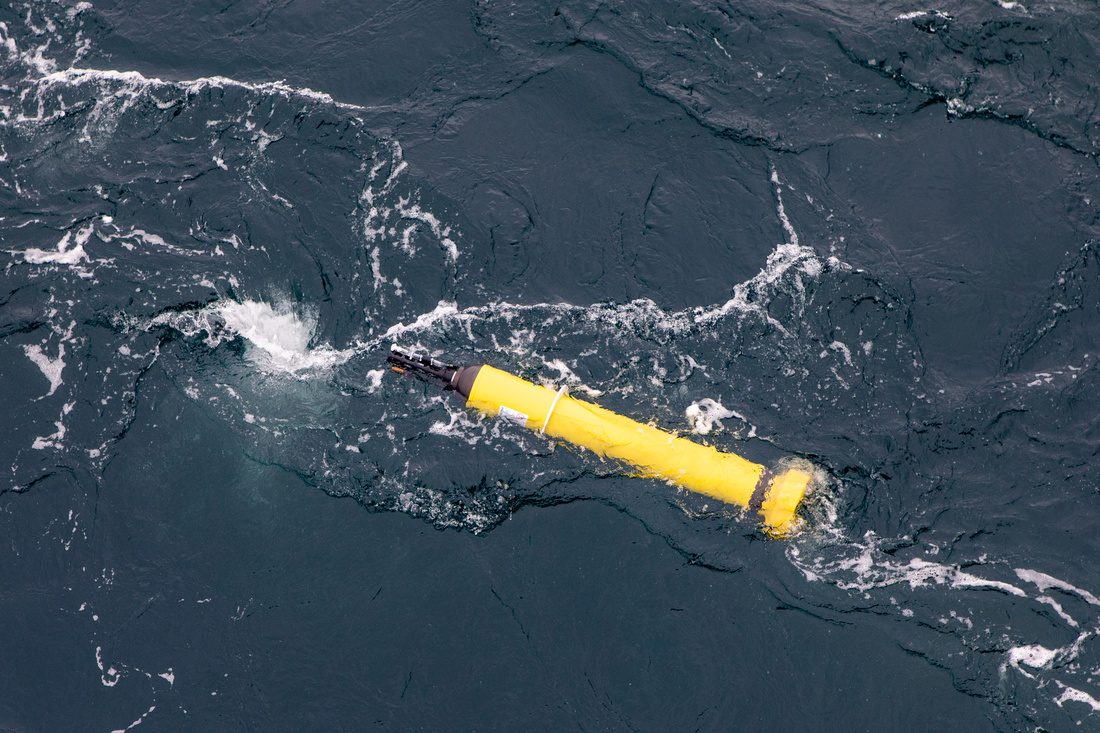
Yellow, cylindrical device - with torpedo-like shape - floats at the surface of the ocean, as seen from slightly above and to one side

“We got lucky,” said oceanographer Dr Steve Rintoul from CSIRO, Australia’s national science agency, and one of the authors of the study.1 CSIRO partnered with the Australian Antarctic Program Partnership at the University of Tasmania.

“Our intrepid float drifted beneath the ice and spent eight months under the Denman and Shackleton ice shelves, collecting profiles from the seafloor to the base of the ice every five days.

“These unprecedented observations provide new insights into the vulnerability of the ice shelves.”
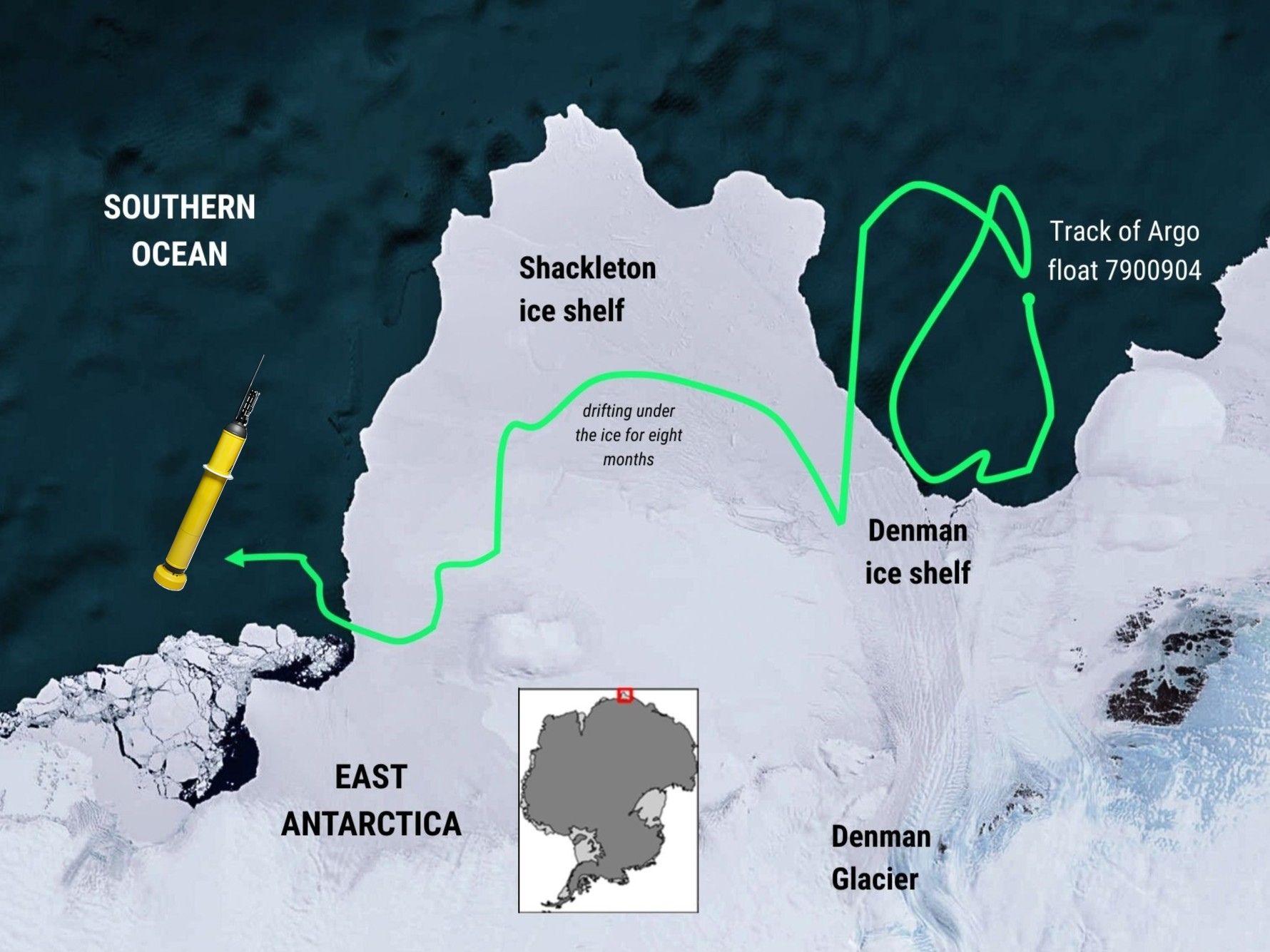
Diagram showing rough map of the area of East Antarctica tracked by the Argo float

The measurements reveal the Shackleton ice shelf (the most northerly in East Antarctica) is, for now, not exposed to warm water capable of melting it from below, and therefore less vulnerable.2

However, the Denman Glacier, with its potential 1.5-metre contribution to global sea level rise, is delicately poised: warm water is reaching underneath and small changes in the thickness of the warm water layer could drive much higher melt rates that lead to unstable retreat.

The transfer of heat from the ocean to the ice depends on the ocean conditions in the 10-metre thick ‘boundary layer’ immediately below the ice shelf.

“A great advantage of floats is that they can measure the properties of the boundary layer that control the melt rate,” said Dr Rintoul.

“The float measurements will be used to improve how these processes are represented in computer models, reducing the uncertainty in projections of future sea level rise.

“Deploying more floats along the Antarctic continental shelf would transform our understanding of the vulnerability of ice shelves to changes in the ocean.

“This, in turn, would help reduce the largest uncertainty in estimates of future sea level rise,” he said.

Leader of the Australian Antarctic Program Partnership, Prof Delphine Lannuzel, sampled the ocean near the ice shelves during the Denman Marine Voyage earlier this year.

“Against the enormity of such a wild region, this is an amazing story of the little float that could,” she said.

“Under incredibly testing conditions, a relatively tiny instrument has delivered us a wealth of invaluable information.”

Notes
[1] The authors are from CSIRO, the Australian Antarctic Program Partnership and the Institute for Marine and Antarctic Studies at the University of Tasmania. They acknowledge support from Australia’s Integrated Marine Observing System (IMOS) — IMOS is enabled by the National Collaborative Research Infrastructure Strategy (NCRIS).
[2] Published in Science Advances: Rintoul S.R., van Wijk E.M., Herraiz-Borreguero, L. and Rosevear, M.G. (2025) ‘Circulation and ocean–ice shelf interaction beneath the Denman and Shackleton Ice Shelves’, Sci. Adv. 11, 10.1126/sciadv.adx1024

ShareTweetSharePinSendShare

Related Articles

Waste heat from data centres could heat over 3.5 million UK homes
News

Waste heat from data centres could heat over 3.5 million UK homes

January 28, 2026
Record wasted wind could have powered every home in London in 2025
News

Record wasted wind could have powered every home in London in 2025

January 26, 2026
Biofilms might be key to supporting the health of space missions
News

Biofilms might be key to supporting the health of space missions

January 22, 2026
Nature groups say nuclear review exaggerates the cost of preventing harm to nature
News

Nature groups say nuclear review exaggerates the cost of preventing harm to nature

January 20, 2026
End trade-off between recycling targets and toxic exposure, Zero Waste Europe urges EU
News

End trade-off between recycling targets and toxic exposure, Zero Waste Europe urges EU

January 19, 2026
Rare earth magnet recycling centre launched in West Midlands
News

Rare earth magnet recycling centre launched in West Midlands

January 19, 2026

Leave a Reply Cancel reply

Your email address will not be published. Required fields are marked *

Recommended

Despite Biden Administration Proposals to Address Colorado River Shortages, a Solution Is Far Off

Despite Biden Administration Proposals to Address Colorado River Shortages, a Solution Is Far Off

November 21, 2024
Governors in the West Seek Profitability for Industrial and Natural Carbon Removal Projects

Governors in the West Seek Profitability for Industrial and Natural Carbon Removal Projects

July 3, 2024

Don't miss it

Amid National Call to ‘Make Polluters Pay,’ Illinois Lawmakers Are Prepping a Climate Change Superfund Bill
Fossil Fuels

Amid National Call to ‘Make Polluters Pay,’ Illinois Lawmakers Are Prepping a Climate Change Superfund Bill

January 28, 2026
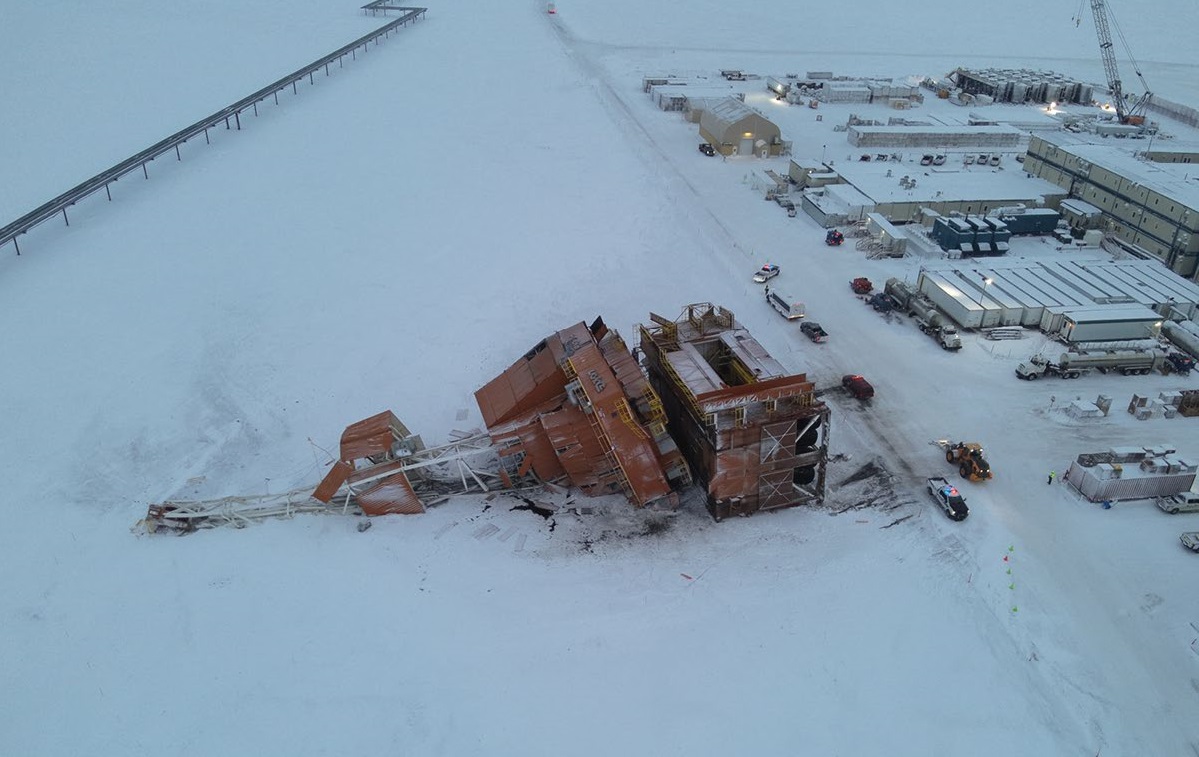
As an Oil Rig Topples in the Alaskan Arctic and Ignites a Fire, Exploration There Continues
Fossil Fuels

As an Oil Rig Topples in the Alaskan Arctic and Ignites a Fire, Exploration There Continues

January 28, 2026
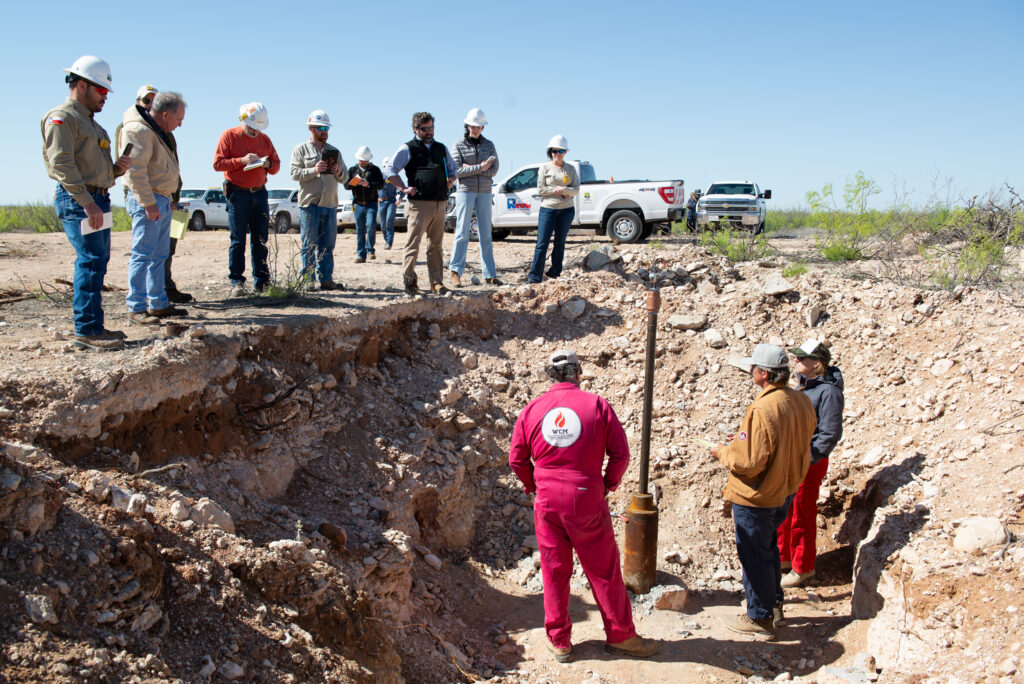
 New Lawsuit Claims ‘Catastrophic Impacts’ From Permian Basin Injection Wells
Fossil Fuels

 New Lawsuit Claims ‘Catastrophic Impacts’ From Permian Basin Injection Wells

January 28, 2026
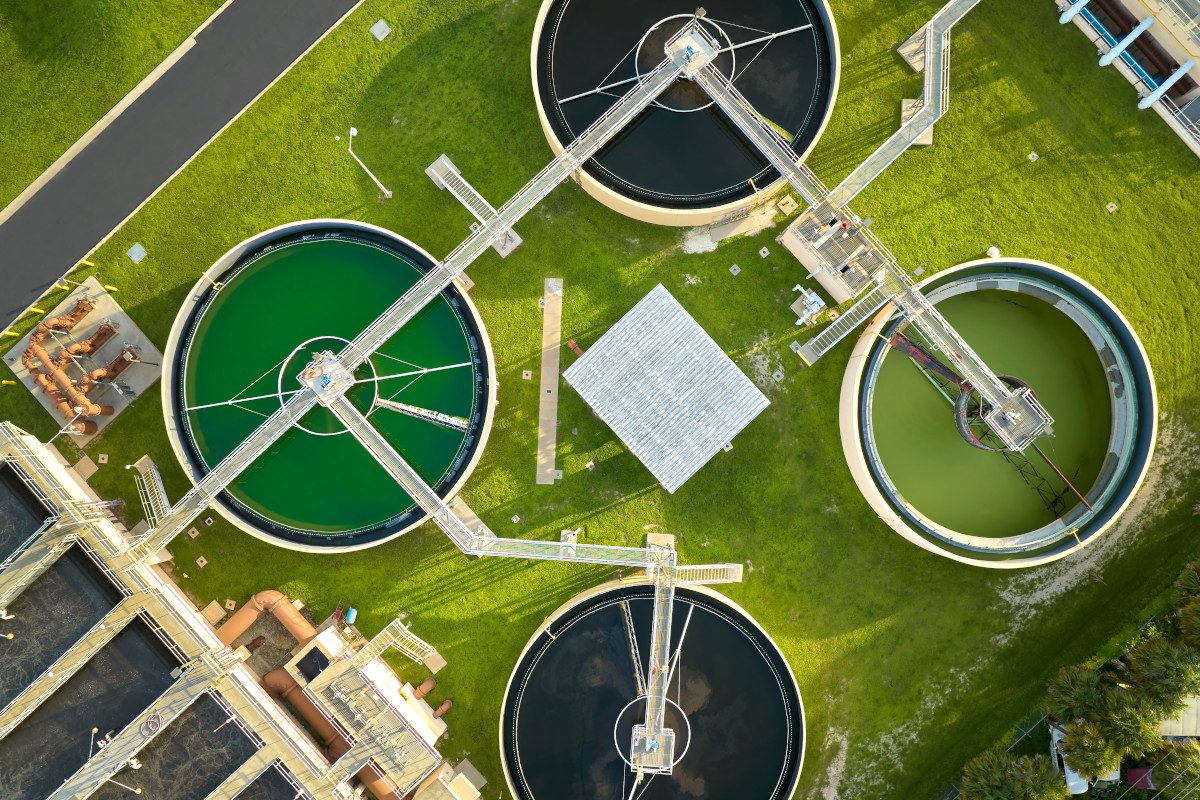
Comment: Why predictive intelligence is non-negotiable for UK water
Water

Comment: Why predictive intelligence is non-negotiable for UK water

January 28, 2026
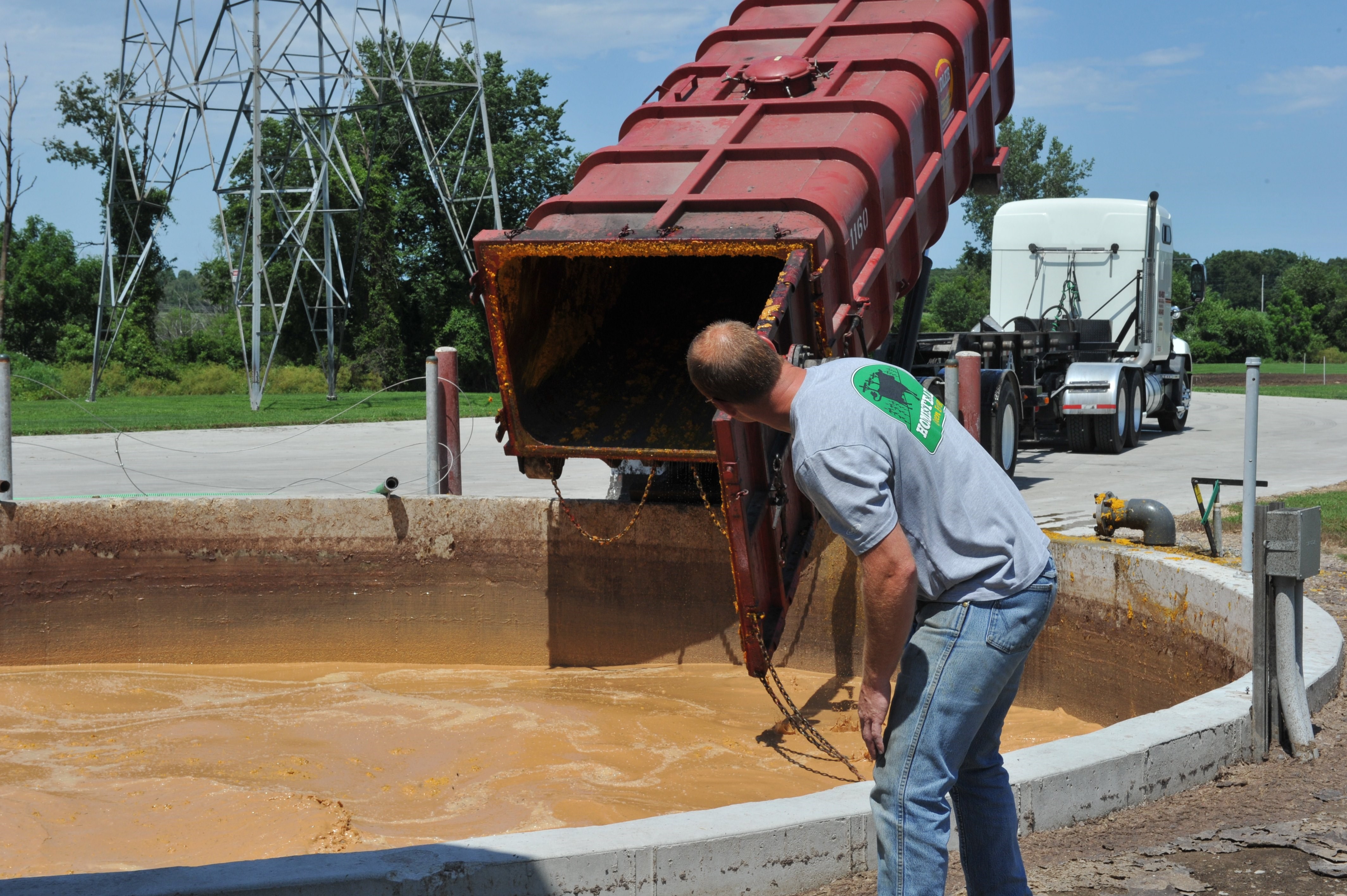
Are Incentives for Fuel Made from Livestock Manure Leaving Small Farmers Behind?
Energy

Are Incentives for Fuel Made from Livestock Manure Leaving Small Farmers Behind?

January 28, 2026
Trump’s Choice to Be Alabama’s Next Senator Finds an Odd Political Target: the Modern Gas Can
Fossil Fuels

Trump’s Choice to Be Alabama’s Next Senator Finds an Odd Political Target: the Modern Gas Can

January 28, 2026
Environmental Magazine

Environmental Magazine, Latest News, Opinions, Analysis Environmental Magazine. Follow us for more news about Enviroment and climate change from all around the world.

Learn more

Sections

  • Activism
  • Air
  • Climate Change
  • Energy
  • Fossil Fuels
  • News
  • Uncategorized
  • Water

Topics

Activism Air Climate Change Energy Fossil Fuels News Uncategorized Water

Recent News

Amid National Call to ‘Make Polluters Pay,’ Illinois Lawmakers Are Prepping a Climate Change Superfund Bill

Amid National Call to ‘Make Polluters Pay,’ Illinois Lawmakers Are Prepping a Climate Change Superfund Bill

January 28, 2026
As an Oil Rig Topples in the Alaskan Arctic and Ignites a Fire, Exploration There Continues

As an Oil Rig Topples in the Alaskan Arctic and Ignites a Fire, Exploration There Continues

January 28, 2026

© 2023 Environmental Magazine. All rights reserved.

No Result
View All Result
  • Home
  • News
  • Climate Change
  • Energy
  • Recycling
  • Air
  • Fossil Fuels
  • Water

© 2023 Environmental Magazine. All rights reserved.

This website uses cookies. By continuing to use this website you are giving consent to cookies being used. Visit our Privacy and Cookie Policy.