

A lot of the methane simply dissolved in the surrounding water of the southern Baltic Sea following the September 2022 explosion, according to measurements taken by the University of Gothenburg, and reported in Nature Scientific Reports.
At the end of September 2022, the Nord Stream gas pipeline on the bottom of the Baltic Sea exploded east of Bornholm and one of the largest unnatural methane gas emissions of all time was initiated. The methane gas from the pipeline created large bubbles at the water surface and measurements showed elevated levels of methane in the atmosphere.
But much of the methane never reached the surface and dissolved in the water instead. This is according to a scientific study published in Scientific Reports.
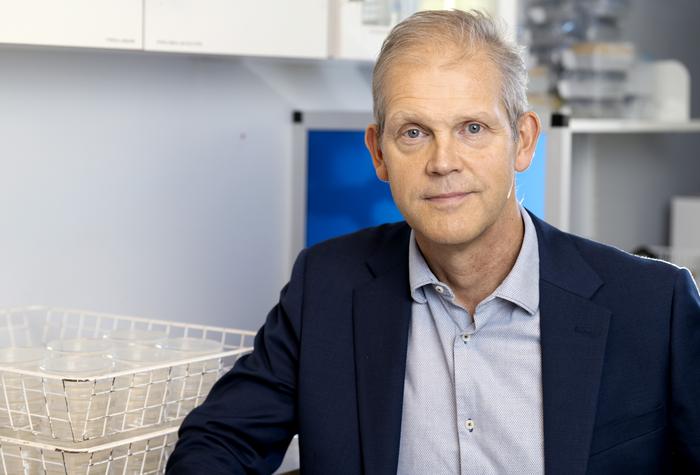
“Thanks to fortunate circumstances, we were able to organise an expedition to the area of the leak in less than a week. Based on what we measured, we estimate that between 10,000 and 50,000 tonnes of methane remained in the sea in dissolved form,” says Katarina Abrahamsson, professor of marine chemistry at the University of Gothenburg.
The methane was spread over large areas and has dissolved in the water, where some is taken care of by bacteria. Methane is also normally present in the water, formed during the decomposition of organic material in the bottom sediments.
Isotopes pinpoint leaked gas
“In our study, we have been able to distinguish the methane coming from the Nord Stream leak from that naturally present in the water, thanks to the fact that the methane from the gas pipeline has a different isotopic composition than that which seeps up from the bottom sediments,” says Katarina Abrahamsson.
The water in the sea normally lies in different layers due to differences in temperature and salinity. Despite the fact that the methane leaked out of the gas pipeline at great speed and in large quantities, the researchers could not observe any major mixing in the water masses. The stratification that normally occurs at the end of September was stable. The levels of the leaked methane therefore varied greatly in the water. The researchers assume that the methane was diluted in a larger body of water later in the autumn when the water was remixed due to falling water temperature.
Plume puzzle
In the immediate aftermath of the incident, on 26th September 2022, a surface bubble plume appeared, according to satellite and air reconnaissance observations at the time. And this confirmed that there was sufficient methane discharge from the pipe to transport large amounts of gas to the surface of the sea.
As the paper notes, there is some debate and uncertainty regarding the rate of release to the surrounding seawater and atmosphere. “It has been suggested that between 100,000 and 500,000 tonnes of gas were leaked at a rate of 500 tonnes per hour to the sea during the initial phase of the leakage of approximately one week,” notes the paper. It goes on to assume that 300,000 metric tonnes were released in total.
The authors observe that the direct gas transfer to the atmosphere by bubble bursting stopped a week after the detonations, but “sea-air gas flux initiated by supersaturated surface water” continued into the second week. The investigators were able to observe the elevated presence of natural gas from the pipeline via a shift towards carbon-13 isotopes in the methane in the air.
The paper documents an apparent shortfall in the quantities of fossil-fuel methane detected from seawater measurements, compared to what might be expected.
One possibility is that the plume could have provided a boost to aerobic methanotrophic bacteria wihch would have been responsible for increased methane oxidation – mirroring phenomena observed following the DeepWater Horizon spill.
Unclear biological impact
It is too early to say what impact the increased methane levels will have on biological life in the southern Baltic Sea.
“The expedition also included researchers who took plankton samples in the affected area, the analyses of which are not yet complete,” says Katarina Abrahamsson.
Three months after the first expedition, a return visit was made to the area and new measurements were taken. Preliminary results show that bacterial activity has been high during these three months. The researchers do not yet know how the phytoplankton and zooplankton have been affected by this.